1960s Maps of Los Angeles, California
Explore 16 historic maps of Los Angeles from the 1960s. These maps offer a rare glimpse into what life looked like during the 1960s — showing old roads, neighborhoods, homes, and landmarks that have changed or disappeared over time.
Whether you're researching your family's past, planning a metal detecting trip, or studying how Los Angeles's landscape evolved across the 1960s, these high-resolution maps are a powerful tool for exploring the history of this region.
- Focus on a specific era: All maps on this page are from the 1960s, giving you a focused view of this time period.
- See what’s changed: Compare century-old streets, trails, and buildings to today's modern landscape using overlays and satellite layers.
- Research with precision: Use these maps for genealogy, historical research, land use analysis, or educational projects.
- View, download, or print: Maps are fully viewable online in high resolution, and can be downloaded or printed for your own records.
Start exploring Los Angeles's history through authentic maps from the 1960s. This is your window into the past.
Los Angeles, CA maps
(16)- 1960 Map of Long Beach
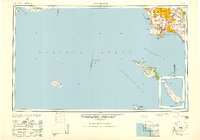 1960 Long Beach1960 Print · USGSCoastal California at the height of post-war expansion reveals a dense network of suburban growth and maritime industry. Trace the development of the South Bay and inland neighborhoods like Lakewood Village, or explore the topography of Santa Catalina Island and Los Angeles Harbor.2 unique versions available
 - 1964 Map of Inglewood, 1965 Print
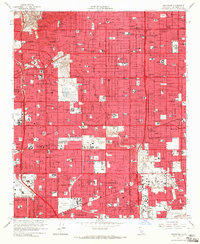 1964 Inglewood1965 Print · USGSSouthwestern Los Angeles County undergoes a mid-century suburban boom in this detailed record of the South Bay and Inglewood area. Genealogists and historians can trace neighborhood growth near Inglewood Park Cemetery, Lennox High Sch, and the local Oil Field operations.4 unique versions available
 - 1964 Map of Venice, 1965 Print
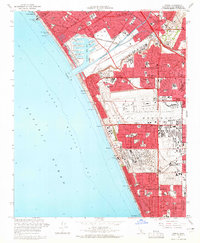 1964 Venice1965 Print · USGSThe Los Angeles coastline undergoes a massive mid-century transformation as Marina del Rey and Los Angeles International Airport expand. Researchers can trace the growth of Westchester or find coastal landmarks like the Ocean Park Pier and Dockweiler Beach State Park.4 unique versions available
 - 1964 Map of San Pedro, 1965 Print
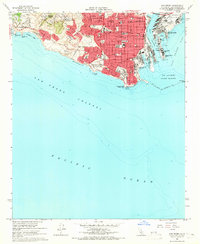 1964 San Pedro1965 Print · USGSSan Pedro and the Palos Verdes coastline are captured in the mid-sixties, just as the Vincent Thomas Bridge reshaped the harbor's profile. Researchers can trace the extensive footprints of Fort MacArthur and the industrial layout of Terminal Island and Fish Harbor.3 unique versions available
 - 1964 Map of Torrance, 1966 Print
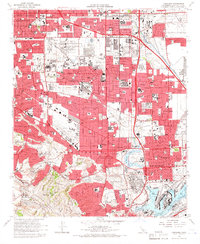 1964 Torrance1966 Print · USGSMid-century Los Angeles County is captured here during a period of massive industrial and suburban growth. Genealogists and historians can locate dozens of neighborhood landmarks, from the Banning Drum Barracks to local schools like Bishop Montgomery High Sch and Casimir Sch.3 unique versions available
 - 1964 Map of South Gate, 1966 Print
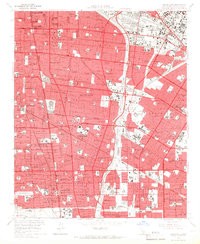 1964 South Gate1966 Print · USGSSoutheast Los Angeles County comes into focus in the mid-1960s, showing a landscape of mature suburbs and heavy rail corridors. Trace the development of local neighborhoods through sites like the Angeles Abbey Mausoleum, Old Downey Cemetery, and the Lynwood Station.4 unique versions available
 - 1964 Map of Long Beach, 1966 Print
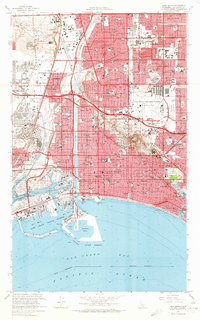 1964 Long Beach1966 Print · USGSCoastal Los Angeles County entered the mid-sixties as a powerhouse of oil production and naval activity. Researchers can trace the mid-century layout of Long Beach, the expansive Long Beach Municipal Airport, and residential areas like Bixby Knolls and Naples.5 unique versions available
 - 1966 Map of Los Angeles
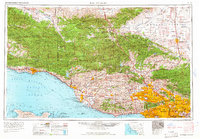 1966 Los Angeles1966 Print · USGSSouthern California underwent a mid-century transformation as suburban grids reached the base of the San Gabriel Mountains. Researchers can trace the path of the Los Angeles Aqueduct or locate defense landmarks like Edwards Air Force Base.
 - 1966 Map of Sunland, 1967 Print
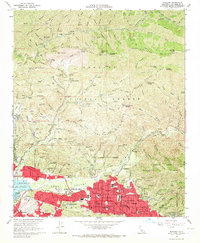 1966 Sunland1967 Print · USGSThe foothills of the Verdugo Hills and the San Gabriel Mountains meet during the suburban expansion of the mid-sixties. Researchers can trace the development of Sunland and Tujunga, locating historic sites like the Lakeview Terrace Sanitarium, Hansen Dam, and the Angeles Gun Club.3 unique versions available
 - 1966 Map of Burbank, 1967 Print
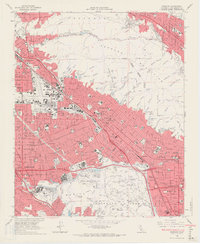 1966 Burbank1967 Print · USGSMid-century Los Angeles is on full display as the postwar suburbs expand into the Verdugo Mountains. Genealogists and historians can trace the growth of Burbank and Glendale alongside landmarks like Lockheed Air Terminal and the NBC-TV Studios.5 unique versions available
 - 1966 Map of San Fernando, 1967 Print
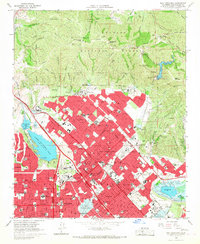 1966 San Fernando1967 Print · USGSThe San Fernando Valley was undergoing a massive suburban expansion in the mid-1960s as major freeways reshaped the northern Los Angeles landscape. Researchers can trace the development of Sylmar and Pacoima, locate historic grounds like San Fernando Mission Cem, and see the footprint of Van Norman Lake before its reconfiguration.3 unique versions available
 - 1966 Map of Hollywood, 1968 Print
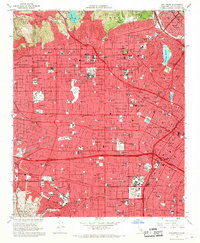 1966 Hollywood1968 Print · USGSLos Angeles and the Hollywood district are seen here at the peak of the mid-century era, showing a fully matured street grid and freeway system. Genealogists and historians can locate specific landmarks like Hollywood Memorial Park (Cem), Wrigley Field, and numerous local schools such as Fairfax High Sch.4 unique versions available
 - 1966 Map of Pasadena, 1968 Print
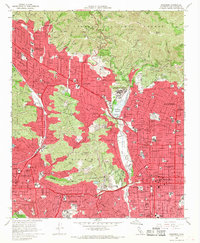 1966 Pasadena1968 Print · USGSMid-century Los Angeles County unfolds here during a period of rapid suburban and institutional growth. Researchers can trace the legacy of major landmarks like the Jet Propulsion Laboratory, the Rose Bowl, and the campus of Occidental College.5 unique versions available
 - 1966 Map of Beverly Hills, 1968 Print
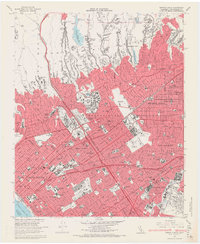 1966 Beverly Hills1968 Print · USGSThe Westside during the mid-sixties reveals a landscape transitioning from historic land grants to a modern metropolis. Trace the growth of Westwood Village and Century City alongside landmarks like the US Veterans Cemetery and Santa Monica Pier.6 unique versions available
 - 1966 Map of Los Angeles, 1968 Print
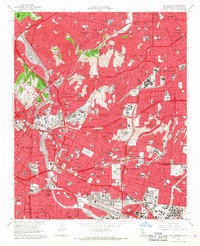 1966 Los Angeles1968 Print · USGSLos Angeles and its eastern suburbs are shown here in the mid-sixties, a period of massive freeway expansion and urban density. Researchers can trace historic neighborhoods and landmarks like Dodger Stadium, Boyle Heights, and the expansive Evergreen Cemetery.5 unique versions available
 - 1966 Map of Van Nuys, 1968 Print
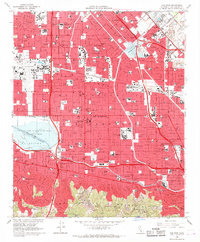 1966 Van Nuys1968 Print · USGSThe San Fernando Valley of the mid-sixties is a landscape of rapid suburban growth and massive infrastructure projects. Researchers can trace the legacy of local institutions from Van Nuys Airport to the Los Encinos State Historical Monument.4 unique versions available
End of results
Showing maps 1-16 of 16
Top cities near Los Angeles
- Long Beach historical maps
- Glendale historical maps
- Torrance historical maps
- Pasadena historical maps
- Simi Valley historical maps
- Inglewood historical maps
See more
Top neighborhoods of Los Angeles
- Pacific Palisades historical maps
- Harbor Pines historical maps
- Dana Strand Village historical maps
- Los Angeles Eco Village historical maps
- Thenard historical maps
- Studio City Neighborhood Council District historical maps
See more
Frequently asked questions
- What are the different types of historical maps available for Los Angeles?
- What is the oldest map of Los Angeles?
- Where can I purchase historical maps of Los Angeles for my home or office?
- Where can I download high-res historical maps of Los Angeles?
- Are there historical topographic maps available for Los Angeles?
- Is there historical aerial imagery available for Los Angeles?
- Where are historical maps of Los Angeles sourced from?