1940s Maps of Monterey County, California
Explore 82 historic maps of Monterey County from the 1940s. These maps offer a rare glimpse into what life looked like during the 1940s — showing old roads, neighborhoods, homes, and landmarks that have changed or disappeared over time.
Whether you're researching your family's past, planning a metal detecting trip, or studying how Monterey County's landscape evolved across the 1940s, these high-resolution maps are a powerful tool for exploring the history of this region.
- Focus on a specific era: All maps on this page are from the 1940s, giving you a focused view of this time period.
- See what’s changed: Compare century-old streets, trails, and buildings to today's modern landscape using overlays and satellite layers.
- Research with precision: Use these maps for genealogy, historical research, land use analysis, or educational projects.
- View, download, or print: Maps are fully viewable online in high resolution, and can be downloaded or printed for your own records.
Start exploring Monterey County's history through authentic maps from the 1940s. This is your window into the past.
Monterey County, CA maps
(82)- 1940 Map of San Juan Bautista
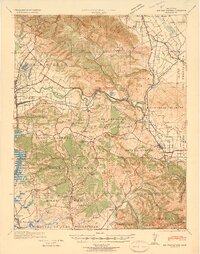 1940 San Juan Bautista1940 Print · USGSCentral California coastal and valley life at the start of the 1940s is captured here, where four counties meet. Genealogy researchers can trace family-named sites like Patrick Breen, old rural institutions like the St Francis Orphan Asylum, and the early Sargent Oil Fields.
 - 1940 Map of Metz
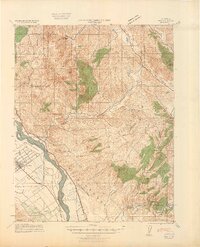 1940 Metz1940 Print · USGSThe Salinas River valley and the Gabilan Range come into sharp focus just before the war, showing the area's transition into a major agricultural corridor. Genealogists and historians can locate specific family landmarks like Schmidt Ranch, the Metz School, and early layouts of Greenfield.
 - 1940 Map of Hollister
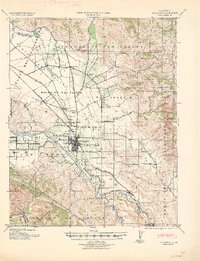 1940 Hollister1940 Print · USGSSan Benito County is shown just before the war as a landscape of productive ranches and emerging civic infrastructure. Genealogists and local historians can trace rural school districts like Anasymas School and the Southern Pacific rail line through Tres Pinos.2 unique versions available
 - 1940 Map of Salinas
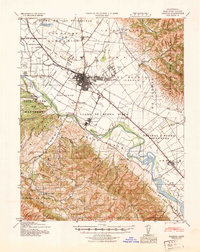 1940 Salinas1940 Print · USGSThe Salinas Valley at the start of the 1940s shows an agricultural landscape defined by historic land grants and expanding industry. Researchers can trace rural school locations like Natividad School and established landmarks such as Hartnell College and the railroad hub at Spreckles.
 - 1940 Map of Capitola
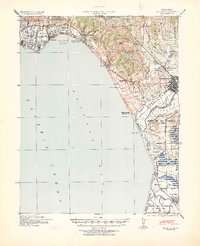 1940 Capitola1940 Print · USGSCoastal Monterey Bay comes alive in the late 1930s, showing a landscape of rail-linked beach towns and sprawling ranchos. Genealogists and historians can trace family-named schools and early airfields like Santa Cruz Airport, Camp McQuaide, and the original rail stops of the Southern Pacific.
 - 1940 Map of Jamesburg
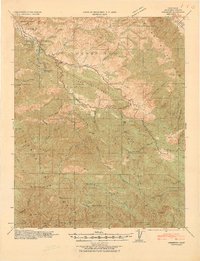 1940 Jamesburg1940 Print · USGSThe rugged Santa Lucia interior during the early 1940s is shown here through its network of remote ranching outposts and canyon settlements. Local researchers can trace family landmarks like Tularcitos Ranch, Bruce Ranch, and the isolated Tularcitos School.2 unique versions available
 - 1940 Map of Soledad
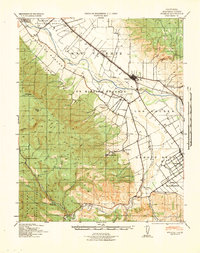 1940 Soledad1940 Print · USGSThe Salinas Valley of the 1940s is shown here as a landscape of historic ranchos and rising agricultural industry. Genealogists and researchers can locate Mission Soledad (Ruins), the Camphora School, and family landmarks like the Olson Ranch.
 - 1940 Map of San Benito
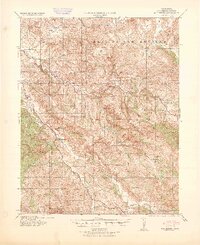 1940 San Benito1940 Print · USGSThe San Benito River valley in the early 1940s was a landscape of remote ranching and rural education. Genealogists can locate family-named outposts like Elkhorn Ranch and several country schools, including Cottonwood School and Emmett School.2 unique versions available
 - 1940 Map of Gonzales, 1947 Print
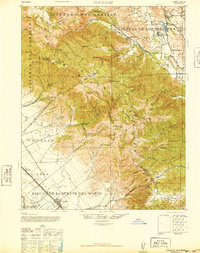 1940 Gonzales1947 Print · USGSMonterey and San Benito counties meet in the high Gabilan Range during the pre-war era of ranching and early highway travel. Genealogy researchers can find the Paicines Ranch, tracing old schoolhouses like Paicines School and the rails of the Southern Pacific.
 - 1941 Map of Priest Valley
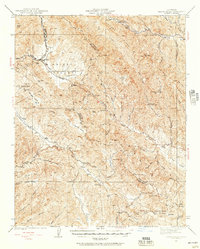 1941 Priest Valley1941 Print · USGSThe high ridges and deep canyons of Monterey County are captured here just before the mid-century, documenting remote ranching outposts and early industrial sites. Genealogists and historians can trace old landmarks like the Stone Canyon Mine, the Priest Valley Sch, and the settlement at San Lorenzo (Randall).
 - 1941 Map of Gonzales
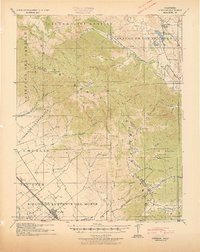 1941 Gonzales1941 Print · USGSThe Salinas Valley meets the Gabilan Range in this early 1940s tactical survey of Monterey and San Benito Counties. Genealogists can locate rural landmarks like Paicines Ranch, Willow Grove School, and the Southern Pacific stop at Dean.
 - 1941 Map of San Ardo
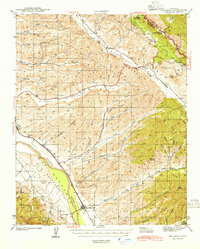 1941 San Ardo1941 Print · USGSThe Salinas River valley in the early 1940s was a landscape defined by the Southern Pacific rail line and ranching outposts. Genealogists and local historians can trace the rural infrastructure of Monterey County through the San Ardo townsite, the Lewis Creek Sch, and family landmarks like Casey Gulch.2 unique versions available
 - 1941 Map of Bradley
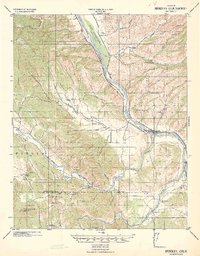 1941 Bradley1941 Print · USGSCoastal California ranching and rail life are recorded here during the early years of the war. Genealogists and local historians can locate early homesteads and schoolhouses like Hames School or trace the Southern Pacific Coast Line through Bradley.
 - 1941 Map of Cape San Martin
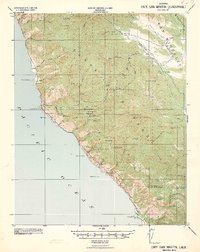 1941 Cape San Martin1941 Print · USGSThe central California coast was a landscape of remote mining claims and family ranchlands during the early 1940s. Trace the history of the Los Burros Mine and the W R Hearst Foremans Headquarters as the Coast Highway winds past Gorda P O.
 - 1941 Map of Lucia
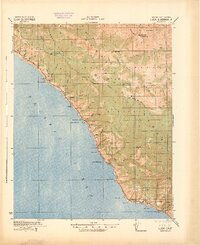 1941 Lucia1941 Print · USGSThe Monterey coast and Santa Lucia mountains appear here just before the mid-century, showing a landscape of remote homesteads and rugged landings. Researchers can trace family names at Lucia and Twitchells or locate the Seaview School and Tassajara Hot Springs.
 - 1941 Map of Monterey
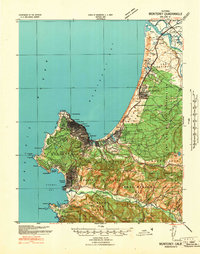 1941 Monterey1941 Print · USGSThe Monterey Peninsula and Salinas Valley appear here just before the massive wartime expansion of the early forties. You can trace the famous Seventeen Mile Drive, the early footprint of Camp Ord, and local family landmarks like Rincon Sch and Nashua.
 - 1941 Map of Junipero Serra
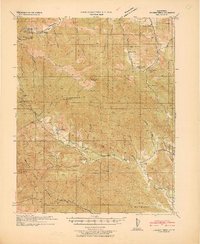 1941 Junipero Serra1941 Print · USGSThe Santa Lucia mountains in the early 1940s served as a rugged backdrop for remote cattle ranches and early forest service outposts. Genealogists and researchers can trace family holdings at Abbott Ranch and Berry Ranch or locate the Indian Guard Sta.
 - 1941 Map of Bryson
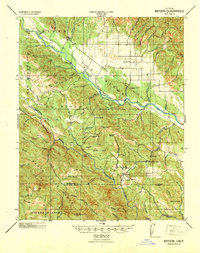 1941 Bryson1941 Print · USGSThe Santa Lucia Range and the valley of the Nacimiento River come into focus in this early 1940s survey. Genealogists can locate family holdings like Graves Ranch or Davis Ranch and study local education at Hesperia School.
 - 1942 Map of Bryson
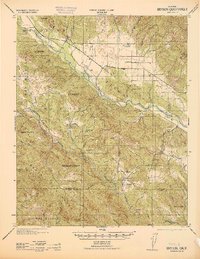 1942 Bryson1942 Print · USGSCoastal range foothills and river valleys are shown here during the early years of the war, as military holdings expanded over historic ranch lands. Researchers can trace the boundaries of the Hunter Liggett Military Reservation and locate old landmarks like the Quicksilver Mine and Playa School.
 - 1942 Map of Cape San Martin
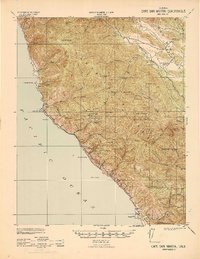 1942 Cape San Martin1942 Print · USGSThe Monterey coast and Santa Lucia Range are captured here during the early 1940s, just as military use of the backcountry intensified. Genealogists and researchers can locate remote homesteads like the Krenkel Ranch and Dutra Place, alongside several workings like the Polar Star Mine.
 - 1942 Map of Parkfield, 1956 Print
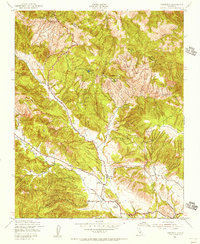 1942 Parkfield1956 Print · USGSThe Cholame Valley was a remote ranching and mining corridor in the early 1940s, centered on the settlement of Parkfield. Local historians can trace family landholdings like Durham Ranch and historic mercury operations at the Patriquin Quicksilver Mine.
 - 1942 Map of Tent Hills, 1960 Print
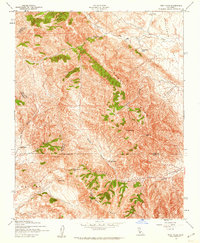 1942 Tent Hills1960 Print · USGSIn the early 1940s, this pocket of the California Coast Ranges was a rugged intersection of ranch land and high ridges. Genealogists and historians can trace old homestead boundaries and early routes through Cottonwood Pass, Iron Spring Ranch, and Fahey Ranch.2 unique versions available
 - 1943 Map of New Idria
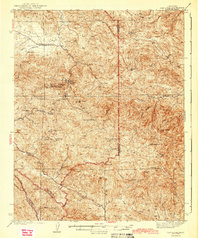 1943 New Idria1943 Print · USGSSan Benito and Fresno counties were centers of intensive mercury mining in the early 1940s. Genealogists and industrial historians can trace early claims like the Spanish Mine and Florence Mack Mine or locate the remote New Idria Idria PO.2 unique versions available
 - 1943 Map of Tent Hills
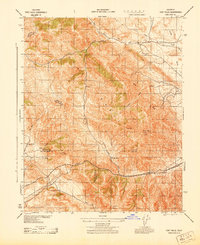 1943 Tent Hills1943 Print · USGSThe rugged junction of four California counties during the early 1940s is detailed here through the peaks of the Diablo Range. Genealogists and historians can trace family-named outposts like Acebedo Ranch and landmarks at Polonio Pass.
 - 1943 Map of Cholame Hills
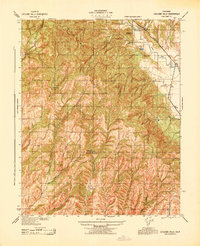 1943 Cholame Hills1943 Print · USGSThe ranching landscape of the California interior is captured here during the early 1940s, spanning the border of Monterey and San Luis Obispo counties. Researchers can trace family homesteads like Hillman Ranch and Harlan Ranch or locate the Parkfield Cemetery along the Cholame Creek corridor.
Showing maps 1-25 of 82
Top cities of Monterey County
- Salinas historical maps
- Monterey historical maps
- Marina historical maps
- Prunedale historical maps
- Pacific Grove historical maps
- Greenfield historical maps
See more
Frequently asked questions
- What are the different types of historical maps available for Monterey County?
- What is the oldest map of Monterey County?
- Where can I purchase historical maps of Monterey County for my home or office?
- Where can I download high-res historical maps of Monterey County?
- Are there historical topographic maps available for Monterey County?
- Is there historical aerial imagery available for Monterey County?
- Where are historical maps of Monterey County sourced from?