1900s (20th Century) Maps of Plumas County, California
Explore 166 historic maps of Plumas County from the 1900s (20th Century). These maps offer a rare glimpse into what life looked like during the 1900s — showing old roads, neighborhoods, homes, and landmarks that have changed or disappeared over time.
Whether you're researching your family's past, planning a metal detecting trip, or studying how Plumas County's landscape evolved across the 1900s, these high-resolution maps are a powerful tool for exploring the history of this region.
- Focus on a specific era: All maps on this page are from the 1900s, giving you a focused view of this time period.
- See what’s changed: Compare century-old streets, trails, and buildings to today's modern landscape using overlays and satellite layers.
- Research with precision: Use these maps for genealogy, historical research, land use analysis, or educational projects.
- View, download, or print: Maps are fully viewable online in high resolution, and can be downloaded or printed for your own records.
Start exploring Plumas County's history through authentic maps from the 1900s. This is your window into the past.
Plumas County, CA maps
(166)- 1937 Map of Blairsden
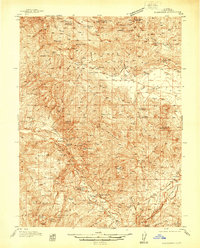 1937 Blairsden1937 Print · USGSPlumas County mining and timber operations are captured in detail during the late 1930s. Researchers can trace the industrial Aerial Tramway routes and locate remote mountain camps like Nye Meadows and Midway House.
 - 1943 Map of Blairsden
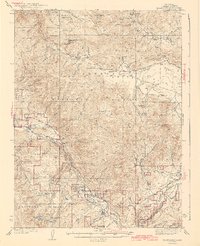 1943 Blairsden1943 Print · USGSThe High Sierra timber and mining districts are in full operation during the late 1930s as rail lines penetrate the mountain canyons. Genealogists and historians can trace industrial sites like Walkermine and the Plumas Eureka Mine or early lodges like Camp Wieland Feather River Lodge.3 unique versions available
 - 1948 Map of Mooreville Ridge, 1953 Print
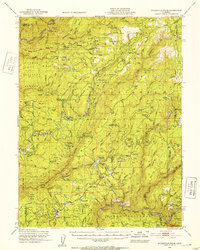 1948 Mooreville Ridge1953 Print · USGSThe northern Sierra Nevada at the end of the 1940s shows a landscape of deep canyons and timber camps. Locate family-named landmarks like McIntosh Ranch or trace the early industrial footprint of Brandy City and the Monte de Oro Mine.3 unique versions available
 - 1948 Map of Cascade, 1955 Print
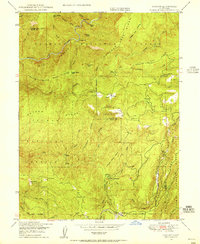 1948 Cascade1955 Print · USGSThe Sierra Nevada foothills on the Butte and Plumas county line are shown here in the late 1940s as a landscape of timber camps and river crossings. Researchers can trace the Feather River Railway and find named locations like Hansons Bar, Jackson Ranch, and Camp Eighteen.4 unique versions available
 - 1948 Map of American House, 1956 Print
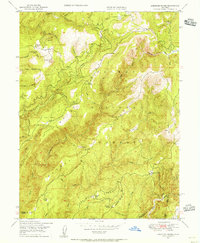 1948 American House1956 Print · USGSThe Plumas County high country in the late 1940s reveals a landscape of remote mountain ranches and legacy gold mines. Researchers can trace the heritage of American House, locate the Browns Hill Mine, and find family-named sites like McIntosh Ranch.3 unique versions available
 - 1948 Map of Strawberry Valley, 1957 Print
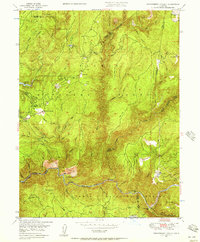 1948 Strawberry Valley1957 Print · USGSThe Sierra Nevada gold country of Yuba and Sierra Counties is captured here just after the war, showing the rugged canyons of the Yuba River. Genealogists and historians can trace the locations of Brandy City, the Palace Mine, and river settlements like Cut Eye Fosters Bar.4 unique versions available
 - 1950 Map of Strawberry Valley
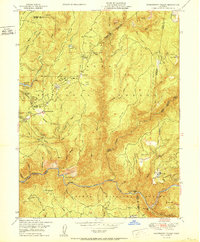 1950 Strawberry Valley1950 Print · USGSThe Gold Country of the northern Sierras comes into focus at mid-century, showing the overlapping boundaries of Plumas and Tahoe National Forests. Genealogists and researchers can trace historical mining sites and river bars like Brandy City, Strawberry Valley, and the Palace Mine.
 - 1950 Map of Cascade
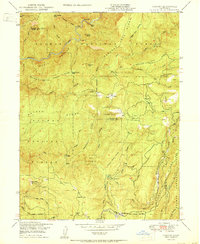 1950 Cascade1950 Print · USGSThe mid-century Sierra Nevada foothills come alive in this survey of the Butte and Plumas county line. Researchers can trace historic mountain homesteads and industrial relics like the Walters Mine, the LOGGING RR at Camp Eighteen, and family sites like Graves Cabin.
 - 1950 Map of American House
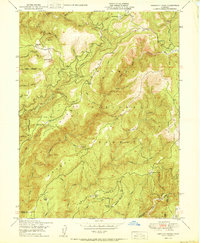 1950 American House1950 Print · USGSThe Plumas National Forest backcountry is documented here during the post-war era, showing a landscape defined by timber, water, and early mining. Trace local history through sites like American House, the Lexington Hill Lookout, and the Sanborn Mine.2 unique versions available
 - 1950 Map of Chilcoot, 1952 Print
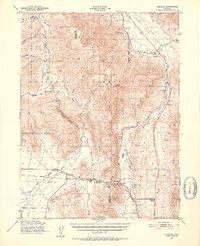 1950 Chilcoot1952 Print · USGSThe high Sierra gateway at Beckwourth Pass is documented here at mid-century as the railroad and highway networks expanded. Researchers can trace the routes of the Western Pacific and locate local landmarks like Summit Sch and Hallelujah Junction.5 unique versions available
 - 1950 Map of Kettle Rock, 1952 Print
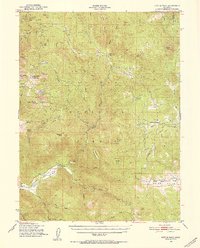 1950 Kettle Rock1952 Print · USGSThe Plumas National Forest and Diamond Mountains are captured here at the start of the 1950s during a peak era for timber and mining. Researchers can trace the Logging Railroad to Clover Valley Lumber Camp No 14 or locate the remote Engel Mine Upper Camp and Beardsley Mine.3 unique versions available
 - 1950 Map of Portola, 1952 Print
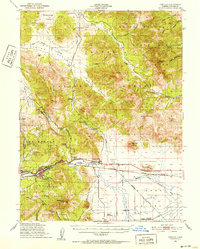 1950 Portola1952 Print · USGSPortola and the Sierra Valley are captured here in the early 1950s as the rail and timber industries shaped the Plumas County landscape. Researchers can trace the Western Pacific Railroad corridor, locate the Island Sch (Aband), and find family landmarks like Ramelli Ranch.4 unique versions available
 - 1950 Map of Greenville, 1952 Print
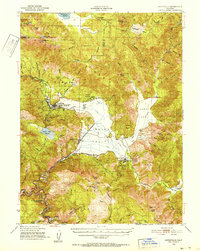 1950 Greenville1952 Print · USGSPlumas County at the mid-century shows a landscape shaped by the Western Pacific RR and deep-vein mining operations. Local researchers can trace the footings of the Engel Mine, the Indian Mission, and historical settlements like Crescent Mills and Taylorsville.4 unique versions available
 - 1950 Map of Milford, 1952 Print
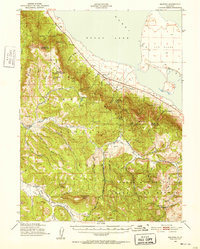 1950 Milford1952 Print · USGSThe high desert basin meets the timbered peaks of the Sierras in the early fifties. Genealogists and historians can trace family-named sites like Clark Ranch, the early operations of the Honey Lake Mine, and the mid-century boundaries of the Dixie Mountain State Game Refuge.3 unique versions available
 - 1950 Map of Bucks Lake, 1953 Print
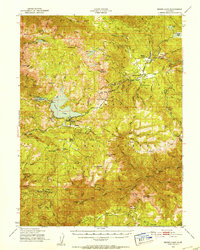 1950 Bucks Lake1953 Print · USGSThe High Sierra timberlands and alpine lakes of Plumas County are captured here just after the mid-century. Researchers can trace early ranching and mining sites like Spanish Ranch, the Pineleaf Mine, and the U C Forestry Camp in Meadow Valley.3 unique versions available
 - 1950 Map of Spring Garden, 1958 Print
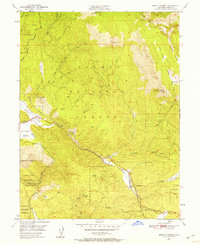 1950 Spring Garden1958 Print · USGSThe northern Sierra Nevada's rail and timber landscape comes into focus mid-century as the Plumas National Forest undergoes modernization. Trace the Western Pacific route past the Johnson Mine (Abandoned) and the small settlements of Massack and Spring Garden.2 unique versions available
 - 1950 Map of Quincy, 1958 Print
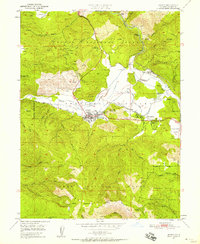 1950 Quincy1958 Print · USGSAmerican Valley in the mid-twentieth century was a vital hub for Plumas County logging and transport. Genealogists and researchers can trace the old footprints of Newtown, locate the Indian Cemetery, and follow the Western Pacific Railroad through Quincy.5 unique versions available
 - 1950 Map of Onion Valley, 1958 Print
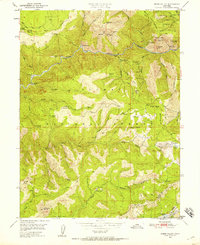 1950 Onion Valley1958 Print · USGSPlumas County is captured here in the mid-twentieth century, showcasing a landscape shaped by the Feather River and a deep mining history. Genealogists and researchers can trace former settlements at Onion Valley or locate old operations like the Five Bear Mine and Rich Bar.3 unique versions available
 - 1951 Map of Onion Valley
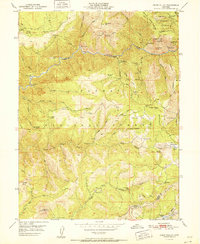 1951 Onion Valley1951 Print · USGSThe northern Sierra Nevada highlands appear in the early fifties as a landscape of recovering forest and dormant gold works. Trace the history of the Feather River canyon through mining claims like the Belfrin Mine and vanished outposts at McCarthy Bar and Last Chance (Site).
 - 1951 Map of Quincy
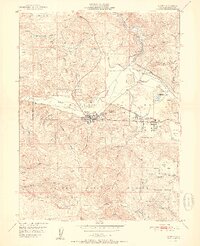 1951 Quincy1951 Print · USGSQuincy and the American Valley are seen here in the early fifties during a period of steady timber and rail activity. Genealogists and historians can locate the Indian Cemetery, trace the Western Pacific Railroad, and find early sites like the Imperial Mine or Pioneer Sch.2 unique versions available
 - 1951 Map of Mt. Fillmore, 1952 Print
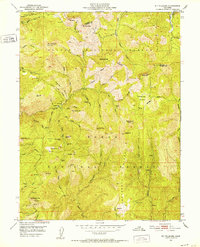 1951 Mt. Fillmore1952 Print · USGSSierra County gold country is frozen in time during the early 1950s, documenting the remote canyons and high ridges between the Yuba and Downie Rivers. Researchers can trace the heritage of the northern mines through landmarks like Poker Flat, the California Mine, and the Deadwood Diggings.3 unique versions available
 - 1951 Map of La Porte, 1952 Print
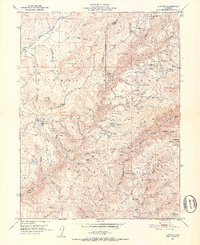 1951 La Porte1952 Print · USGSGold Rush-era mining camps and high-country forests define this landscape in the early fifties. Local historians can trace family roots at Pine Grove Cem or locate the former sites of Gibsonville, Port Wine, and the Thistle Shaft (Site).4 unique versions available
 - 1951 Map of Blue Nose Mtn, 1953 Print
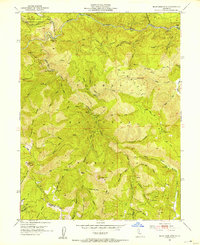 1951 Blue Nose Mtn1953 Print · USGSPlumas County gold country is documented here in the early fifties, showing the high-elevation mines and river bars of the Sierra Nevada. Trace the legacy of early mining at Turkeytown Diggings, the Nelson Point (Site), and the Bunker Hill Mine.5 unique versions available
 - 1951 Map of Quincy, 1958 Print
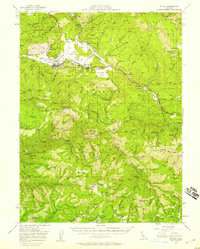 1951 Quincy1958 Print · USGSMid-century Plumas County comes alive through this survey of the American Valley and its surrounding gold-bearing ridges. Researchers can trace the Western Pacific Railroad past historic points like Nelson Point and the Hungarian Placer Mine.3 unique versions available
 - 1951 Map of Downieville, 1958 Print
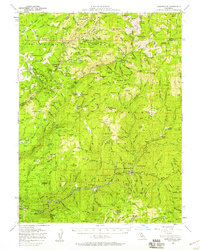 1951 Downieville1958 Print · USGSGold country life in the early fifties centered on the deep canyons of the Yuba and Feather Rivers. Trace the legacies of mining camps and family holdings from Downieville to the remote Howland Flat and the Standard Mine.3 unique versions available
Showing maps 1-25 of 166
Top cities of Plumas County
- Portola historical maps
- Chester historical maps
- Hamilton Branch historical maps
- Chilcoot–Venton historical maps
Frequently asked questions
- What are the different types of historical maps available for Plumas County?
- What is the oldest map of Plumas County?
- Where can I purchase historical maps of Plumas County for my home or office?
- Where can I download high-res historical maps of Plumas County?
- Are there historical topographic maps available for Plumas County?
- Is there historical aerial imagery available for Plumas County?
- Where are historical maps of Plumas County sourced from?