1900s (20th Century) Maps of Lincoln County, Colorado
Explore 71 historic maps of Lincoln County from the 1900s (20th Century). These maps offer a rare glimpse into what life looked like during the 1900s — showing old roads, neighborhoods, homes, and landmarks that have changed or disappeared over time.
Whether you're researching your family's past, planning a metal detecting trip, or studying how Lincoln County's landscape evolved across the 1900s, these high-resolution maps are a powerful tool for exploring the history of this region.
- Focus on a specific era: All maps on this page are from the 1900s, giving you a focused view of this time period.
- See what’s changed: Compare century-old streets, trails, and buildings to today's modern landscape using overlays and satellite layers.
- Research with precision: Use these maps for genealogy, historical research, land use analysis, or educational projects.
- View, download, or print: Maps are fully viewable online in high resolution, and can be downloaded or printed for your own records.
Start exploring Lincoln County's history through authentic maps from the 1900s. This is your window into the past.
Lincoln County, CO maps
(71)- 1954 Map of Limon
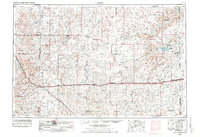 1954 Limon1954 Print · USGSThe Eastern Colorado plains and the Kansas borderlands come alive in the mid-fifties, showing the vital rail-and-road corridor through Limon. Genealogists and historians can trace the Chicago Rock Island & Pacific line through Burlington and find remote outposts like Arickaree and Anton.4 unique versions available
 - 1954 Map of Lamar, 1964 Print
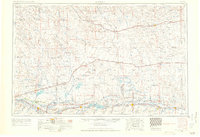 1954 Lamar1964 Print · USGSSoutheastern Colorado and the Kansas borderlands appear here in the mid-fifties, dominated by the vital Arkansas River irrigation network. Researchers can trace the development of river towns like Lamar and La Junta alongside the Amity Cemetery and several major reservoirs.3 unique versions available
 - 1954 Map of Pueblo, 1966 Print
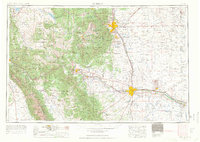 1954 Pueblo1966 Print · USGSMid-century Colorado comes alive in this survey of the Front Range and the high plains as the region expanded after the war. Genealogists and historians can trace family roots through rural landmarks like Hanover Church, Pioneer Cemetery, and the Grandview School.3 unique versions available
 - 1957 Map of Limon
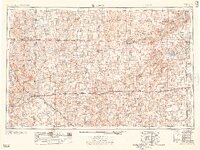 1957 Limon1957 Print · USGSThe High Plains of Eastern Colorado and Western Kansas come alive in the mid-1950s, showing the vital rail-and-road connections of the era. You can trace the path of the Chicago Rock Island and Pacific through towns like Limon, Stratton, and Burlington or find the early footprint of Bonny Reservoir.
 - 1957 Map of Pueblo
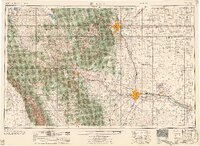 1957 Pueblo1957 Print · USGSMid-century Colorado comes alive as the Front Range urban centers expand alongside massive Cold War military installations. Genealogists and historians can trace the foundations of Stone City, rural sites like Hanover School, and the industrial Canon Imperial Mine.
 - 1958 Map of Limon
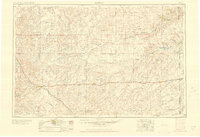 1958 Limon1958 Print · USGSEastern Colorado and the Kansas border meet in this late-fifties study of High Plains rail and river systems. Researchers can trace the path of the Chicago Rock Island and Pacific through Limon and Burlington, or locate the Bonny Dam and Bonny Reservoir.
 - 1958 Map of Pueblo
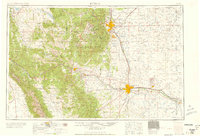 1958 Pueblo1958 Print · USGSColorado's Front Range and Arkansas River Valley come alive in the late fifties, showing the transition from historic mining districts to major military and rail hubs. Genealogists and historians can trace family roots in ranching communities and find landmarks like Cripple Creek, Manitou, and the Hanover School.
 - 1958 Map of Lamar
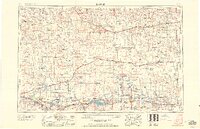 1958 Lamar1958 Print · USGSThe High Plains of Eastern Colorado and Western Kansas in the late fifties reveal a landscape tied to the Arkansas River and the rails. Trace the heritage of the river valley through Fort Lyon, the Atchison Topeka and Santa Fe RR, and rural landmarks like Kendrick Church.2 unique versions available
 - 1962 Map of Pueblo
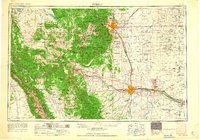 1962 Pueblo1962 Print · USGSThe Front Range and high plains meet in the early sixties as military installations and industrial mining shape the corridor from Colorado Springs to Pueblo. Genealogists can trace family names through rural landmarks like the Columbine School, Hanover Church, and Fairview Cem.
 - 1966 Map of Pueblo
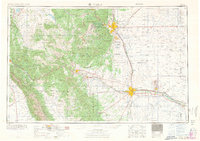 1966 Pueblo1966 Print · USGSThe Front Range and Arkansas River Valley are captured here in the mid-1960s, showing a landscape shaped by mining, military expansion, and rail. Researchers can locate numerous country schools and mines, such as the Lytle School, Pioneer Cem, and Empire Zinc Mine.
 - 1970 Map of Limon, 1973 Print
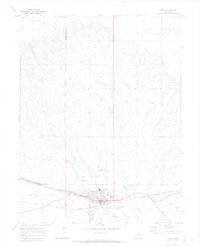 1970 Limon1973 Print · USGSLimon at the start of the 1970s is a bustling rail hub where the High Plains meet critical transport lines. Genealogists and rail historians can trace the intersection of the Union Pacific and Chicago Rock Island and Pacific alongside landmarks like Pershing Mem Cem.
 - 1970 Map of Four Corners, 1973 Print
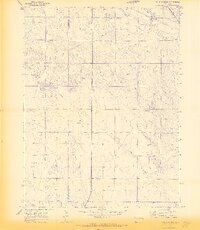 1970 Four Corners1973 Print · USGSLincoln County at the start of the 1970s shows a quiet plains landscape defined by the intersection of county lines and rail lines. Local historians can trace the Union Pacific corridor through the Big Sandy Creek valley or locate the Cem near Four Corners.2 unique versions available
 - 1970 Map of Long Creek, 1973 Print
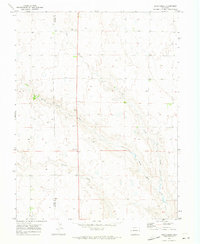 1970 Long Creek1973 Print · USGSEastern Colorado plains life in the early seventies centered on the essential drainage of Long Creek and Apache Creek. Trace the 1960s-era boundary lines and find remote landmarks like the Gravel Pit and scattered wells across the Elbert-Lincoln county line.
 - 1970 Map of T Draw, 1974 Print
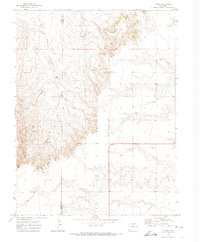 1970 T Draw1974 Print · USGSEastern Colorado ranching country is documented here in 1970 at the border of Elbert Co and Lincoln Co. Trace the remote Jeep Trail and seasonal water sources along Middlemist Creek or the eponymous T Draw.
 - 1973 Map of Truckton SE, 1975 Print
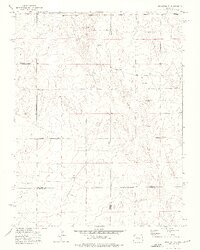 1973 Truckton SE1975 Print · USGSThe high plains of eastern Colorado meet at a four-county junction in the early 1970s. Researchers can trace rural family routes like Whittemore Road and Rasner Road past several isolated Water Tanks and fence lines.2 unique versions available
 - 1973 Map of Last Chance SW, 1976 Print
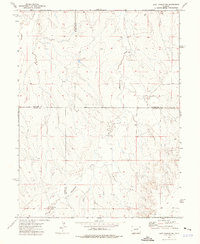 1973 Last Chance SW1976 Print · USGSThe eastern Colorado plains during the early 1970s are revealed here at the four-county junction of Arapahoe, Washington, Elbert, and Lincoln. Researchers can trace rural landmarks like Brooks Ranch and the winding course of Middlemist Creek across this high-country landscape.
 - 1973 Map of Truckton NE, 1976 Print
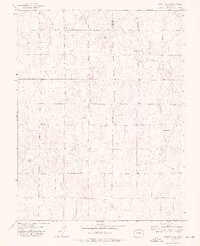 1973 Truckton NE1976 Print · USGSThe eastern Colorado plains at the start of the 1970s show a strictly gridded landscape of rural homesteads and county boundaries. Genealogists and local historians can trace family-named routes like Keller Road and Rush Road, or locate the St Lukes Cem.2 unique versions available
 - 1973 Map of Lusto Springs, 1976 Print
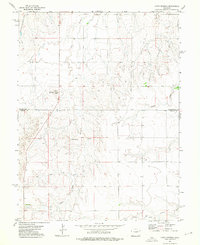 1973 Lusto Springs1976 Print · USGSThe High Plains of Eastern Colorado come into focus during the early seventies, spanning the border of Washington and Lincoln counties. Researchers can trace the ranching landscape near Lusto Springs and locate early settlements like Falch and Sutton.
 - 1973 Map of Lindon SW, 1976 Print
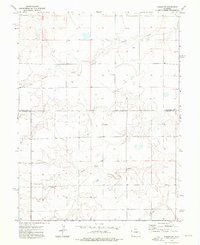 1973 Lindon SW1976 Print · USGSEastern Colorado ranching country is meticulously detailed in the early 1970s at the Washington and Lincoln County line. Family historians can trace rural landmarks like Glen Chapel, the small settlement of Carroll, and the winding North Fork Arikaree River.
 - 1973 Map of Shaw, 1976 Print
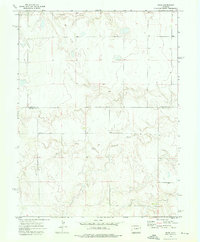 1973 Shaw1976 Print · USGSThe High Plains of Eastern Colorado are captured in the early 1970s as a quiet ranching landscape spanning the Washington and Lincoln County line. Researchers can locate the small settlement of Shaw and trace the winding paths of Gordon Creek and the North Fork Arikaree River.
 - 1973 Map of Rush, 1976 Print
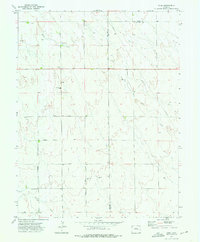 1973 Rush1976 Print · USGSHigh plains ranching and farming life in El Paso and Lincoln Counties are captured here during the 1970s. Trace local family history at the Crescent Cem, find the District 60 Jr Sch, or follow old routes like Whittemore Road.
 - 1975 Map of Stanley Gulch, 1978 Print
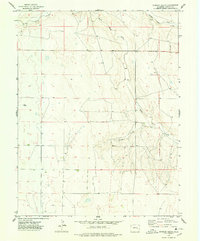 1975 Stanley Gulch1978 Print · USGSThe high plains of Lincoln County come into focus during the mid-seventies, showing a landscape defined by ranching and water management. Trace early infrastructure and drainage patterns along South Rush Creek, Stanley Gulch, and isolated Well sites.
 - 1977 Map of Walker Point, 1978 Print
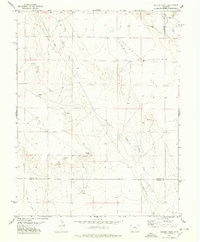 1977 Walker Point1978 Print · USGSHigh Plains ranching country along the boundary of Lincoln and Crowley counties is captured here in the mid-1970s. Researchers can trace vital water sources across Ninemile Flats, including Dead Horse Creek, Lone Tree Creek, and the prominent Walker Point.
 - 1977 Map of Thurman, 1978 Print
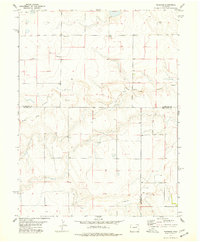 1977 Thurman1978 Print · USGSEastern Colorado's High Plains in the 1970s reveal a landscape of remote farmsteads and river drainages. Genealogists can locate Thurman Cem and the settlement of Thurman near the winding North Fork Arikaree River.
 - 1977 Map of Punkin Center, 1978 Print
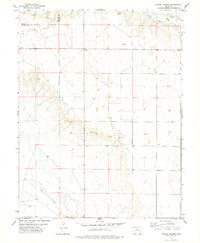 1977 Punkin Center1978 Print · USGSHigh plains ranching country at the Elbert and Lincoln County line comes into focus in the mid-seventies. Trace the rural landscape around Punkin Center and find scattered water sources like Mustang Creek and several isolated Springs.
Showing maps 1-25 of 71
Top cities of Lincoln County
Frequently asked questions
- What are the different types of historical maps available for Lincoln County?
- What is the oldest map of Lincoln County?
- Where can I purchase historical maps of Lincoln County for my home or office?
- Where can I download high-res historical maps of Lincoln County?
- Are there historical topographic maps available for Lincoln County?
- Is there historical aerial imagery available for Lincoln County?
- Where are historical maps of Lincoln County sourced from?