1900s (20th Century) Maps of Iron River Township, Michigan
Explore 33 historic maps of Iron River Township from the 1900s (20th Century). These maps offer a rare glimpse into what life looked like during the 1900s — showing old roads, neighborhoods, homes, and landmarks that have changed or disappeared over time.
Whether you're researching your family's past, planning a metal detecting trip, or studying how Iron River Township's landscape evolved across the 1900s, these high-resolution maps are a powerful tool for exploring the history of this region.
- Focus on a specific era: All maps on this page are from the 1900s, giving you a focused view of this time period.
- See what’s changed: Compare century-old streets, trails, and buildings to today's modern landscape using overlays and satellite layers.
- Research with precision: Use these maps for genealogy, historical research, land use analysis, or educational projects.
- View, download, or print: Maps are fully viewable online in high resolution, and can be downloaded or printed for your own records.
Start exploring Iron River Township's history through authentic maps from the 1900s. This is your window into the past.
Iron River Township, MI maps
(33)- 1944 Map of Iron River, 1956 Print
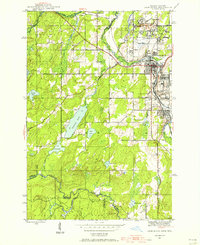 1944 Iron River1956 Print · USGSIron River and the Menominee Range are shown in the 1940s during a peak era of Michigan mining activity. Researchers can trace the extensive rail-and-mine network connecting sites like James Mine, Wauseca Mine, and the Virgil Location worker settlement.2 unique versions available
 - 1944 Map of Gaastra, 1956 Print
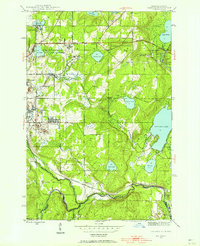 1944 Gaastra1956 Print · USGSIron County thrived during the mid-forties as a critical mining hub where rail lines and company towns shaped the landscape. Genealogists and industrial historians can locate worker housing at Bates Location and trace the paths of the Bates Mine and Bengal Mine.2 unique versions available
 - 1945 Map of Gibbs City
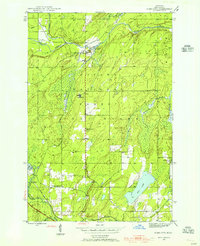 1945 Gibbs City1945 Print · USGSIron County, Michigan, is depicted here at the end of the Second World War as a landscape of timber, rail, and small forest settlements. Genealogists and historians can locate the Finnish Lutheran Ch, trace the Chicago and Northwestern line, and find sites like Camp Gibbs.2 unique versions available
 - 1945 Map of Sunset Lake, 1959 Print
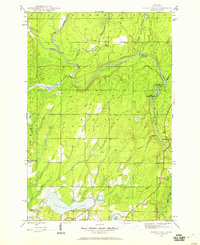 1945 Sunset Lake1959 Print · USGSIron County’s Upper Peninsula timberlands are captured here in the mid-1940s, centered on the waters of Bates Township. Researchers can trace the settlement at Sunset, locate the Paint Dam (Abandoned), and explore the shoreline of Sunset Lake.3 unique versions available
 - 1946 Map of Iron River
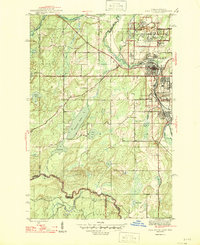 1946 Iron River1946 Print · USGSIron County’s mining heartland is captured here during the mid-1940s, showing the dense industrial corridor from Stambaugh to Caspian. Trace the iron ore legacy through the Hiawatha No 1 Mine and the many worker-housing sites like Homer Location.2 unique versions available
 - 1946 Map of Sunset Lake
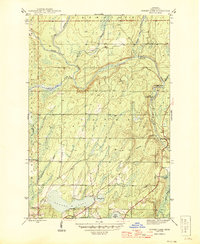 1946 Sunset Lake1946 Print · USGSIron County’s wooded river valleys are captured here just after the war, showing a landscape defined by its waterways and early infrastructure. Researchers can locate the Paint Dam (Abandoned) and trace family-named streams like Barnetts Creek and De Moss Creek.2 unique versions available
 - 1946 Map of Gaastra
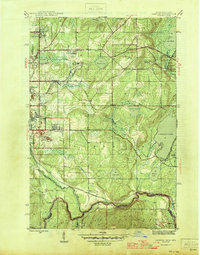 1946 Gaastra1946 Print · USGSIron County’s mining heartland is captured here in the mid-1940s, showing the height of local industrial and community life. Genealogists can locate specific homesteads and family sites near Bates Location, Bates Sch, and the Bengal Mine.
 - 1946 Map of Gibbs City
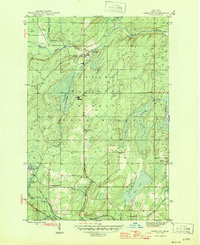 1946 Gibbs City1946 Print · USGSIron County’s timber and rail landscape is captured here in the mid-1940s, centered on the confluence of the Paint River. Genealogists and historians can trace the Chicago and Northwestern tracks through Hazel and locate the Finnish Lutheran Ch near the banks of the South Branch Iron River.2 unique versions available
 - 1954 Map of Kenton, 1956 Print
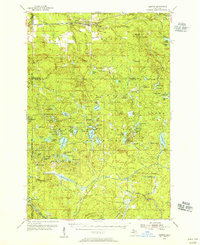 1954 Kenton1956 Print · USGSThe Upper Peninsula rail corridors and timberlands are well-defined in the mid-1950s, centering on the crossing of the Duluth South Shore and Atlantic. Researchers can locate historic sites like the Kenton Cemetery, Holmes Dam, and the old Lookout Tower.3 unique versions available
 - 1954 Map of Perch Lake, 1956 Print
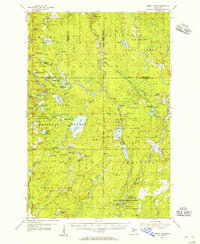 1954 Perch Lake1956 Print · USGSUpper Peninsula timberlands and glacial lakes are shown here during the mid-fifties at the meeting of Houghton, Baraga, and Iron Counties. Trace the Milwaukee Road rail line through Tunis or locate the Lookout Tower and Snake Rapids.3 unique versions available
 - 1956 Map of Beechwood, 1957 Print
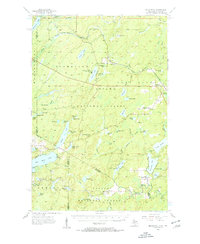 1956 Beechwood1957 Print · USGSUpper Peninsula timberlands meet the Wisconsin Northwoods in the 1950s, a landscape defined by rail-line outposts and forestry stations. Researchers can find old rural school sites like Elvoy Sch, the Beechwood Ch, and remote rail stops at Elmwood and Basswood.4 unique versions available
 - 1958 Map of Iron River, 1968 Print
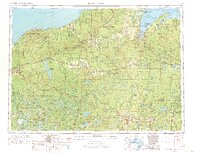 1958 Iron River1968 Print · USGSThe Upper Peninsula in the late fifties is captured here as a landscape of timber, iron, and rail. Genealogists and historians can trace rail stops like Mass Station or explore the coastlines of Lake Gogebic and Keweenaw Bay.3 unique versions available
 - 1960 Map of Iron River
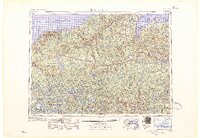 1960 Iron River1960 Print · USGSThe Upper Peninsula’s western reaches are shown in the late fifties, featuring the industrial infrastructure of the Copper Country and the vast Ottawa National Forest. Researchers can trace the rail lines of the Milwaukee Road through settlements like Bruce Crossing and the White Pine Mine.
 - 1961 Map of Iron River
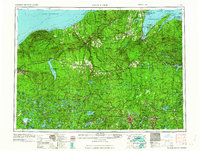 1961 Iron River1961 Print · USGSThe Upper Peninsula and northern Wisconsin are shown here in the early 1960s, a landscape defined by the iron range and vast timberlands. Researchers can trace the legacy of mining and rail transport through Caspian, the Lac Du Flambeau Indian Reservation, and the Milwaukee Road.
 - 1967 Map of Iron River, 1968 Print
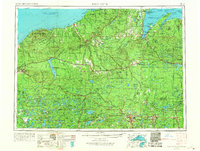 1967 Iron River1968 Print · USGSThe Upper Peninsula and northern Wisconsin borderlands are shown here in the late sixties, a landscape of deep woods and iron-country rail lines. Genealogists and historians can trace the lakeside settlements of L'Anse and Ontonagon or follow the Soo Line through towns like Michigamme and Nestoria.
 - 1981 Map of Hagerman Lake
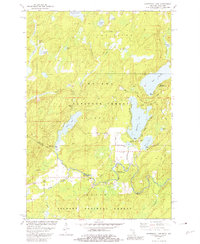 1981 Hagerman Lake1981 Print · USGSThe Michigan-Wisconsin border comes alive in the early eighties as the Brule River winds through the twin national forests. Researchers can trace the Old Railroad Grade past Bass Lake or explore the settlement of Nelma along the riverbanks.
 - 1981 Map of Beechwood
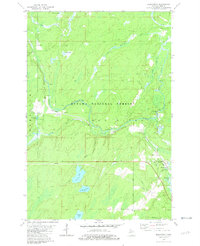 1981 Beechwood1981 Print · USGSIron County in the early 1980s reveals a landscape of timber and rail where small settlements like Beechwood and Basswood endure. Trace family roots at Rosehill Cem, explore the Chicago and North Western corridor, or locate the Bethany Ch.
 - 1982 Map of Lake Mitigwaki, 1983 Print
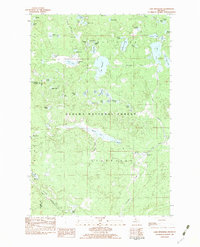 1982 Lake Mitigwaki1983 Print · USGSUpper Peninsula wilderness in the early eighties is defined here by the dense hydrology of the Ottawa National Forest. You can trace the Chicago and North Western rail line and locate remote features like Bear Trap Dam and Lake Mitigwaki.
 - 1982 Map of Kenton, 1983 Print
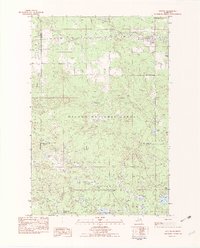 1982 Kenton1983 Print · USGSUpper Peninsula timber and river lands come into focus during the early eighties, centered on the settlement of Kenton. Researchers can trace the Old RR Grade through the Ottawa National Forest and locate family landmarks like the local Cem or the camps near Tepee Lake.
 - 1982 Map of Winslow Lake, 1983 Print
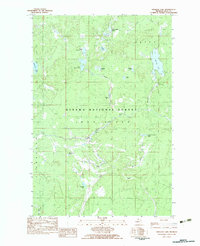 1982 Winslow Lake1983 Print · USGSIron County's forested lake country is documented in the early 1980s, centered on the Paint River and its tributaries. Researchers can trace old logging infrastructure at Holmes Dam or locate isolated landmarks like the Big Spring Hole and Winslow Lake.
 - 1982 Map of Glitter Lake, 1983 Print
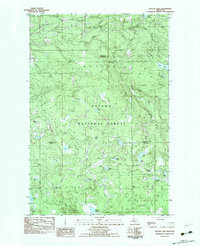 1982 Glitter Lake1983 Print · USGSUpper Michigan's lake country is captured here in the early eighties, spanning the wooded border between Houghton and Iron counties. Researchers can trace the water systems of the Ottawa National Forest, from Passmore Springs to remote shores like Glitter Lake and Lake Thirteen.
 - 1985 Map of Perch Lake, 1986 Print
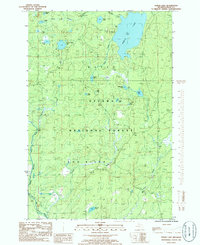 1985 Perch Lake1986 Print · USGSIron County’s wooded lake country is captured here in the mid-1980s, centered on the Perch Lake watershed and the Ottawa National Forest. Researchers can trace old family names and small-scale industry across sites like Hannah Webb Lake and a local Gravel Pit.
 - 1989 Map of Iron River, 1990 Print
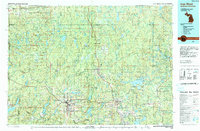 1989 Iron River1990 Print · USGSUpper Peninsula mining and timber lands are documented here in the late 1980s, showcasing the region's industrial and natural interface. Researchers can trace the iron heritage through the Monongahela Mine and local junctions like Kelso Junction and Amasa.
 - 1999 Map of Lake Mitigwaki, 2004 Print
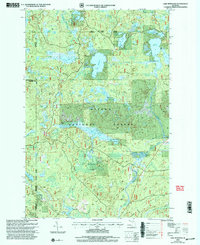 1999 Lake Mitigwaki2004 Print · USGSUpper Peninsula wilderness near the turn of the century is defined by its vast water networks within the Ottawa National Forest. Researchers can trace remote landmarks like Bear Trap Dam, the Jumbo River, and Harding Lake.
 - 1999 Map of Winslow Lake, 2004 Print
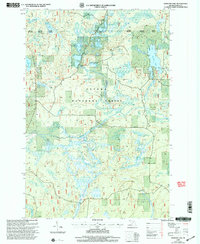 1999 Winslow Lake2004 Print · USGSIron County’s Upper Peninsula wilderness is shown here at the turn of the millennium, dominated by the waters of the Ottawa National Forest. Researchers can locate remote landmarks like Holmes Dam, trace the North Branch Paint River, and find secluded spots such as Big Spring Hole.
Showing maps 1-25 of 33
Top cities near Iron River Township
- Iron River historical maps
- Phelps historical maps
- Stambaugh historical maps
- Caspian historical maps
- Gaastra historical maps
- Alvin historical maps
Top neighborhoods of Iron River Township
Frequently asked questions
- What are the different types of historical maps available for Iron River Township?
- What is the oldest map of Iron River Township?
- Where can I purchase historical maps of Iron River Township for my home or office?
- Where can I download high-res historical maps of Iron River Township?
- Are there historical topographic maps available for Iron River Township?
- Is there historical aerial imagery available for Iron River Township?
- Where are historical maps of Iron River Township sourced from?