1910s Maps of Marshall County, Minnesota
Explore 12 historic maps of Marshall County from the 1910s. These maps offer a rare glimpse into what life looked like during the 1910s — showing old roads, neighborhoods, homes, and landmarks that have changed or disappeared over time.
Whether you're researching your family's past, planning a metal detecting trip, or studying how Marshall County's landscape evolved across the 1910s, these high-resolution maps are a powerful tool for exploring the history of this region.
- Focus on a specific era: All maps on this page are from the 1910s, giving you a focused view of this time period.
- See what’s changed: Compare century-old streets, trails, and buildings to today's modern landscape using overlays and satellite layers.
- Research with precision: Use these maps for genealogy, historical research, land use analysis, or educational projects.
- View, download, or print: Maps are fully viewable online in high resolution, and can be downloaded or printed for your own records.
Start exploring Marshall County's history through authentic maps from the 1910s. This is your window into the past.
Marshall County, MN maps
(12)- 1918 Map of Rollis
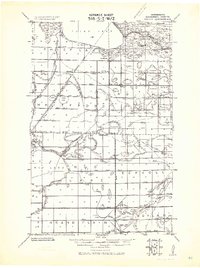 1918 Rollis1918 Print · USGSMarshall County's northern wetlands are documented here just after the war, showing a landscape defined by drainage projects and new settlements. Genealogists can locate family ties at Gatzke, Jonstad, or the Town Hall near Rollis, while tracing the Old Indian Reservation Boundary Line.
 - 1918 Map of Angus
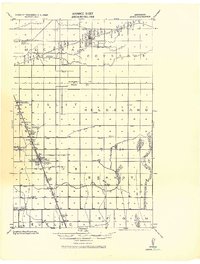 1918 Angus1918 Print · USGSThe Red River Valley's agricultural landscape is documented here during the Great War era, showing a region defined by rail lines and grain elevators. Family historians can trace rural property through schools and specific landmarks like the Lone Elevator and Cem. near Radium.
 - 1918 Map of Pencer
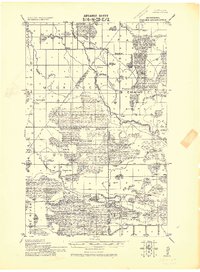 1918 Pencer1918 Print · USGSNorthern Minnesota's borderlands appear in the late nineteen-teens as a landscape of timbered swamps and new drainage districts. Genealogists and local researchers can trace early rural life through scattered settlements like Pencer, Wannaska, and Casperson, or locate the Old Indian Reservation Boundary Line.
 - 1918 Map of Acton
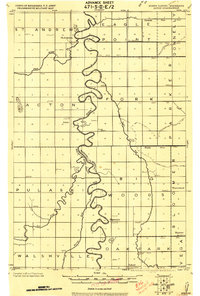 1918 Acton1918 Print · USGSThe Red River Valley's winding borderlands are captured here during the First World War, showing the transition from wild wetlands to managed farmland. Genealogists can trace small settlements and rural schoolhouses like Acton, Bigwoods, and St. Andrews.
 - 1918 Map of Garland
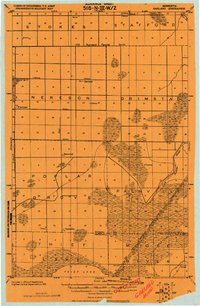 1918 Garland1918 Print · USGSNorthern Minnesota borderlands during the First World War reveal a landscape of drainage ditches and early rural post offices. Genealogists can locate long-vanished sites like P.O. Garland and Homolka P.O. or trace the Old Indian Reservation Boundary Line.
 - 1918 Map of Argyle
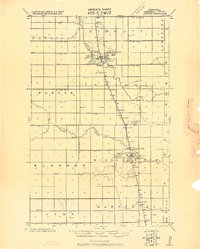 1918 Argyle1918 Print · USGSPrairie life in Marshall County thrives during the late teens as railroads and drainage ditches reshape the land. Genealogists can trace family footprints near Argyle, Stephen, and the Luna elevator, or locate rural landmarks like the Argyle tallest church spire.
 - 1918 Map of Viking, 1943 Print
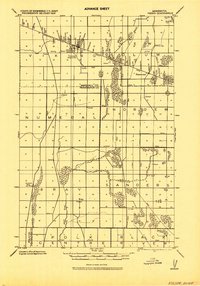 1918 Viking1943 Print · USGSNorthwestern Minnesota at the end of the Great War is captured here as a grid of drainage ditches and emerging rail towns. Genealogists can locate family landmarks including the Cem. near Rosewood, the settlement of Bray, and more than a dozen rural schools.
 - 1918 Map of Greenbush, 1943 Print
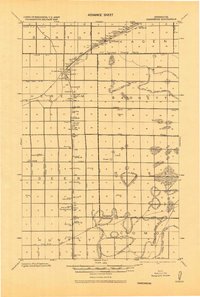 1918 Greenbush1943 Print · USGSNorthern Minnesota farming and drainage districts are captured in the late teens as the Great Northeastern railroad connects Greenbush and Strathcona. Genealogists can trace early homestead life via rural landmarks like School 34, Herb, and the Cem. near the county line.
 - 1918 Map of Warren, 1943 Print
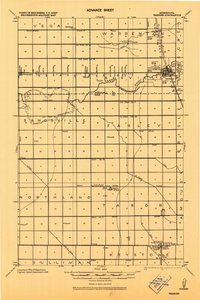 1918 Warren1943 Print · USGSThe northern Minnesota prairie at the end of the Great War was a landscape of pioneering drainage projects and emerging rail towns. Genealogists can trace family footprints through the Warren Courthouse Tower, local School sites, and early grain stops like the Sherack Tall Elevator.
 - 1918 Map of Middle River, 1943 Print
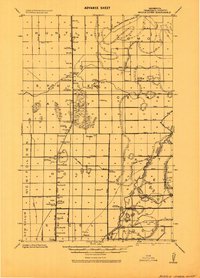 1918 Middle River1943 Print · USGSThe Marshall County plains are shown during a period of intense drainage and development in the early twentieth century. Genealogists and historians can locate early settlements like Holt and Ringbo P.O. or trace the path of the Northern Pacific railroad.
 - 1919 Map of Liner
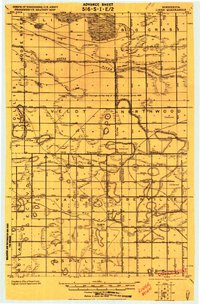 1919 Liner1919 Print · USGSNorthern Minnesota during the drainage era comes into focus on this 1919 survey, showing the extensive ditching projects designed to reclaim the marshlands. Researchers can trace early schools and settlements like Grygla, Randen, and Liner along the Moose River.
 - 1919 Map of Pelan
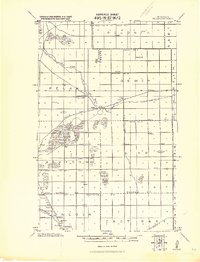 1919 Pelan1919 Print · USGSNorthwestern Minnesota at the close of the Great War was a landscape defined by massive drainage projects. Researchers can trace the early townships of Pelan and Linda, identifying the locations of numerous rural Schools and local hubs like Sanwick.
End of results
Showing maps 1-12 of 12
Top cities of Marshall County
- Warren historical maps
- Stephen historical maps
- Argyle historical maps
- Alvarado historical maps
- Newfolden historical maps
- Oslo historical maps
See more
Frequently asked questions
- What are the different types of historical maps available for Marshall County?
- What is the oldest map of Marshall County?
- Where can I purchase historical maps of Marshall County for my home or office?
- Where can I download high-res historical maps of Marshall County?
- Are there historical topographic maps available for Marshall County?
- Is there historical aerial imagery available for Marshall County?
- Where are historical maps of Marshall County sourced from?