1900s (20th Century) Maps of Powell County, Montana
Explore 128 historic maps of Powell County from the 1900s (20th Century). These maps offer a rare glimpse into what life looked like during the 1900s — showing old roads, neighborhoods, homes, and landmarks that have changed or disappeared over time.
Whether you're researching your family's past, planning a metal detecting trip, or studying how Powell County's landscape evolved across the 1900s, these high-resolution maps are a powerful tool for exploring the history of this region.
- Focus on a specific era: All maps on this page are from the 1900s, giving you a focused view of this time period.
- See what’s changed: Compare century-old streets, trails, and buildings to today's modern landscape using overlays and satellite layers.
- Research with precision: Use these maps for genealogy, historical research, land use analysis, or educational projects.
- View, download, or print: Maps are fully viewable online in high resolution, and can be downloaded or printed for your own records.
Start exploring Powell County's history through authentic maps from the 1900s. This is your window into the past.
Powell County, MT maps
(128)- 1902 Map of Ovando, 1960 Print
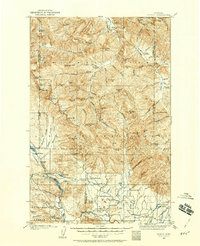 1902 Ovando1960 Print · USGSMontana's mountain ranchlands come into focus at the turn of the century, centered on the valley around Ovando. Genealogists and historians can trace numerous family homesteads and early outposts, including Danaher's Ranch, Woodworth, and Blanchard's Ranch.2 unique versions available
 - 1903 Map of Coopers Lake
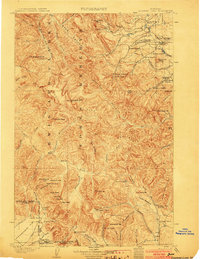 1903 Coopers Lake1903 Print · USGSLewis and Clark and Powell counties are shown at the turn of the century as the high-mountain ranching and mining frontier expanded. Genealogists and researchers can locate family landmarks like Lunds Ranch, Witmer Bros Ranch, and the Klondike Mine.3 unique versions available
 - 1903 Map of Helena
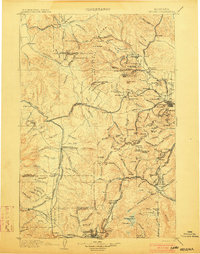 1903 Helena1903 Print · USGSMontana's mining heartland comes alive at the dawn of the new century, from the state capital to the copper-rich summits above the Silver Bow. Trace the early rail lines serving Marysville, locate the historic barracks of Ft. Harrison, and follow the mountain trails through Mullan Pass.4 unique versions available
 - 1905 Map of Ovando
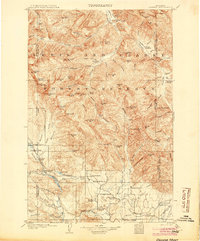 1905 Ovando1905 Print · USGSThe Montana backcountry at the turn of the century is a landscape of isolated homesteads and forest reserves. Researchers can locate early family-owned landmarks like Danaher's Ranch and Jakway's Ranch or trace the early timber works at Logging Camp.2 unique versions available
 - 1908 Map of Philipsburg
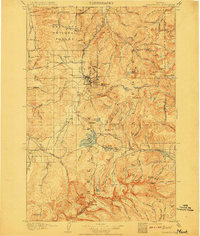 1908 Philipsburg1908 Print · USGSGranite County at the height of its mining era features a landscape shaped by mineral wealth and the high peaks of the Divide. Genealogists and historians can trace industrial roots at Philipsburg, Southern Cross, and the Stamp Mill near Combination.3 unique versions available
 - 1919 Map of Drummond, 1958 Print
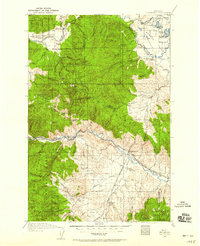 1919 Drummond1958 Print · USGSGranite and Powell counties were at the height of their rail-and-ranching era in the years following the Great War. Researchers can trace the dual paths of the Northern Pacific railroad through Drummond or locate long-standing landmarks like New Chicago and the Sugarloaf School.2 unique versions available
 - 1921 Map of Drummond
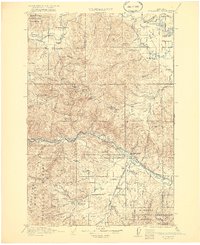 1921 Drummond1921 Print · USGSGranite and Missoula counties are seen here in the years following the Great War, as mining camps and valley ranches defined the local economy. Genealogists can trace family homesteads like Williams Ranch or locate rural landmarks including Sunset School and Garnet.3 unique versions available
 - 1936 Map of Silvertip
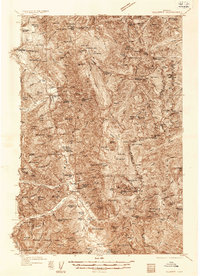 1936 Silvertip1936 Print · USGSThe Flathead National Forest wilderness in the mid-1930s was a land of isolated outposts and early aviation. Researchers can trace the early ranger station network at Spotted Bear Ranger Sta and remote landmarks like Indian Camp or Limestone Cabin.3 unique versions available
 - 1942 Map of Silvertip
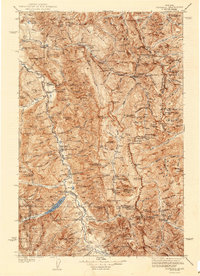 1942 Silvertip1942 Print · USGSThe South Fork of the Flathead River backcountry is captured here in the late thirties, showing a wilderness managed by air and trail. Locate historic outposts like Big Prairie Ranger Sta, early airstrips, and remote cabins such as Limestone Cabin.2 unique versions available
 - 1947 Map of Butte, 1949 Print
 1947 Butte1949 Print · USGSWestern Montana at the peak of its rail-and-river era shows the vital connections between the mining and industrial centers of Butte and Helena. Researchers can trace the three major railroad lines serving mountain settlements like Garrison, Philipsburg, and Warm Springs.2 unique versions available
 - 1954 Map of Basin, 1956 Print
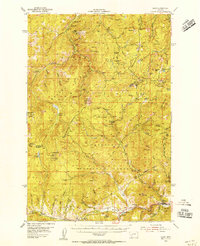 1954 Basin1956 Print · USGSJefferson and Powell Counties were centers of intense mountain industry in the mid-fifties, linked by the GREAT NORTHERN rail line. Researchers can trace dozens of individual lode and placer operations, including the Monarch Mine, Bullion Mine, and the local rail hub at Basin.3 unique versions available
 - 1955 Map of Choteau, 1978 Print
 1955 Choteau1978 Print · USGSWestern Montana during the mid-fifties is captured here as a land of rugged high-country wilderness and vital eastern plains irrigation. Genealogists and historians can locate remote outposts like Condon, the communal Miller Colony, and the rail stops of the Chicago Milwaukee St Paul and Pacific.
 - 1957 Map of Choteau
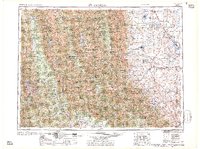 1957 Choteau1957 Print · USGSMontana's mountain front meets the eastern plains in the mid-fifties, showing the transition from forested wilderness to irrigated ranch land. Genealogists and historians can trace the rail lines of the Great Northern and find settlements like Choteau, Augusta, and Seeley Lake.
 - 1958 Map of Butte
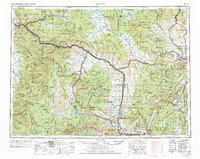 1958 Butte1958 Print · USGSWestern Montana's mining and rail corridors are captured in the late fifties, from the urban bustle of the Copper King cities to high mountain passes. Researchers can trace the path of the Milwaukee St Paul and Pacific through Deer Lodge and locate remote outposts like Potomac Post Office.5 unique versions available
 - 1958 Map of Choteau
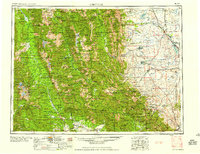 1958 Choteau1958 Print · USGSMontana's front range meets the high wilderness in the late fifties, where the Great Northern railway connects ranching towns to the eastern plains. Researchers can trace the development of irrigation at Bynum Reservoir or locate remote camps like the Big Prairie District Ranger Station and Helmville.2 unique versions available
 - 1958 Map of Avon, 1960 Print
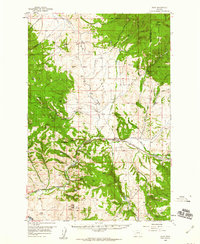 1958 Avon1960 Print · USGSThe Little Blackfoot River valley was a vital transport corridor in the late 1950s, bridging the gap between ranching lands and the high timber of the Helena National Forest. Researchers can trace the legacy of the mining era at Blackfoot City (Ghost Town) and locate landmarks like the Shearing Plant and Lost Cabin.4 unique versions available
 - 1958 Map of Drummond, 1960 Print
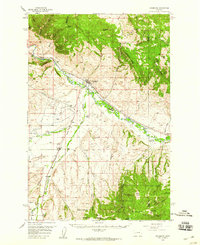 1958 Drummond1960 Print · USGSDrummond and the surrounding Clark Fork valley are captured here in the late fifties, showcasing a critical Montana rail and river corridor. Genealogists and rail historians can trace the paths of the Northern Pacific through settlements like New Chicago and Hall.3 unique versions available
 - 1958 Map of Garrison, 1960 Print
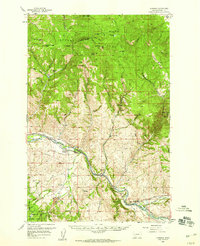 1958 Garrison1960 Print · USGSThe confluence of the Clark Fork and Little Blackfoot River defined this late-fifties Montana rail corridor. Genealogists and historians can trace the legacy of the Northern Pacific through towns like Garrison, find Placer Mines in the gulches, and locate the vanished site of Wall City.3 unique versions available
 - 1959 Map of Deer Lodge, 1961 Print
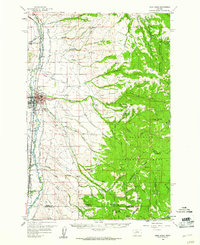 1959 Deer Lodge1961 Print · USGSDeer Lodge and the Clark Fork valley are captured here in the late fifties, showcasing a landscape defined by parallel transcontinental railroads and mountain mining. Genealogists and historians can trace the foundations of Deer Lodge, the State Prison, and isolated settlements like Leadville.2 unique versions available
 - 1959 Map of Elliston, 1961 Print
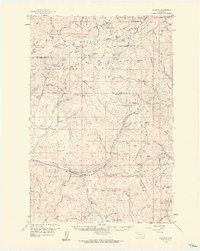 1959 Elliston1961 Print · USGSThe mountain passes of the Continental Divide appear in great detail here in the late fifties as the mining and railroad era evolved. Local historians can trace the Northern Pacific line past Blossburg or locate old operations like the Strawberry Mine and Ophir Cave.3 unique versions available
 - 1960 Map of Butte
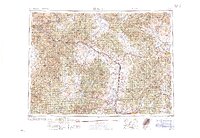 1960 Butte1960 Print · USGSWestern Montana at the dawn of the sixties is defined by its industrial mining hubs and the railroads that connect them. Genealogists and historians can trace the routes of the Milwaukee Road through Butte or locate smaller settlements like Southern Cross and Bearmouth.
 - 1962 Map of Choteau
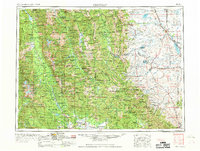 1962 Choteau1962 Print · USGSThe Rocky Mountain Front meets the western plains in the early 1960s, showing a landscape defined by the Continental Divide. Genealogists and researchers can trace the tracks of the Great Northern and find settlements like Choteau, Augusta, and Bynum.
 - 1962 Map of Butte
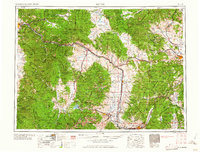 1962 Butte1962 Print · USGSWestern Montana in the early sixties remains a landscape of industrial muscle and high-mountain passes. Trace the rail lines of the Northern Pacific through Deer Lodge and the mining history around Anaconda and Philipsburg.
 - 1965 Map of Chimney Lakes, 1967 Print
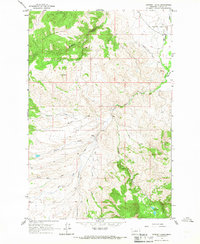 1965 Chimney Lakes1967 Print · USGSPowell County ranchlands and mountain drainages come into focus in this mid-1960s survey of the Montana high country. Researchers can trace historic water rights and land use through the Number Five Ditch and family holdings like W W Ranch and Manley Ranch.
 - 1965 Map of Wild Horse Parks, 1967 Print
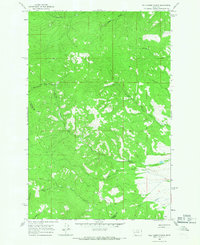 1965 Wild Horse Parks1967 Print · USGSThe high Montana backcountry along the Granite and Powell county line is captured here during the mid-sixties. Researchers and collectors can trace the remote network of Wild Horse Parks and Jeep Trails connecting landmarks like Nelson Spring and a solitary mountain prospect.
Showing maps 1-25 of 128
Top cities of Powell County
Frequently asked questions
- What are the different types of historical maps available for Powell County?
- What is the oldest map of Powell County?
- Where can I purchase historical maps of Powell County for my home or office?
- Where can I download high-res historical maps of Powell County?
- Are there historical topographic maps available for Powell County?
- Is there historical aerial imagery available for Powell County?
- Where are historical maps of Powell County sourced from?