1980s Maps of Wayne County, North Carolina
Explore 12 historic maps of Wayne County from the 1980s. These maps offer a rare glimpse into what life looked like during the 1980s — showing old roads, neighborhoods, homes, and landmarks that have changed or disappeared over time.
Whether you're researching your family's past, planning a metal detecting trip, or studying how Wayne County's landscape evolved across the 1980s, these high-resolution maps are a powerful tool for exploring the history of this region.
- Focus on a specific era: All maps on this page are from the 1980s, giving you a focused view of this time period.
- See what’s changed: Compare century-old streets, trails, and buildings to today's modern landscape using overlays and satellite layers.
- Research with precision: Use these maps for genealogy, historical research, land use analysis, or educational projects.
- View, download, or print: Maps are fully viewable online in high resolution, and can be downloaded or printed for your own records.
Start exploring Wayne County's history through authentic maps from the 1980s. This is your window into the past.
Wayne County, NC maps
(12)- 1980 Map of Seven Springs
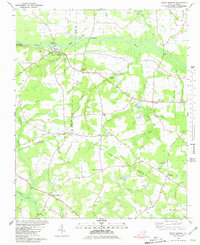 1980 Seven Springs1980 Print · USGSCoastal plain life in eastern North Carolina comes into focus during the late seventies, centered on the oxbows of the Neuse River. Genealogists and historians can trace community roots at Outlaws Bridge, Husseys Crossroads, and the grounds of New Jerusalem Ch.
 - 1980 Map of Williams, 1981 Print
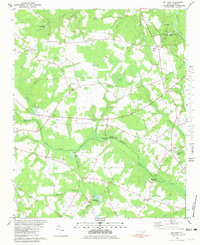 1980 Williams1981 Print · USGSCoastal plain settlements and river bottomlands define this Wayne and Duplin County border region during the early eighties. Genealogists can trace family-named sites like Whitfields Pond or visit historic gathering places such as Indian Springs, Best Chapel, and Spring Creek Sch.2 unique versions available
 - 1982 Map of Jason, 1983 Print
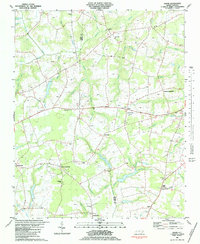 1982 Jason1983 Print · USGSGreene and Wayne counties are shown in the late seventies as a network of crossroads settlements and swamp-fed farmsteads. Genealogists can trace family landmarks and rural congregations like St Johns Ch, Cokers Crossroads, and Lovicks Chapel.2 unique versions available
 - 1982 Map of Southeast Goldsboro, 1983 Print
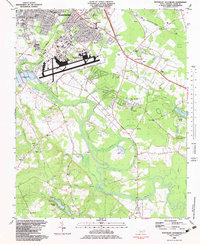 1982 Southeast Goldsboro1983 Print · USGSGoldsboro and its southern outskirts are shown in the early eighties as military and suburban life intersected with the Neuse River lowlands. Researchers can locate numerous local churches and schools like Atkinson Chapel, Holly Green Ch, and Greenwood Sch.2 unique versions available
 - 1983 Map of Northeast Goldsboro
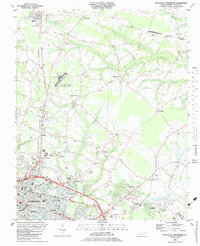 1983 Northeast Goldsboro1983 Print · USGSGoldsboro and its northeastern suburbs are caught in a moment of rapid growth during the early eighties. Genealogists and historians can trace the foundations of Wayne Community College and Wayne Co Mem Hospital, or locate rural landmarks like Musgrave Crossroads and the Pikeville Cem.
 - 1983 Map of La Grange
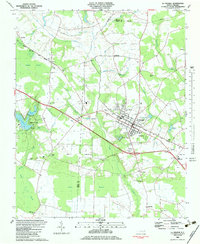 1983 La Grange1983 Print · USGSThe town of La Grange and its surrounding crossroads are captured here in the early eighties. Genealogists and local historians can trace the rural church network, including Jackson Chapel and White Oak Grove Ch, or locate small settlements like Best and Little Baltimore.
 - 1984 Map of Raleigh, 1985 Print
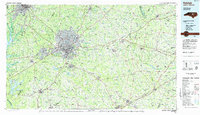 1984 Raleigh1985 Print · USGSThe North Carolina Research Triangle is shown during a decade of rapid growth, from the sprawl of Raleigh to the expanding waters of Falls Lake. Genealogists and historians can trace rail lines like the Seaboard Coast Line or locate landmark sites like Dorothea Dix State Hospital and Fuquay-Varina.
 - 1985 Map of Rocky Mount
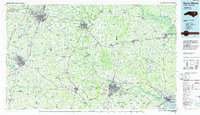 1985 Rocky Mount1985 Print · USGSThe eastern North Carolina coastal plain in the mid-eighties shows a landscape defined by its river-and-rail heritage. Genealogists and local historians can trace the development of Rocky Mount, Greenville, and Wilson, or locate landmarks like East Carolina University and the Voice of America site.2 unique versions available
 - 1985 Map of Kinston
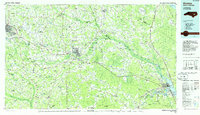 1985 Kinston1985 Print · USGSCoastal plain life and Cold War infrastructure meet in the mid-eighties as the Neuse River winds through agricultural heartlands. Researchers can locate family landmarks like Falling Creek Cem, old milling sites such as Tulls Mill, and the massive Voice of America Radio Towers.2 unique versions available
 - 1986 Map of Newton Grove South
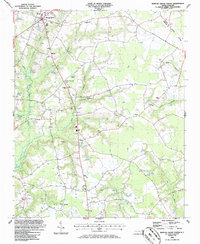 1986 Newton Grove South1986 Print · USGSSampson County in the mid-1980s reveals a rural landscape shaped by ancient watercourses and deep-rooted church communities. Genealogists can trace family footprints through numerous crossroads and landmarks like Monks Crossroads, Hobbton, and Marys Chapel.
 - 1986 Map of Newton Grove North
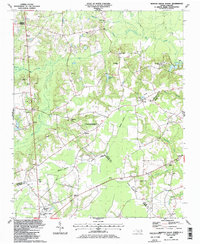 1986 Newton Grove North1986 Print · USGSCoastal Plain farmland meets civil war history in this mid-1980s survey of the Johnston and Sampson county border. Genealogists can trace family landmarks and rural congregations like Strickland Crossroads, Bentonville, and Antioch Ch.
 - 1986 Map of Fayetteville
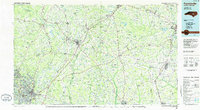 1986 Fayetteville1986 Print · USGSThe North Carolina coastal plain appears in the mid-1980s as a bustling corridor of military installations and historic tobacco towns. Genealogists and historians can trace the footprints of Fort Bragg Military Reservation, Campbell University, and the rail lines of the Seaboard Coast Line RR.2 unique versions available
End of results
Showing maps 1-12 of 12
Top cities of Wayne County
- Goldsboro historical maps
- Mount Olive historical maps
- Fremont historical maps
- Walnut Creek historical maps
- Pikeville historical maps
- Eureka historical maps
See more
Frequently asked questions
- What are the different types of historical maps available for Wayne County?
- What is the oldest map of Wayne County?
- Where can I purchase historical maps of Wayne County for my home or office?
- Where can I download high-res historical maps of Wayne County?
- Are there historical topographic maps available for Wayne County?
- Is there historical aerial imagery available for Wayne County?
- Where are historical maps of Wayne County sourced from?