1940s Maps of McHenry County, North Dakota
Explore 26 historic maps of McHenry County from the 1940s. These maps offer a rare glimpse into what life looked like during the 1940s — showing old roads, neighborhoods, homes, and landmarks that have changed or disappeared over time.
Whether you're researching your family's past, planning a metal detecting trip, or studying how McHenry County's landscape evolved across the 1940s, these high-resolution maps are a powerful tool for exploring the history of this region.
- Focus on a specific era: All maps on this page are from the 1940s, giving you a focused view of this time period.
- See what’s changed: Compare century-old streets, trails, and buildings to today's modern landscape using overlays and satellite layers.
- Research with precision: Use these maps for genealogy, historical research, land use analysis, or educational projects.
- View, download, or print: Maps are fully viewable online in high resolution, and can be downloaded or printed for your own records.
Start exploring McHenry County's history through authentic maps from the 1940s. This is your window into the past.
McHenry County, ND maps
(26)- 1940 Map of Aylmer
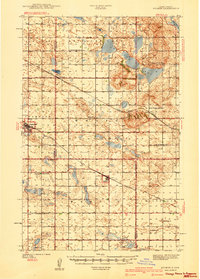 1940 Aylmer1940 Print · USGSPierce and Sheridan Counties come into focus just before the war, showing the peak of the North Dakota rail-and-prairie economy. Genealogists can pinpoint exact locations for family landmarks like Hillsdale Ch, White Sch, and Martin Cem.3 unique versions available
 - 1948 Map of Voltaire, 1955 Print
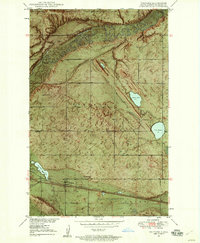 1948 Voltaire1955 Print · USGSThe northern plains of McHenry County come alive in the late 1940s, showing the intersection of the Souris River and the high prairie. Researchers can locate the Hjerdal Ch, rural schoolhouses like Roach Sch, and the rail siding at Voltaire.7 unique versions available
 - 1948 Map of Velva, 1966 Print
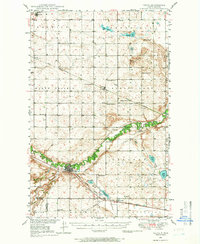 1948 Velva1966 Print · USGSNorth Dakota's prairie landscape comes alive in this post-war survey of McHenry and Ward Counties, where the Souris River dictates the path of early rail and settlement. Genealogists and historians can trace numerous rural landmarks, including Shenkjer Cem, Howe School, and the community of Velva.
 - 1948 Map of Sawyer, 1966 Print
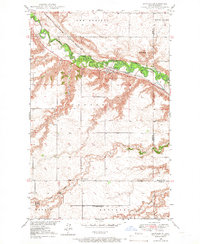 1948 Sawyer1966 Print · USGSNorth Dakota's prairie landscape is defined by the winding Souris River and the rail-driven growth of Sawyer just after the war. Genealogists and local historians can locate the Mennonite Ch, Sawyer Cem, and the old Schilling Bridge.
 - 1948 Map of Newburg SW, 1976 Print
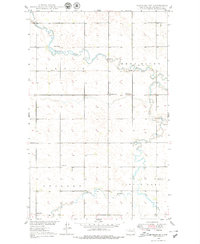 1948 Newburg SW1976 Print · USGSThe rural prairie of McHenry County is captured here just after the war, showing the intricate meanders of the Deep River. Local historians can trace family roots through landmarks like the Lutheran Cem, St Paul Cem, and several early schoolhouses.
 - 1949 Map of Norwich
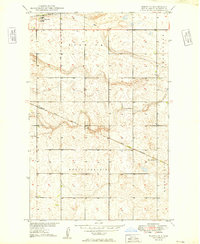 1949 Norwich1949 Print · USGSThe Great Northern railroad cuts through McHenry County in the late 1940s, anchoring a landscape of isolated farmsteads and rural townships. Genealogists and local historians can trace the foundations of this prairie community through landmarks like North Prairie Ch and School No 1.
 - 1949 Map of Granville NE
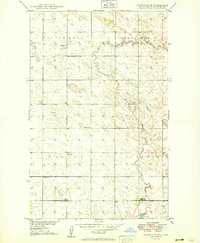 1949 Granville NE1949 Print · USGSMcHenry County farm country at the end of the 1940s reveals a quiet landscape of prairie townships and scattered rural schoolhouses. Genealogists can locate family landmarks such as Barnes Sch, the Saline Ch, and North Lake School No 4.
 - 1949 Map of Sawyer
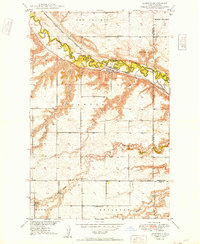 1949 Sawyer1949 Print · USGSNear the mid-century mark, the Souris River valley in Ward County supported a network of rural schools and townships. Genealogists can trace the locations of Roosevelt Sch No 1 and Lignite Sch No 3 or the Mennonite Ch near Sawyer.
 - 1949 Map of Simcoe
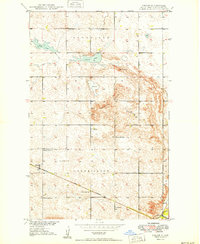 1949 Simcoe1949 Print · USGSMcHenry County in the late 1940s shows a landscape of rail-driven prairie settlements and a dense network of country schools. Genealogists can locate family landmarks like Strenkjer Cem and follow the Great Northern tracks through Simcoe.
 - 1949 Map of Sawyer NE
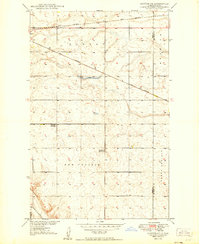 1949 Sawyer NE1949 Print · USGSThe high North Dakota prairie in the late 1940s was a land of expanding railroads and rural school districts. Genealogists and historians can trace the early layout of farming communities via Grassland School No 1, Grassland School No 2, and the Great Northern rail line.
 - 1949 Map of Newburg SW
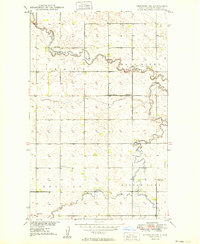 1949 Newburg SW1949 Print · USGSNorth Dakota's McHenry County prairie unfolds in the late 1940s, showing a rural landscape shaped by the Deep River and its tributary coulees. Genealogists and local historians can trace the foundations of the community through sites like Deep River Ch, St Paul Cem, and School No 1.
 - 1949 Map of Velva
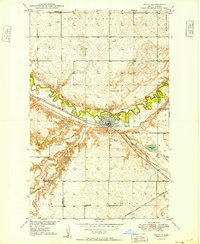 1949 Velva1949 Print · USGSThe Souris River valley in the late 1940s was a critical junction for rail and river transport in McHenry and Ward counties. Researchers can trace the path of the Minneapolis St Paul and Sault Ste Marie railroad and find rural landmarks like Coulee Sch and Potters Lake.2 unique versions available
 - 1949 Map of Deering SE
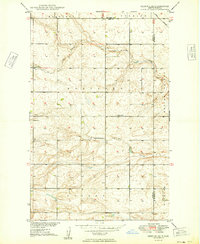 1949 Deering SE1949 Print · USGSNorth Dakota's prairie townships in Ward and McHenry counties are captured here just after the war. Researchers can locate rural landmarks like Baptist Cemetery, School No 1, and the winding Egg Creek.
 - 1949 Map of Voltaire
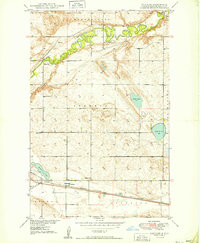 1949 Voltaire1949 Print · USGSMcHenry County at the end of the 1940s shows a landscape of river-bend farms and small-town rail commerce. Genealogists can locate family landmarks like Hjerdal Ch, Westgaard Cem, and rural schoolhouses such as Roach Sch.2 unique versions available
 - 1949 Map of Granville NW
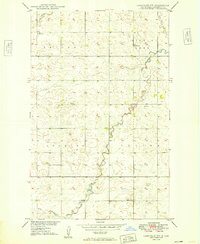 1949 Granville NW1949 Print · USGSMcHenry County at the end of the 1940s reveals a prairie landscape meticulously organized by the Missouri River Basin development program. Genealogists can trace rural community centers including St. Olaf Ch, Saline Cem, and Barton Sch.
 - 1949 Map of Riga
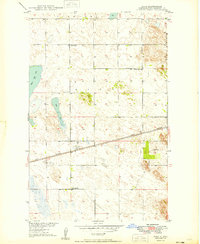 1949 Riga1949 Print · USGSMcHenry County prairie life in the late 1940s is centered on the Great Northern rail line and the small hub of Riga. Researchers can locate several rural schoolhouses and the Thompson Cem among the glacial waters of Buffalo Lake.
 - 1949 Map of Granville SW
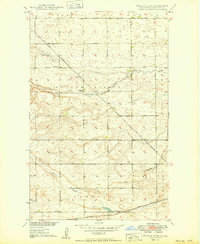 1949 Granville SW1949 Print · USGSMcHenry County is documented here in the late 1940s, showing a landscape of rural schoolhouses and the rail line at Norwich. Genealogists and local historians can locate early community hubs like Rising Ch and family-named features like Kottke Valley.
 - 1949 Map of Karlsruhe NW
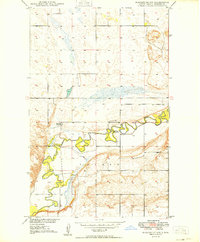 1949 Karlsruhe NW1949 Print · USGSThe North Dakota prairie near the mid-century shows a landscape of winding river bends and rural school districts. Researchers can trace local heritage at Trinity Cem or locate the historic school sites of Oak Valley School No 1 and Oak Valley School No 2.
 - 1949 Map of Eckman SE
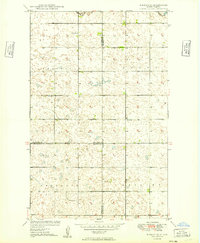 1949 Eckman SE1949 Print · USGSMcHenry County at the close of the 1940s reveals a structured prairie landscape during the Missouri River Basin development era. Genealogists and local historians can locate early rural landmarks like Our Savior Church, School No 1, and the meandering Deep River.2 unique versions available
 - 1949 Map of Eckman
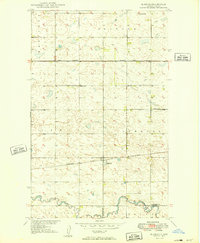 1949 Eckman1949 Print · USGSNear the border of Bottineau and McHenry counties in the late 1940s, this prairie landscape highlights a vital rail junction. Genealogists can locate rural landmarks like Betania Ch, Riverside Cem, and the intersection of two major western railroads at Eckman.
 - 1949 Map of Deering
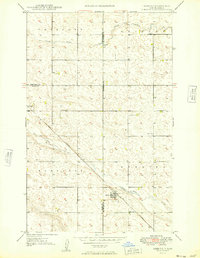 1949 Deering1949 Print · USGSDeering and the surrounding prairie were firmly established agricultural hubs by the late 1940s. Genealogists and researchers can trace the diagonal route of the Great Northern railroad and locate historical sites like Nidarose Ch and Bethel Cem.2 unique versions available
 - 1949 Map of Granville
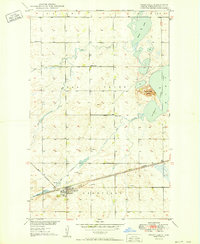 1949 Granville1949 Print · USGSGranville and the surrounding McHenry County prairie are captured here in the late 1940s, centered on the railroad and local water systems. Genealogists and researchers can locate several numbered schoolhouses and family-landmarked features like Granville Cem and the prominent Buffalo Lodge Butte.2 unique versions available
 - 1949 Map of Sawyer, 1959 Print
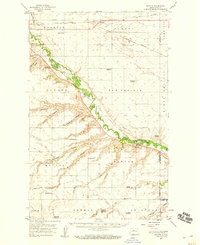 1949 Sawyer1959 Print · USGSWard County in the late 1940s was defined by the winding Souris River and a robust network of rural schoolhouses and railroads. Family historians can trace local landmarks like Black Butte, search for ancestors at Sawyer Cem, and locate early community hubs like Bell Sch No 2.
 - 1949 Map of Kramer, 1976 Print
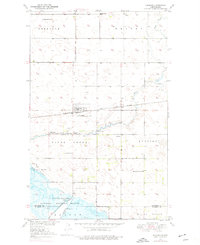 1949 Kramer1976 Print · USGSThe Bottineau County prairie around the middle of the twentieth century was a landscape of remote schoolhouses and vital rail connections. Researchers can locate the Kramer Cem, trace the Minneapolis St Paul and Sault Ste Marie tracks, and explore the river bottoms of the J Clark Salyer National Wildlife Refuge.
 - 1949 Map of Denbigh, 1977 Print
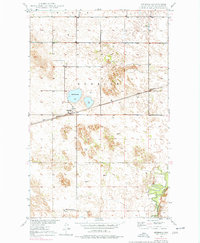 1949 Denbigh1977 Print · USGSMcHenry County, North Dakota, is documented here in the late 1940s as rural life centered on the rail line and township schoolhouses. Genealogists and local historians can trace the foundations of Denbigh and find the site of Wintering Sch No 1 near the Souris River.2 unique versions available
Showing maps 1-25 of 26
Top cities of McHenry County
- Velva historical maps
- Towner historical maps
- Drake historical maps
- Anamoose historical maps
- Granville historical maps
- Upham historical maps
See more
Frequently asked questions
- What are the different types of historical maps available for McHenry County?
- What is the oldest map of McHenry County?
- Where can I purchase historical maps of McHenry County for my home or office?
- Where can I download high-res historical maps of McHenry County?
- Are there historical topographic maps available for McHenry County?
- Is there historical aerial imagery available for McHenry County?
- Where are historical maps of McHenry County sourced from?