1950s Maps of Tillman County, Oklahoma
Explore 11 historic maps of Tillman County from the 1950s. These maps offer a rare glimpse into what life looked like during the 1950s — showing old roads, neighborhoods, homes, and landmarks that have changed or disappeared over time.
Whether you're researching your family's past, planning a metal detecting trip, or studying how Tillman County's landscape evolved across the 1950s, these high-resolution maps are a powerful tool for exploring the history of this region.
- Focus on a specific era: All maps on this page are from the 1950s, giving you a focused view of this time period.
- See what’s changed: Compare century-old streets, trails, and buildings to today's modern landscape using overlays and satellite layers.
- Research with precision: Use these maps for genealogy, historical research, land use analysis, or educational projects.
- View, download, or print: Maps are fully viewable online in high resolution, and can be downloaded or printed for your own records.
Start exploring Tillman County's history through authentic maps from the 1950s. This is your window into the past.
Tillman County, OK maps
(11)- 1950 Map of Snyder, 1953 Print
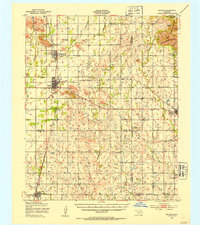 1950 Snyder1953 Print · USGSKiowa and Tillman Counties come into focus during the early fifties, showing a landscape where the granite peaks of the Wichita Mountains meet the Oklahoma prairie. Genealogists can locate numerous rural landmarks like Richland Sch, Maple Grove Ch, and the Oklahoma Cem.2 unique versions available
 - 1955 Map of Lawton, 1958 Print
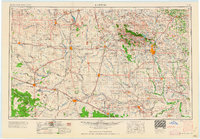 1955 Lawton1958 Print · USGSSouthwestern Oklahoma and North Texas are shown here in the mid-fifties, dominated by the Wichita Mountains and the vital Red River watershed. Genealogists and historians can trace the foundations of Lawton alongside rural landmarks like Rainy Mountain Church and Pleasant Hill School.5 unique versions available
 - 1956 Map of Post Oak Creek, 1959 Print
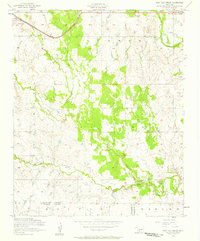 1956 Post Oak Creek1959 Print · USGSSouthwestern Oklahoma's agricultural and mission history comes into focus in the mid-1950s near the Comanche and Tillman county line. Researchers can trace the St Louis - San Francisco rail corridor and find the Nazarene (Indian) Mission near Indiahoma.2 unique versions available
 - 1956 Map of Manitou, 1959 Print
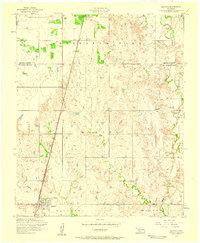 1956 Manitou1959 Print · USGSIn the Oklahoma plains during the mid-fifties, Manitou stood as a key rail stop along the St Louis San Francisco line. Genealogists and local historians can trace the rural landscape across the Kiowa and Tillman County line to find Deep Red Cemetery and the winding course of Deep Red Creek.
 - 1956 Map of Indiahoma, 1959 Print
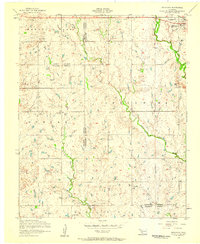 1956 Indiahoma1959 Print · USGSIndiahoma and the surrounding southwestern Oklahoma prairies are captured here in the mid-1950s, a landscape defined by seasonal creeks and rural community centers. Genealogists can trace family roots through the Indiahoma IOOF Cemetery, Post Oak Mission School, and North Deep Red Church.2 unique versions available
 - 1956 Map of Cache, 1960 Print
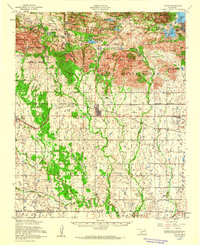 1956 Cache1960 Print · USGSSouthwestern Oklahoma at the peak of the mid-century era shows a landscape defined by federal land reserves and rural rail towns. Researchers can trace family history at the Deyo Memorial Chapel or explore the early footprints of Cache and Indiahoma.3 unique versions available
 - 1956 Map of Snyder, 1960 Print
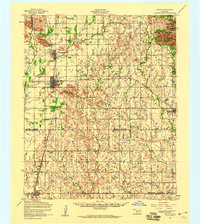 1956 Snyder1960 Print · USGSSouthwestern Oklahoma's agricultural and mountain landscapes meet in the mid-1950s as the rail lines connect growing prairie towns. Researchers can locate family sites at Sopefield Cemetery, Oak Mission School, or the rural Pilgrim Church.
 - 1957 Map of Burkburnett, 1958 Print
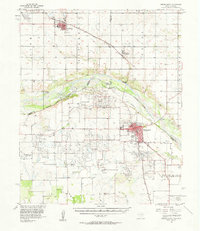 1957 Burkburnett1958 Print · USGSThe Red River valley in the late fifties was a bustling corridor of oil production and rail transport. Genealogists and historians can trace the foundations of Burkburnett and Grandfield, finding old sites like Clara Ch and the Red River Oil Field.
 - 1958 Map of Davidson, 1959 Print
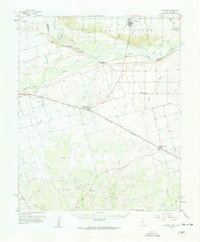 1958 Davidson1959 Print · USGSThe Red River border between Oklahoma and Texas comes alive in this mid-century survey of the river's confluence with the Pease River. Researchers can trace the path of the Fort Worth and Denver (Burlington) rail line through Oklaunion and Harrold or locate rural landmarks like Sharp Gin and Immanuel Ch.2 unique versions available
 - 1958 Map of Frederick, 1959 Print
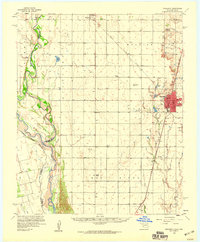 1958 Frederick1959 Print · USGSAcross the Tillman County plains in the late fifties, the landscape was defined by the transition from agriculture to oil. Researchers can trace the rail corridors of the Missouri Kansas Texas or locate local centers like Middick Store and Tesca Ch.
 - 1958 Map of Electra, 1959 Print
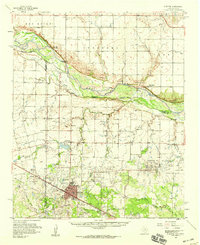 1958 Electra1959 Print · USGSThe Texas-Oklahoma borderlands thrived during the late 1950s as the petroleum industry reshaped the North Texas prairie around Electra. Genealogists and historians can trace the foundations of local communities through landmarks like Haynesville (Punkin Center), Antioch Ch, and the site of Fort Augur.
End of results
Showing maps 1-11 of 11
Top cities of Tillman County
- Frederick historical maps
- Grandfield historical maps
- Tipton historical maps
- Davidson historical maps
- Manitou historical maps
- Hollister historical maps
See more
Frequently asked questions
- What are the different types of historical maps available for Tillman County?
- What is the oldest map of Tillman County?
- Where can I purchase historical maps of Tillman County for my home or office?
- Where can I download high-res historical maps of Tillman County?
- Are there historical topographic maps available for Tillman County?
- Is there historical aerial imagery available for Tillman County?
- Where are historical maps of Tillman County sourced from?