Old Maps of Callahan County, Texas for Genealogy
Trace your family roots with 194 historic maps of Callahan County. These high-res maps reveal old neighborhoods, homesites, landmarks, and streets — helping you uncover where your ancestors lived and how the area evolved over time.
- Explore historic neighborhoods: Identify where your relatives may have lived in the 1800s or 1900s.
- Compare maps over time: Trace the changes in streets, buildings, and landmarks for multi-generational research.
- Perfect for genealogy & ancestry research: Used by family historians and researchers to map out lineage and migration.
These maps are an incredible resource for exploring your personal connection to Callahan County's past.
Callahan County, TX maps
(194)- 1890 Map of Abilene, 1955 Print
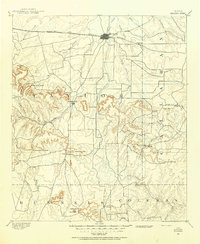 1890 Abilene1955 Print · USGSWest Texas ranching country and rail settlements come alive in the 1890s as the railroad transforms the prairie. Genealogists can trace early homesteads near Buffalo Gap or follow the Texas and Pacific Railway through Abilene and Elmdale.
 - 1891 Map of Anson
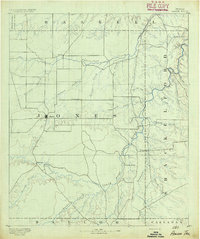 1891 Anson1891 Print · USGSJones County was still a frontier of small settlements and river crossings in the early 1890s. Genealogists and researchers can trace the early footprints of Anson alongside forgotten locales like Sandersville, Phantom Hill, and Rising Sun.
 - 1892 Map of Abilene
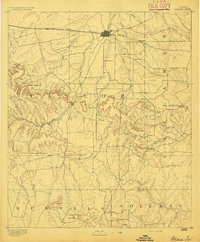 1892 Abilene1892 Print · USGSTaylor and Callahan counties were transitioning into a major rail and ranching corridor during the 1890s. Genealogical researchers can locate early frontier settlements like Buffalo Gap and Guion, or trace the path of the Texas and Pacific Railway.5 unique versions available
 - 1892 Map of Albany
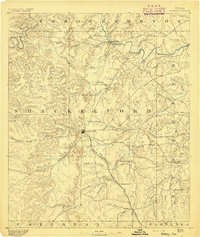 1892 Albany1892 Print · USGSShackelford County in the late 1880s was a landscape of emerging rail lines and river outposts. Local historians can trace the early path of the Texas Central Railroad through Albany and locate early landmarks like Fort Griffen and Mankins Mill.
 - 1893 Map of Albany
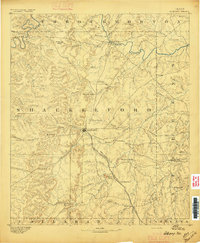 1893 Albany1893 Print · USGSShackelford County and the surrounding cattle country are captured in the late nineteenth century during the expansion of the Texas Central Railroad. Researchers can locate the frontier site of Fort Griffen, early schools like Shady Grove Ch., and the milling operations at Mankins Mill.5 unique versions available
 - 1893 Map of Anson
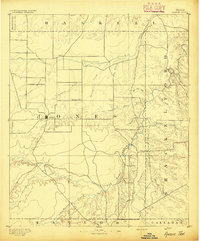 1893 Anson1893 Print · USGSCentral West Texas in the early 1890s shows a landscape of cattle ranches and early outposts. Genealogists can locate family-named settlements like Sandersville and Newsom or trace the early community at Phantom Hill.5 unique versions available
 - 1931 Map of Baird
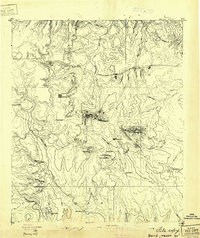 1931 Baird1931 Print · USGSCallahan County ranching and rail life are documented here in the early twentieth century. Genealogists and local historians can trace the foundations of Baird, the Rough Creek P.O., and distinctive landmarks like Caddo Peak and Round Mt.
 - 1932 Map of Baird
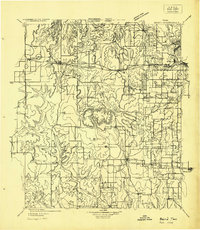 1932 Baird1932 Print · USGSCallahan and Eastland counties appear in the early 1930s, showing the region's transition into the oil and highway era. Genealogists can locate family homes near Belle Plain, Oak Ridge School, and along the Missouri Kansas & Texas railroad.
 - 1954 Map of Abilene, 1966 Print
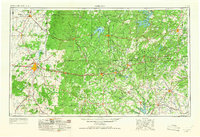 1954 Abilene1966 Print · USGSThe Texas Big Country comes into focus in the mid-1950s as petroleum and new water projects reshape the landscape. Local historians can trace the Butterfield Trail, find the Fort Phantom Hill Ruins, and locate numerous small communities along the Texas & Pacific line.2 unique versions available
 - 1957 Map of Kirby Lake, 1958 Print
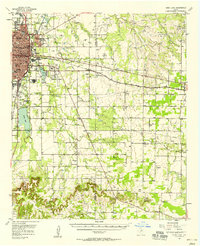 1957 Kirby Lake1958 Print · USGSAbilene was expanding toward the eastern oil fields and southern ranch lands in the late fifties. Genealogists can trace family names at the Potosi Cem and Eula Cem, or locate earlier rural landmarks like the Denton Sch (Aban'd) and Potosi Sch (Aban'd).2 unique versions available
 - 1957 Map of Abilene East, 1958 Print
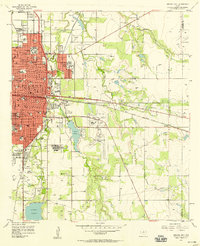 1957 Abilene East1958 Print · USGSAbilene emerges as a flourishing West Texas educational and medical center in the mid-fifties. Researchers can trace the footprints of Hardin-Simmons University, the old Airport (Aban'd), and the grounds of the West Texas Fairground.4 unique versions available
 - 1957 Map of Nugent, 1958 Print
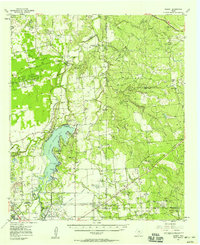 1957 Nugent1958 Print · USGSThe West Texas ranchlands and oil fields of Jones and Taylor counties are captured here in the late fifties. Genealogists and local historians can trace the foundations of Hamby, the Fort Phantom Hill ruins, and family landmarks like the Davis Ranch.
 - 1957 Map of Hamby, 1958 Print
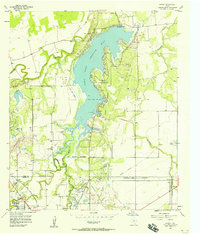 1957 Hamby1958 Print · USGSThe West Texas plains northeast of Abilene are captured here in the late fifties as water infrastructure transformed the landscape. Trace the shores of Lake Fort Phantom Hill and find local landmarks like the Drive-in Theater and the community of Hamby.4 unique versions available
 - 1958 Map of Abilene
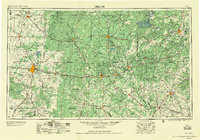 1958 Abilene1958 Print · USGSMid-century West Texas comes alive in this survey of the Abilene and Stephenville region during a period of steady oil expansion and military growth. Genealogists and local historians can trace the paths of the Texas & Pacific RR through historic towns, locate the Fort Griffin Ruins, and find smaller settlements like Desdemona and Lueders.
 - 1960 Map of Cross Cut, 1962 Print
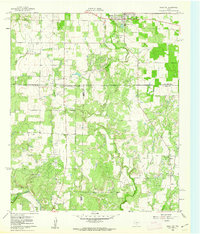 1960 Cross Cut1962 Print · USGSMid-century Texas oil and ranching land come into focus here during the early 1960s. Genealogists and industrial historians can trace the Old Railroad Grade or locate family sites near Dressy Cem and the small community of Cross Cut.2 unique versions available
 - 1960 Map of Webbville, 1962 Print
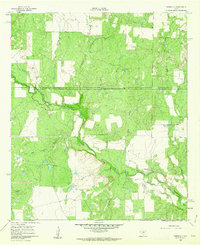 1960 Webbville1962 Print · USGSThe West Texas landscape at the start of the 1960s reveals a region defined by cattle country and petroleum extraction. Trace local history through the Anzah Morris Oil Field, the settlement of Webbville, and the Adams Cem along the disputed county line.2 unique versions available
 - 1960 Map of Crooked Creek, 1962 Print
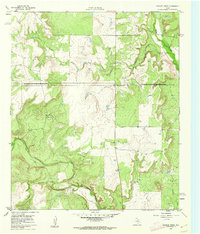 1960 Crooked Creek1962 Print · USGSTexas ranching and oil country come to life in the early 1960s along the winding paths of Jim Ned Creek and Crooked Creek. Researchers can trace old property lines across the 1885 county boundary survey while locating numerous Oil Wells and a Quarry in the hills near Ranger.2 unique versions available
 - 1965 Map of Snyder Lake, 1967 Print
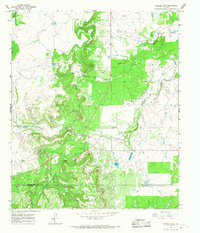 1965 Snyder Lake1967 Print · USGSThe Shackelford and Callahan county line in the mid-1960s is characterized by an active petroleum economy and ranching lands. Researchers can trace the extensive OIL FIELD operations and natural water features like Snyder Lake and Hubbard Creek.2 unique versions available
 - 1965 Map of Indian Knoll, 1967 Print
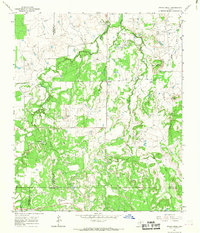 1965 Indian Knoll1967 Print · USGSThe West Texas rangelands at the crossroads of Stephens and Eastland counties come into focus in the mid-1960s. Genealogists and researchers can trace family-named sites like Graves and explore the industrial footprint of Eureka and the Compressor Sta.
 - 1965 Map of Moran, 1968 Print
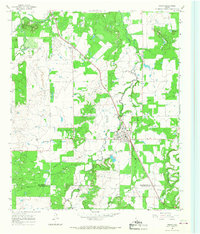 1965 Moran1968 Print · USGSThe West Texas landscape around the Shackelford and Callahan county line is captured here in the mid-1960s, showing a region defined by petroleum and rail. Researchers can trace the Missouri Kansas Texas line, the Oil Field at Sedwick, and old burial grounds like Johnson Cem.
 - 1965 Map of Leeper Creek, 1968 Print
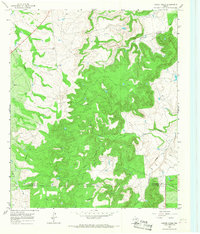 1965 Leeper Creek1968 Print · USGSThe West Texas ranchlands on the Shackelford and Callahan county line are captured here in the mid-1960s. Genealogists and researchers can trace early energy development through numerous Oil Wells and pipelines near Leeper Creek and Deadman Draw.2 unique versions available
 - 1966 Map of Scranton, 1969 Print
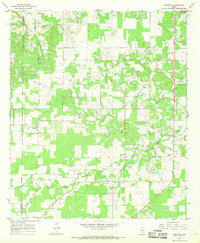 1966 Scranton1969 Print · USGSAcross the Eastland County ranchlands in the mid-1960s, rural life centered on small communities and family burial grounds. Researchers can trace local lineages at Pisgah Cem and Haskell Cem or explore the early settlements of Scranton and Nimrod.2 unique versions available
 - 1966 Map of Putnam South, 1969 Print
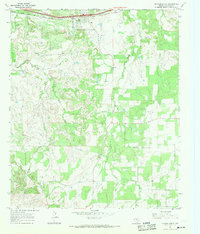 1966 Putnam South1969 Print · USGSCallahan County's rural landscape is defined by the energy and rail industries in the mid-1960s. Genealogists and researchers can trace the settlement at Putnam, locate remote Oil Wells, and follow the path of the Texas and Pacific railroad.2 unique versions available
 - 1966 Map of Baird, 1969 Print
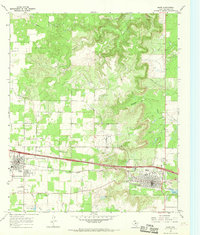 1966 Baird1969 Print · USGSCallahan County's rail and road corridor comes into focus in the 1960s as INTERSTATE 20 parallels the Texas and Pacific line. Genealogists and local historians can trace the foundations of Clyde and Baird, locating the St Joachim Cem and the community Rodeo Ground.2 unique versions available
 - 1966 Map of Bernie Lake, 1969 Print
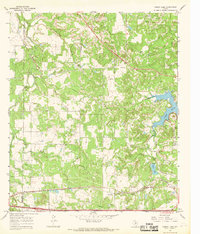 1966 Bernie Lake1969 Print · USGSThe West Texas borderlands of Callahan and Eastland Counties are shown here during the mid-sixties, dominated by a network of creeks and early industrial infrastructure. Researchers can trace the Texas and Pacific line, locate Dothan Cem, and explore the shoreline of Lake Cisco.
Showing maps 1-25 of 194
Top cities of Callahan County
Frequently asked questions
- What are the different types of historical maps available for Callahan County?
- What is the oldest map of Callahan County?
- Where can I purchase historical maps of Callahan County for my home or office?
- Where can I download high-res historical maps of Callahan County?
- Are there historical topographic maps available for Callahan County?
- Is there historical aerial imagery available for Callahan County?
- Where are historical maps of Callahan County sourced from?