Old Maps of Eastland County, Texas for Genealogy
Trace your family roots with 173 historic maps of Eastland County. These high-res maps reveal old neighborhoods, homesites, landmarks, and streets — helping you uncover where your ancestors lived and how the area evolved over time.
- Explore historic neighborhoods: Identify where your relatives may have lived in the 1800s or 1900s.
- Compare maps over time: Trace the changes in streets, buildings, and landmarks for multi-generational research.
- Perfect for genealogy & ancestry research: Used by family historians and researchers to map out lineage and migration.
These maps are an incredible resource for exploring your personal connection to Eastland County's past.
Eastland County, TX maps
(173)- 1890 Map of Stephenville
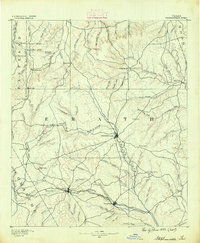 1890 Stephenville1890 Print · USGSErath County at the close of the frontier era centers on the rising trade hub of Stephenville and its surrounding hill country. Researchers can trace the original Texas Central Railroad corridor through Dublin and find vanished locales like Duffau Wells.5 unique versions available
 - 1890 Map of Breckenridge
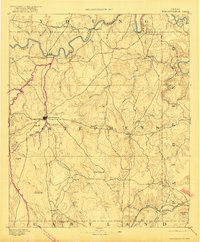 1890 Breckenridge1890 Print · USGSStephens County was a landscape of budding settlements and cattle country in the late nineteenth century. Genealogists can trace early homesteads near Breckenridge or follow the Texas and Pacific R.R. past peaks like Steal Easy Mt. and Gunsight Mt..6 unique versions available
 - 1891 Map of Palo Pinto
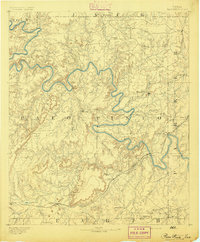 1891 Palo Pinto1891 Print · USGSNorth Texas in the late nineteenth century was a landscape of winding river bends and emerging coal towns. Genealogists and historians can trace early river crossings at Oaks Ferry, the path of the Texas and Pacific Railroad, and the Coal Mines at Coalville.7 unique versions available
 - 1892 Map of Albany
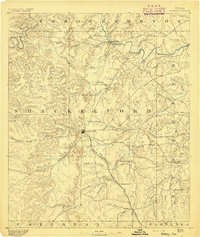 1892 Albany1892 Print · USGSShackelford County in the late 1880s was a landscape of emerging rail lines and river outposts. Local historians can trace the early path of the Texas Central Railroad through Albany and locate early landmarks like Fort Griffen and Mankins Mill.
 - 1893 Map of Albany
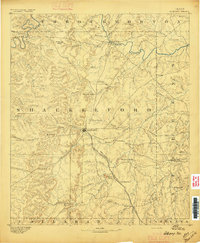 1893 Albany1893 Print · USGSShackelford County and the surrounding cattle country are captured in the late nineteenth century during the expansion of the Texas Central Railroad. Researchers can locate the frontier site of Fort Griffen, early schools like Shady Grove Ch., and the milling operations at Mankins Mill.5 unique versions available
 - 1894 Map of Eastland
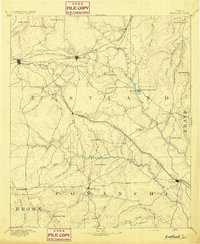 1894 Eastland1894 Print · USGSEastland County and its neighbors are captured here in the late nineteenth century during the expansion of the rail-and-ranching economy. Researchers can locate early town sites like Desdimonia and Merriman or trace the Texas Central Railroad through Carbon.6 unique versions available
 - 1918 Map of Palo Pinto
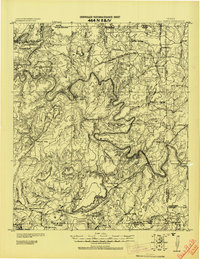 1918 Palo Pinto1918 Print · USGSPalo Pinto County and the Brazos River valley appear here in the final year of the Great War, showing a landscape shaped by coal and steam. Genealogists and historians can locate defunct river crossings like Oaks Ferry, early rural education at Marsden School, and the extensive Coal Mines that once powered the regional economy.
 - 1920 Map of Stephenville
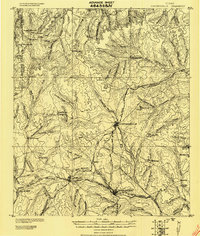 1920 Stephenville1920 Print · USGSErath County thrived at the intersection of three major railroads during the early twentieth century. Genealogists and historians can trace the foundations of Stephenville and Dublin, alongside rural landmarks like Morgan Mill and Tanner School.
 - 1931 Map of Baird
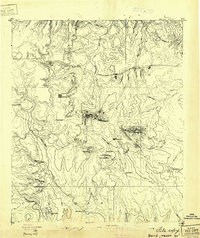 1931 Baird1931 Print · USGSCallahan County ranching and rail life are documented here in the early twentieth century. Genealogists and local historians can trace the foundations of Baird, the Rough Creek P.O., and distinctive landmarks like Caddo Peak and Round Mt.
 - 1932 Map of Baird
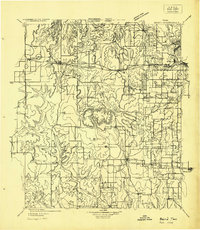 1932 Baird1932 Print · USGSCallahan and Eastland counties appear in the early 1930s, showing the region's transition into the oil and highway era. Genealogists can locate family homes near Belle Plain, Oak Ridge School, and along the Missouri Kansas & Texas railroad.
 - 1954 Map of Abilene, 1966 Print
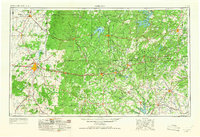 1954 Abilene1966 Print · USGSThe Texas Big Country comes into focus in the mid-1950s as petroleum and new water projects reshape the landscape. Local historians can trace the Butterfield Trail, find the Fort Phantom Hill Ruins, and locate numerous small communities along the Texas & Pacific line.2 unique versions available
 - 1958 Map of Abilene
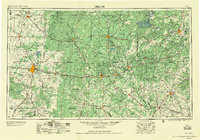 1958 Abilene1958 Print · USGSMid-century West Texas comes alive in this survey of the Abilene and Stephenville region during a period of steady oil expansion and military growth. Genealogists and local historians can trace the paths of the Texas & Pacific RR through historic towns, locate the Fort Griffin Ruins, and find smaller settlements like Desdemona and Lueders.
 - 1959 Map of Gordon, 1960 Print
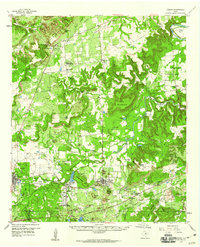 1959 Gordon1960 Print · USGSThe Palo Pinto hills in the late fifties show a landscape defined by the Texas and Pacific railroad and active coal and oil extraction. Local researchers can trace the locations of family burial sites like Thurber Cem and landmarks like Metcalf Gap.2 unique versions available
 - 1965 Map of Huckabay SW, 1967 Print
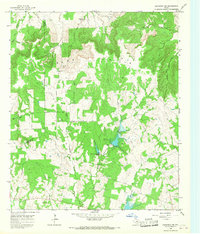 1965 Huckabay SW1967 Print · USGSErath County's ranching landscape is captured here in the mid-sixties, showing the rugged drainage basins of the Blue Hills. Genealogists and historians can locate old family burial sites like Old School Hill Cem, School Hill Cem, and Lowell Cem.
 - 1965 Map of Reddy Mountain, 1967 Print
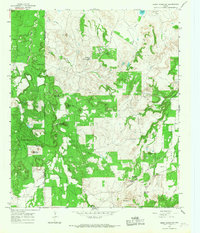 1965 Reddy Mountain1967 Print · USGSThe Erath and Eastland County line in the mid-1960s shows a landscape balancing cattle country with natural gas extraction. Genealogists and historians can locate rural burial grounds like Tudor Cem or trace the industrial footprint of the X Ray Gas Field and the Old Railroad Grade.
 - 1965 Map of Indian Knoll, 1967 Print
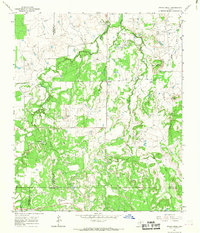 1965 Indian Knoll1967 Print · USGSThe West Texas rangelands at the crossroads of Stephens and Eastland counties come into focus in the mid-1960s. Genealogists and researchers can trace family-named sites like Graves and explore the industrial footprint of Eureka and the Compressor Sta.
 - 1966 Map of Sipe Springs, 1968 Print
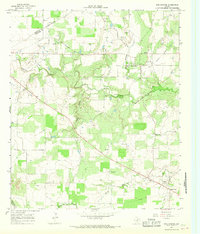 1966 Sipe Springs1968 Print · USGSSipe Springs and the surrounding Comanche County cattle and oil country are captured here in the mid-1960s. Researchers can trace the path of an Old Railroad Grade or locate family sites at Parker Cem and Sipe Springs Cem.2 unique versions available
 - 1966 Map of Rising Star, 1968 Print
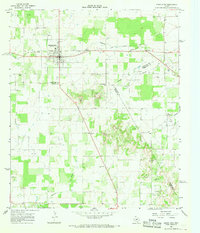 1966 Rising Star1968 Print · USGSCentral Texas during the mid-sixties reveals a landscape of petroleum development and small crossroads settlements. Genealogists and historians can trace the Old Railroad Grade and locate local landmarks like Wolf Valley Ch and Amity.
 - 1966 Map of Cisco North, 1969 Print
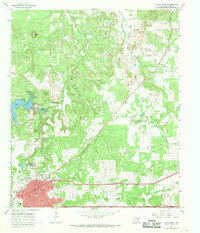 1966 Cisco North1969 Print · USGSCisco and the surrounding Eastland County terrain are shown here in the mid-1960s as oil production and new educational institutions reshaped the local landscape. Researchers can trace family history at Oakwood Cem or explore the mid-century industrial footprint of the Bankline Oil Field and the local Clay Pits.2 unique versions available
 - 1966 Map of Kokomo, 1969 Print
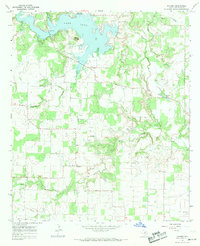 1966 Kokomo1969 Print · USGSEastland County rural life in the mid-sixties is centered on the recently created LAKE LEON and the small settlement of Kokomo. Researchers can trace old family burial sites like Providence Cem and Fredonia Cem or locate early petroleum infrastructure and the M-K-T railroad line.
 - 1966 Map of Desdemona, 1969 Print
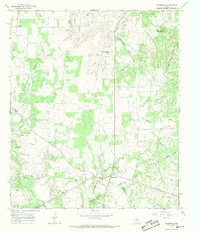 1966 Desdemona1969 Print · USGSDesdemona and the surrounding ranch lands of Eastland and Erath counties appear here in the mid-sixties as the local oil and gas industry matured. Genealogists and historians can trace the Old Railroad Grade, locate the Howard Cem, and find old landmarks like Mockingbird Hill.
 - 1966 Map of Carbon, 1969 Print
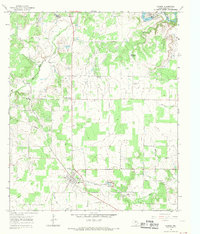 1966 Carbon1969 Print · USGSCarbon and the surrounding Eastland County countryside are captured here in the mid-sixties as the local energy and rail economy shifted. Trace family roots at Murry Memorial Cem or follow the OLD RAILROAD GRADE through Punkin Center and Mangum.
 - 1966 Map of Scranton, 1969 Print
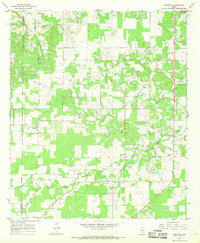 1966 Scranton1969 Print · USGSAcross the Eastland County ranchlands in the mid-1960s, rural life centered on small communities and family burial grounds. Researchers can trace local lineages at Pisgah Cem and Haskell Cem or explore the early settlements of Scranton and Nimrod.2 unique versions available
 - 1966 Map of Bear Mountain, 1969 Print
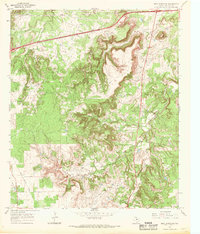 1966 Bear Mountain1969 Print · USGSEastland County during the mid-sixties shows a landscape of deep canyons and growing energy infrastructure. Genealogists and historians can trace the Old Railroad Grade and locate old Oil Wells near Bear Mountain.2 unique versions available
 - 1966 Map of Eastland, 1969 Print
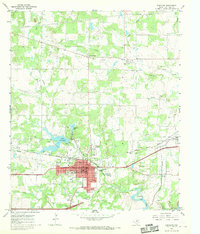 1966 Eastland1969 Print · USGSEastland and the surrounding Texas oil fields are captured here during the mid-sixties at a peak of petroleum and rail activity. Researchers can trace the Old RR Grade and find local landmarks like Pleasant Grove Cem and Lake Brelsford.2 unique versions available
Showing maps 1-25 of 173
Top cities of Eastland County
- Eastland historical maps
- Cisco historical maps
- Ranger historical maps
- Gorman historical maps
- Rising Star historical maps
- Olden historical maps
See more
Frequently asked questions
- What are the different types of historical maps available for Eastland County?
- What is the oldest map of Eastland County?
- Where can I purchase historical maps of Eastland County for my home or office?
- Where can I download high-res historical maps of Eastland County?
- Are there historical topographic maps available for Eastland County?
- Is there historical aerial imagery available for Eastland County?
- Where are historical maps of Eastland County sourced from?