Old Maps of Parmer County, Texas for Academic Research
Study the evolution of Parmer County with 126 high-resolution historic maps. Whether you're teaching, researching, or modeling changes in land use, these maps provide essential visual documentation of urban, environmental, and geographic change.
- Analyze long-term change: Track patterns in development, transportation, and natural features.
- Ideal for environmental or urban studies: Support academic projects with primary historical map data.
- Use in the classroom or lab: Educators and researchers rely on these maps to bring historical context to life.
These maps are a powerful tool for teaching, research, and visualizing how Parmer County has changed over the decades.
Parmer County, TX maps
(126)- 1954 Map of Clovis, 1966 Print
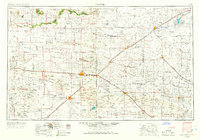 1954 Clovis1966 Print · USGSThe High Plains of the Texas-New Mexico borderland come alive in this mid-century survey as the region's agricultural and rail networks reached their peak. Trace family roots and local history through features like Cannon AFB, the massive Sand Hills, and busy rail towns such as Friona and Littlefield.4 unique versions available
 - 1957 Map of Clovis, 1958 Print
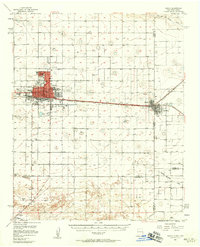 1957 Clovis1958 Print · USGSThe High Plains railroad hub of Clovis is captured here in the mid-fifties at the peak of its rail-era importance. Genealogists and researchers can trace the growth of the border towns of Texico and Farwell or locate landmarks like Lawn Haven Cem.3 unique versions available
 - 1957 Map of Pleasant Hill, 1958 Print
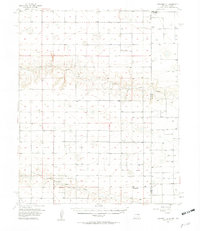 1957 Pleasant Hill1958 Print · USGSCurry County, New Mexico, is captured in the late fifties as a landscape of rural crossroads and prairie draws along the Texas line. Researchers can locate the Pleasant Hill Cem, the settlement of Claud, and the New Mexico Game Refuge No 252.
 - 1958 Map of Clovis
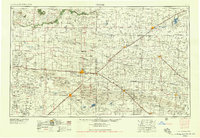 1958 Clovis1958 Print · USGSThe High Plains of the New Mexico-Texas borderlands are captured here in the late fifties, during a period of significant military and agricultural expansion. Genealogists and historians can trace the rail-side growth of Clovis, the operations at Clovis Air Force Base, and the rural layout of communities like Muleshoe and Hereford.
 - 1963 Map of Lariat, 1965 Print
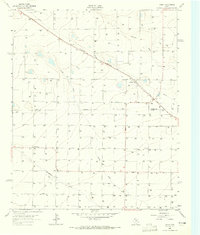 1963 Lariat1965 Print · USGSThe Texas Panhandle comes into focus in the early sixties, showing the agricultural landscape surrounding Lariat and West Camp. Researchers can trace early railroad history along the Panhandle and Santa Fe or locate family plots at Lariat Cem.2 unique versions available
 - 1963 Map of Clays Corner, 1965 Print
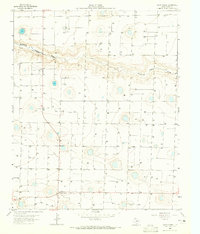 1963 Clays Corner1965 Print · USGSParmer County, Texas, was a landscape defined by groundwater and ranching in the early sixties. Researchers can trace the path of Running Water Draw and locate specific sites like the settlement at Clays Corner or the local Gravel Pit.
 - 1963 Map of Lazbuddie, 1965 Print
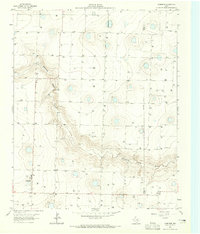 1963 Lazbuddie1965 Print · USGSParmer County at the start of the 1960s shows a landscape transformed by intensive irrigation and the growth of High Plains agriculture. Researchers can trace local landmarks like Lazbuddie Cem, the Athletic Field, and the winding Running Water Draw.2 unique versions available
 - 1963 Map of Oklahoma Lane, 1965 Print
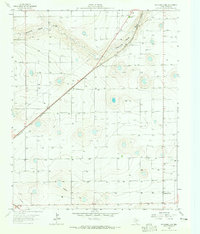 1963 Oklahoma Lane1965 Print · USGSThe High Plains of Parmer County in the early sixties reveal a landscape defined by intensive irrigation and rail transport. Researchers can locate the settlement of Oklahoma Lane or trace the diagonal path of the Panhandle and Santa Fe railroad.2 unique versions available
 - 1963 Map of Lariat NE, 1965 Print
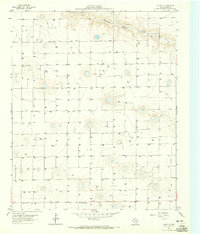 1963 Lariat NE1965 Print · USGSParmer County, Texas, was undergoing a transformation into an irrigation-centered agricultural powerhouse in the early sixties. Genealogists and local historians can trace the rural layout of Oklahoma Lane Community Center and Saunders or locate early water infrastructure along Running Water Draw.
 - 1963 Map of Lazbuddie SW, 1965 Print
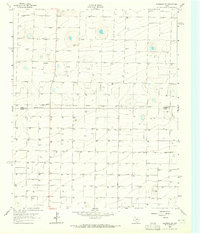 1963 Lazbuddie SW1965 Print · USGSHigh Plains agriculture and the county line between Parmer Co and Bailey Co define this mid-sixties survey. Researchers can trace irrigation history through numerous numbered wells and local community hubs like the Y-L Ch and a rural Substation.
 - 1963 Map of Progress, 1965 Print
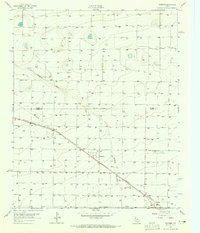 1963 Progress1965 Print · USGSTexas High Plains farming and rail transit define this mid-sixties survey of the Bailey and Parmer county line. Researchers can trace the PANHANDLE AND SANTA FE railroad and locate family burial sites at Muleshoe Cem or the Progress settlement.
 - 1963 Map of Lazbuddie SE, 1965 Print
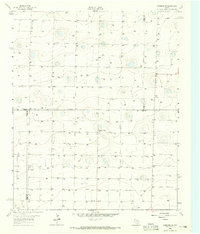 1963 Lazbuddie SE1965 Print · USGSThe High Plains at the intersection of Lamb and Parmer counties were defined by groundwater development in the early sixties. Researchers can trace the agricultural footprint of the era through Pleasant Valley, a remote Airstrip, and dozens of numbered water wells like Well 3912.
 - 1965 Map of Bovina, 1968 Print
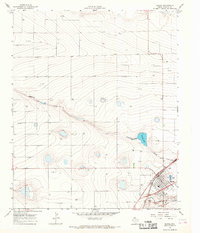 1965 Bovina1968 Print · USGSBovina and the surrounding Texas Panhandle plains are shown here in the mid-sixties, centered on the region's vital rail-and-ranching economy. Researchers can trace the path of the Atchison Topeka and Santa Fe and locate local landmarks like the Cem or Mustang Lake.2 unique versions available
 - 1965 Map of Tam Anne, 1968 Print
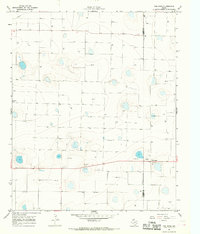 1965 Tam Anne1968 Print · USGSThe Texas Panhandle borderlands of Parmer and Castro counties come into focus during the mid-sixties. Local historians can locate the agricultural heart of Tam Anne, identifying the Grain Elevator and Cotton Gin that anchored this rural High Plains community.
 - 1965 Map of Parmerton, 1968 Print
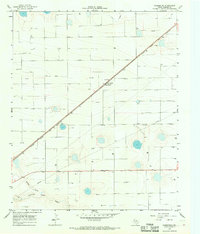 1965 Parmerton1968 Print · USGSParmer County, Texas, is captured in the mid-1960s as a landscape of rail-driven agriculture and high-plains drainage systems. Researchers can locate the Parmerton siding along the Atchison Topeka and Santa Fe railroad, marked by its Grain Elevator and the seasonal waters of Running Water Draw.
 - 1965 Map of Hub, 1968 Print
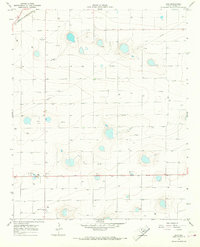 1965 Hub1968 Print · USGSParmer County life in the mid-1960s revolves around the rail lines and agricultural centers of the High Plains. Genealogists and local historians can trace the foundations of Hub, from the Hub Community Hall to the ATCHISON TOPEKA AND SANTA FE railroad and a local Cotton Gin.
 - 1965 Map of Twin Lakes, 1968 Print
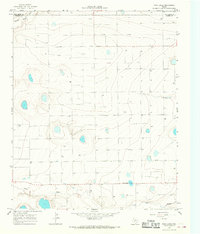 1965 Twin Lakes1968 Print · USGSThe High Plains of the Texas Panhandle come into focus in the mid-sixties, showing a landscape defined by industrial agriculture and ephemeral water. Researchers can trace the development of irrigation through numerous Wells and locate the settlement of Shelby near the Twin Lakes.
 - 1965 Map of Rhea, 1968 Print
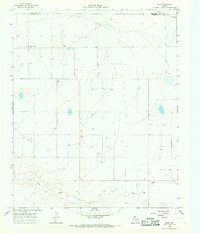 1965 Rhea1968 Print · USGSThe High Plains of the Texas Panhandle are captured here during the mid-sixties, showing the agricultural settlement of Rhea. Researchers can trace the legacy of early residents through landmarks like Rhea Emmanuel Ch, the local Cem, and the winding Frio Draw.
 - 1966 Map of Friona, 1968 Print
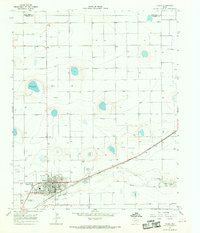 1966 Friona1968 Print · USGSFriona and the surrounding Texas Panhandle plains are documented here in the mid-1960s as a thriving rail and agricultural center. Researchers can trace local infrastructure from Benger Airpark and the Friona Cem to the Drive-in Theater.2 unique versions available
 - 1966 Map of Summerfield, 1968 Print
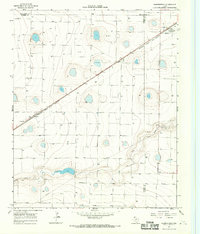 1966 Summerfield1968 Print · USGSAgricultural life in the Panhandle during the mid-sixties centered on the rail lines and grain storage. Genealogists and historians can locate Summerfield and Black along the Atchison Topeka and Santa Fe railroad, alongside local Grain Elevators and the Frio Draw.
 - 1985 Map of Pleasure Lake
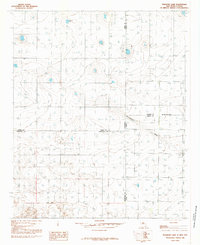 1985 Pleasure Lake1985 Print · USGSThe High Plains borderlands of New Mexico and Texas are captured here during the 1980s, showing a landscape of ranching and water management. Researchers can trace the interstate boundary and find localized landmarks like Pleasure Lake, a small Cem, and a large Feed Lot.
 - 1985 Map of Muleshoe
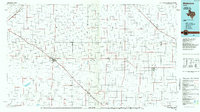 1985 Muleshoe1985 Print · USGSThe High Plains of the Texas Panhandle in the mid-eighties show a landscape defined by industrial agriculture and rail. Genealogists and local historians can trace family roots through rural communities like Lazbuddie, Sudan, and the uniquely named town of Earth.2 unique versions available
 - 1985 Map of Pleasant Hill
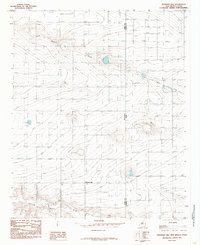 1985 Pleasant Hill1985 Print · USGSThe high plains borderland comes alive in the 1980s, centered on the settlement of Pleasant Hill. Researchers can trace the intersection of New Mexico and Texas across the drainages of Mustang Draw and Catfish Draw.
 - 1985 Map of Farwell
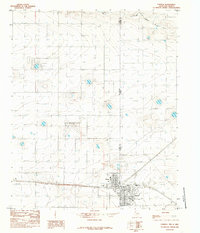 1985 Farwell1985 Print · USGSThe border towns of Texico and Farwell straddle the state line in the mid-1980s, serving as an agricultural and transport hub. Researchers can trace the local economy and infrastructure through features like the Clovis Municipal Airport, the town Cem, and a large central Elevator.
 - 1985 Map of Pleasant Hill NE
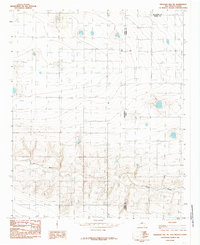 1985 Pleasant Hill NE1985 Print · USGSThe High Plains borderlands of New Mexico and Texas come into focus during the mid-eighties, revealing a landscape of agricultural expansion. Genealogists and historians can trace the exact placement of early wells and landmarks like Frio Draw and the Radio Tower.
Showing maps 1-25 of 126
Top cities of Parmer County
Frequently asked questions
- What are the different types of historical maps available for Parmer County?
- What is the oldest map of Parmer County?
- Where can I purchase historical maps of Parmer County for my home or office?
- Where can I download high-res historical maps of Parmer County?
- Are there historical topographic maps available for Parmer County?
- Is there historical aerial imagery available for Parmer County?
- Where are historical maps of Parmer County sourced from?