1900s (20th Century) Maps of Sheridan County, Wyoming
Explore 104 historic maps of Sheridan County from the 1900s (20th Century). These maps offer a rare glimpse into what life looked like during the 1900s — showing old roads, neighborhoods, homes, and landmarks that have changed or disappeared over time.
Whether you're researching your family's past, planning a metal detecting trip, or studying how Sheridan County's landscape evolved across the 1900s, these high-resolution maps are a powerful tool for exploring the history of this region.
- Focus on a specific era: All maps on this page are from the 1900s, giving you a focused view of this time period.
- See what’s changed: Compare century-old streets, trails, and buildings to today's modern landscape using overlays and satellite layers.
- Research with precision: Use these maps for genealogy, historical research, land use analysis, or educational projects.
- View, download, or print: Maps are fully viewable online in high resolution, and can be downloaded or printed for your own records.
Start exploring Sheridan County's history through authentic maps from the 1900s. This is your window into the past.
Sheridan County, WY maps
(104)- 1901 Map of Rosebud
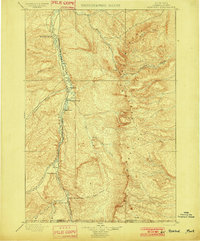 1901 Rosebud1901 Print · USGSSouthern Montana ranching and rail life are documented here during the final decade of the nineteenth century. Genealogists and historians can trace early holdings like Yellow Weasel Ranch and Sand Hills Ranch along the Burlington and Missouri River R. R.4 unique versions available
 - 1901 Map of Dayton
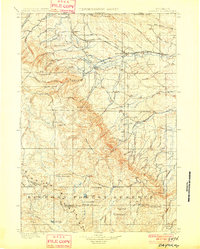 1901 Dayton1901 Print · USGSSheridan County and the Montana borderlands are captured here at the turn of the century as the railroad reshapes the valley. Researchers can trace early settlements and ranching outposts like Slack, Beckton, and the Morrow Ranch along the Tongue River.5 unique versions available
 - 1901 Map of St. Xavier
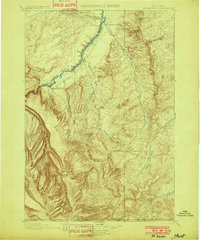 1901 St. Xavier1901 Print · USGSBig Horn County at the turn of the century shows a frontier landscape shaped by military history and the early years of the Crow Reservation. Researchers can trace the path of the Old Bozeman Military Road past the Site of Old Fort C. F. Smith and the St. Xavier Mission.4 unique versions available
 - 1901 Map of Bald Mountain
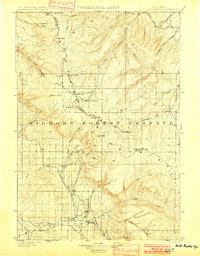 1901 Bald Mountain1901 Print · USGSNorthern Wyoming's high peaks and timber reserves are captured here at the turn of the century. Researchers can trace early industrial sites like Fortunatus Mill and the isolated settlement of Cloverly near the Shell Creek drainage.4 unique versions available
 - 1909 Map of Sheridan, 1954 Print
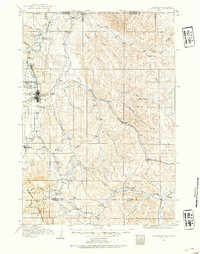 1909 Sheridan1954 Print · USGSSheridan and the surrounding northern Wyoming ranchlands are captured here in the first decade of the twentieth century. Genealogists can trace family holdings at Wagoner Ranch or Big Red Ranch, and locate early rail stations like Verona and Ulm.2 unique versions available
 - 1911 Map of Sheridan
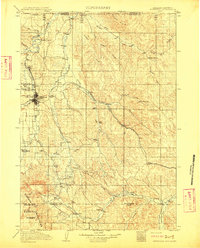 1911 Sheridan1911 Print · USGSSheridan and the surrounding northern Wyoming ranchlands are captured here during a period of rapid railroad expansion. Researchers can trace the Chicago Burlington and Quincy RR through Dietz and Verona, or locate early homesteads like Wagoner Ranch.2 unique versions available
 - 1954 Map of Hardin, 1964 Print
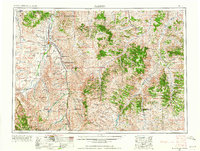 1954 Hardin1964 Print · USGSSoutheastern Montana is documented here during the mid-fifties, showing the vast tribal lands and historic battle sites before modern highway expansion. Researchers can trace the Chicago Burlington and Quincy rail line through Hardin or locate the Custer National Cemetery and Museum.2 unique versions available
 - 1955 Map of Sheridan, 1973 Print
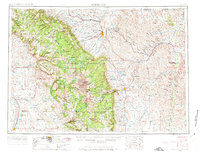 1955 Sheridan1973 Print · USGSThe Bighorn Mountains meet the Powder River Basin in the 1950s, a period when cattle ranching and coal mining defined the regional economy. Genealogists and historians can trace local landmarks like the Fort Mackenzie Veteran Hospital, the Monarch Coal Mine, and legacy operations such as the Beckton Stock Farm.2 unique versions available
 - 1957 Map of Hardin
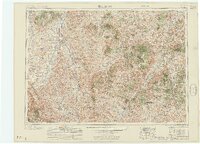 1957 Hardin1957 Print · USGSSoutheastern Montana in the mid-fifties reveals a landscape shaped by tribal lands and the historic Bighorn river valleys. Researchers can trace the Chicago Burlington and Quincy RR through Hardin and locate the National Cemetery and Custer Battlefield Monument.
 - 1958 Map of Hardin
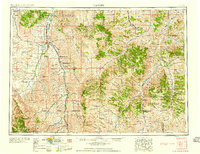 1958 Hardin1958 Print · USGSSoutheastern Montana in the mid-fifties presents a landscape defined by significant tribal lands and national monuments. Researchers can trace the geography of the Little Bighorn at Custer Battlefield National Monument and locate settlements like Lame Deer and Birney.
 - 1958 Map of Sheridan
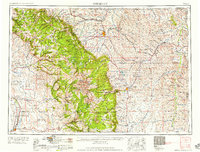 1958 Sheridan1958 Print · USGSThe Bighorn Mountains meet the high plains in the mid-1950s, revealing a landscape of large-scale ranching and mineral extraction. Trace the legacy of early settlements and industry through the Kleenburn Coal Tipple, Beckton Stock Farm, and the Hidden Dome Oil & Gas Field.2 unique versions available
 - 1960 Map of Boyd Ridge, 1962 Print
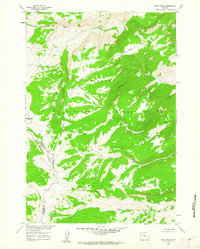 1960 Boyd Ridge1962 Print · USGSHigh in the northern Bighorns during the late fifties, this area was a landscape of remote resource extraction and steep drainages. Researchers can trace the industrial footprint of the Marble Quarry and follow the high-country paths of Boyd Ridge and Wagon Box Creek.3 unique versions available
 - 1960 Map of Mexican Hill, 1962 Print
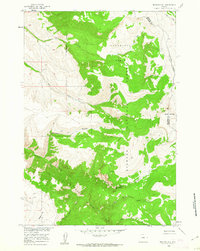 1960 Mexican Hill1962 Print · USGSThe high country of the Big Horn Mountains comes alive in this early 1960s survey of the county line. Trace remote footpaths and landmarks like Cow Camp, Bucking Mule Falls, and the steep terrain of Devils Canyon.2 unique versions available
 - 1960 Map of Granite Pass, 1962 Print
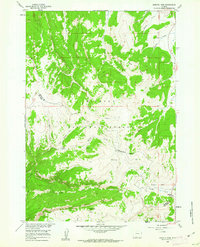 1960 Granite Pass1962 Print · USGSHigh in the Bighorn Mountains during the early sixties, this terrain shows the divide between Sheridan and Big Horn counties. Trace high-altitude landmarks and water sources like Granite Pass, Copemans Tomb, and Three Springs.2 unique versions available
 - 1960 Map of Hidden Tepee Creek, 1962 Print
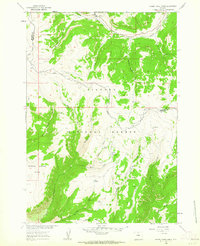 1960 Hidden Tepee Creek1962 Print · USGSHigh in the Big Horn Mountains during the early sixties, this terrain showcases a landscape defined by livestock grazing and forest management. Researchers can find seasonal outposts like Horse Creek Cow Camp and trace the winding paths of Hunt Mountain Road and Hidden Tepee Creek.2 unique versions available
 - 1960 Map of Bald Mountain, 1962 Print
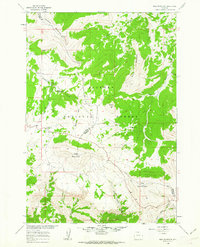 1960 Bald Mountain1962 Print · USGSThe high Bighorn Mountains at the start of the 1960s reveal a landscape of remote ranger stations and alpine camps. Researchers can locate the historic Bald Mountain City (Site) or trace the Sheep Mountain Road past Rooster Hill and Bald Mountain.3 unique versions available
 - 1960 Map of Leavitt Reservoir, 1963 Print
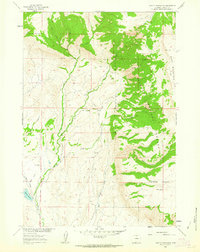 1960 Leavitt Reservoir1963 Print · USGSBig Horn County at the start of the 1960s showcases a high-desert landscape managed for ranching and water storage. Researchers can locate the Leavitt Ranch, trace the path of the London Ditch, and explore the terrain of Hunt Mountain and Horse Creek Mesa.3 unique versions available
 - 1962 Map of Sheridan
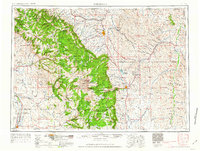 1962 Sheridan1962 Print · USGSThe Big Horn Mountains and Powder River country are captured here in the early sixties as energy production and ranching shaped northern Wyoming. Researchers can locate specific sites like the Kleenburn Coal Tipple, Eaton Bros Ranch, and the Fort McKenzie Veteran Hospital.
 - 1964 Map of Burgess Junction, 1967 Print
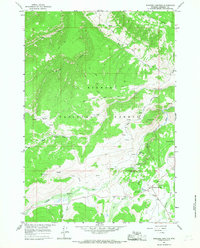 1964 Burgess Junction1967 Print · USGSBighorn National Forest in the mid-1960s showcases a high-country landscape of ranching camps and early mountain tourism. Local historians can trace the sites of Wolfe Cow Camp, the Burgess Ranger Station, and the industrial footprint of a local Sawmill.3 unique versions available
 - 1964 Map of Wolf, 1967 Print
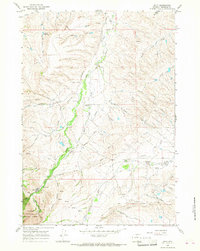 1964 Wolf1967 Print · USGSSheridan County ranching and the mountain front are captured here in the mid-1960s. Genealogists and local historians can trace family-named sites like P K Ranch, the Wolf Creek Sch, and the high forest boundary at Windy Canyon.
 - 1964 Map of Ranchester, 1967 Print
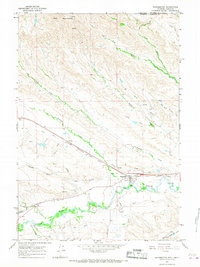 1964 Ranchester1967 Print · USGSRanchester and the surrounding Tongue River valley are shown in the mid-1960s, where the railroad and irrigation systems define the local landscape. Researchers can trace the path of the Chicago Burlington and Quincy railroad and find local landmarks like Mikado, City Park, and the complex Wolf Ditch network.2 unique versions available
 - 1964 Map of Dayton North, 1967 Print
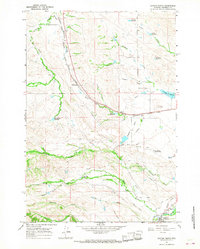 1964 Dayton North1967 Print · USGSSheridan County ranching and rail infrastructure are on full display in the mid-1960s, just south of the Montana border. Researchers can trace the Chicago Burlington and Quincy rail line and local landmarks like Bear Claw Ranch and Padlock Ranch.2 unique versions available
 - 1964 Map of Monarch, 1967 Print
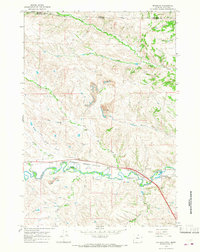 1964 Monarch1967 Print · USGSThe Tongue River valley in the 1960s serves as a hub of Wyoming mining and rail activity. Researchers can trace the industrial footprint of the Strip Mine workings and locate the Monarch Cem near the company towns of Monarch and Kleenburn.2 unique versions available
 - 1964 Map of Dayton South, 1968 Print
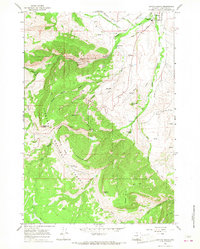 1964 Dayton South1968 Print · USGSSheridan County's mountain front is captured here in the mid-sixties, where the town of Dayton meets the high peaks. Local researchers can trace family lands such as the IXL Ranch, locate the Cemetery, or find the old Tongue River Cave.
 - 1964 Map of Skull Ridge, 1968 Print
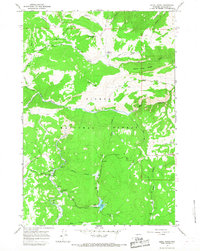 1964 Skull Ridge1968 Print · USGSSheridan County's high-country terrain in the 1960s reveals a landscape shaped by forest service camps and cattle ranching. Trace early mountain recreation and industry at Sibley Lake, the Yonkee Cow Camp, and along the historic Eureka Ditch Trail.
Showing maps 1-25 of 104
Top cities of Sheridan County
Frequently asked questions
- What are the different types of historical maps available for Sheridan County?
- What is the oldest map of Sheridan County?
- Where can I purchase historical maps of Sheridan County for my home or office?
- Where can I download high-res historical maps of Sheridan County?
- Are there historical topographic maps available for Sheridan County?
- Is there historical aerial imagery available for Sheridan County?
- Where are historical maps of Sheridan County sourced from?