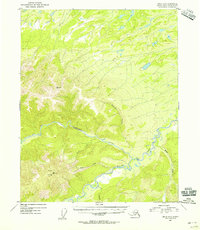
1954 Map of Circle D-6
USGS Topo · Published 1955About this map
Victoria Mountain anchors the high ground of this interior Alaska wilderness, as documented during a mid-1950s survey of the Yukon-Koyukuk region. The landscape is defined by an intricate drainage system, with the prominent Victoria Creek winding through the center of the sheet. Its flow is fed by several smaller tributaries including Squaw Creek, Sand Creek, and Glacier Creek, the latter of which suggests the glacial history that helped carve these valleys. This topographic study reflects the area in its raw state before major modern development, focusing entirely on the natural hydrology and elevation. The eastern edge of the quadrangle is marked by the course of Moose Creek, which continues the pattern of northern water systems that dominate this subarctic terrain. The absence of named settlements or roads underscores the isolation of the region at the time of the 1951 aerial photography.
Find a feature on this map
8 named features on this map. Tap any name to fly to it.
Don’t see what you’re looking for? This feature index may not catch every label — zoom into the map to look around manually.
Map Details
Editions of this 1954 Circle D-6 Map
This is the sole edition of this map. No revisions or reprints were ever made.
Other maps of this area
1945 · Livengood
USGS Topo · 1:250,000
1951 · Fort Yukon
USGS Topo · 1:250,000
1951 · Livengood
USGS Topo · 1:250,000
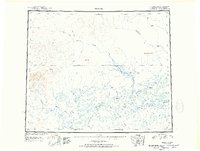
1951 · Beaver
USGS Topo · 1:250,000
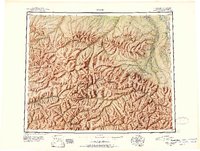
1951 · Circle
USGS Topo · 1:250,000
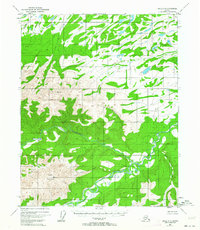
1951 · Circle D-6
USGS Topo · 1:63,360
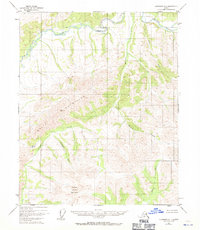
1951 · Livengood C-1
USGS Topo · 1:63,360
1951 · Circle C-6
USGS Topo · 1:63,360
1952 · Livengood D-1
USGS Topo · 1:63,360
1952 · Circle D-5
USGS Topo · 1:63,360