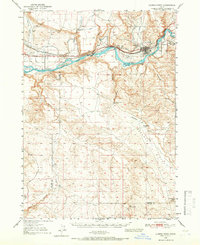
1948 Map of Glenns Ferry
USGS Topo · Published 1966About this map
Oregon Trail (Main Line) routes and the river crossings of the late 1940s dominate this landscape along the Snake River. The survey documents a critical junction of Western migration and modern infrastructure, where the Union Pacific railroad and early highways parallel the historic wagon paths. Significant river features include Three Island Crossing and the Medbury Ferry (Aband.) near Hammett, illustrating the evolution of transit across the water.
Find a feature on this map
43 named features on this map. Tap any name to fly to it.
Don’t see what you’re looking for? This feature index may not catch every label — zoom into the map to look around manually.
Map Details
Editions of this 1948 Glenns Ferry Map
2 editions found
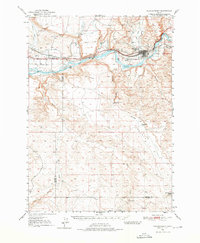
Other maps of this area
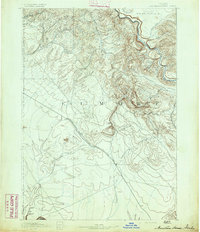
1892 · Mountain Home
USGS Topo · 1:125,000
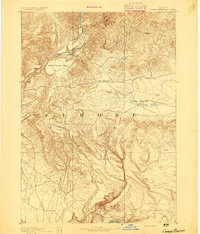
1892 · Camas Prairie
USGS Topo · 1:125,000
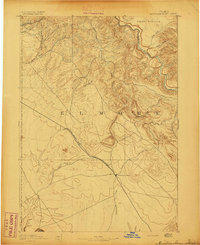
1893 · Mountain Home
USGS Topo · 1:125,000
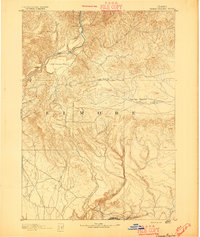
1893 · Camas Prairie
USGS Topo · 1:125,000
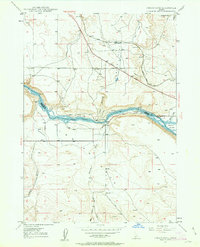
1947 · Indian Cove
USGS Topo · 1:24,000
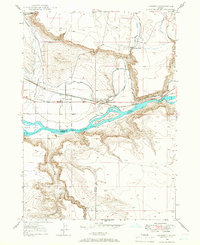
1947 · Hammett
USGS Topo · 1:24,000
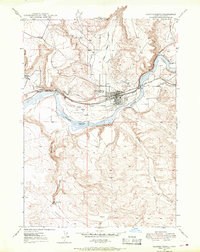
1947 · Glenns Ferry
USGS Topo · 1:24,000
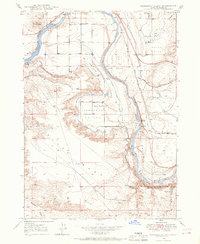
1947 · Pasadena Valley
USGS Topo · 1:24,000
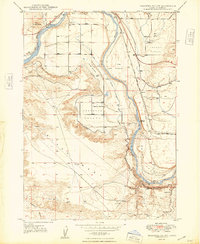
1948 · Pasadena Valley
USGS Topo · 1:24,000
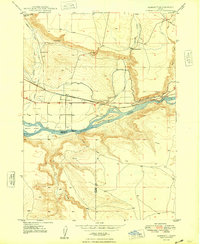
1948 · Hammett
USGS Topo · 1:24,000