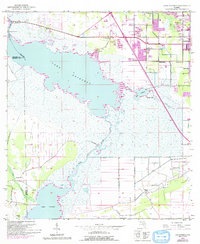
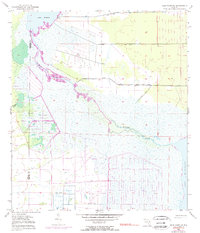
1953 Map of Lake Poinsett
USGS Topo · Published 1992About this map
The St Johns River winds through a vast expanse of marsh and open water, anchoring a landscape where the burgeoning urban footprints of Cocoa and Rockledge meet the river's wilder upper reaches. This 1950s-era survey captures the transition from traditional river life, represented by the Lone Cabbage Camp and Poinsett Lodge, to modern land-use patterns including extensive levee systems and spoil banks. Cultural features like Pine Crest Cem and a Golf Course sit on the higher ground of the eastern ridge, overlooking the complex wetland network of Lake Poinsett, Barnett Lake, and Lake Florence. The presence of Mulberry Mound suggests the long history of human habitation on the river’s edge, while numerous flowing wells indicate the hydrological character of the Floridan aquifer in the mid-century.
Find a feature on this map
23 named features on this map. Tap any name to fly to it.
Don’t see what you’re looking for? This feature index may not catch every label — zoom into the map to look around manually.
Map Details
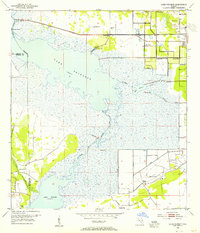
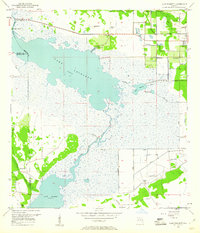
Editions of this 1953 Lake Poinsett Map
4 editions found
Other maps of this area
1949 · Courtenay
USGS Topo · 1:24,000
1949 · Eau Gallie
USGS Topo · 1:24,000
1949 · Sharpes
USGS Topo · 1:24,000
1949 · Cocoa
USGS Topo · 1:24,000
1951 · Eau Gallie
USGS Topo · 1:24,000
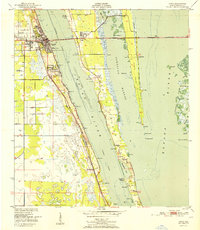
1951 · Cocoa
USGS Topo · 1:24,000
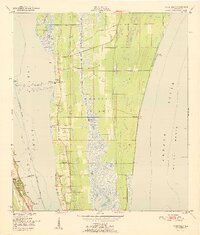
1951 · Courtenay
USGS Topo · 1:24,000
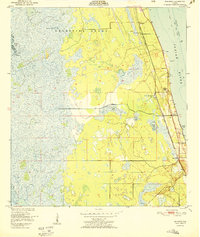
1951 · Sharpes
USGS Topo · 1:24,000
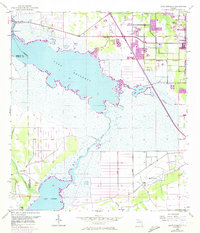
1953 · Lake Poinsett
USGS Topo · 1:24,000
1953 · Deer Park NE
USGS Topo · 1:24,000