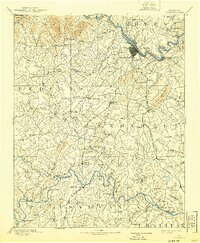
1892 Map of Lynchburg
USGS Topo · Published 1940About this map
The James River and Roanoke River systems dominate this central Virginia landscape, defining a region of early industrial and transit development surveyed in 1890. Lynchburg serves as the primary hub, where the Norfolk and Western Rail Road and the Lynchburg and Durham Rail Road converge near the river's distinctive bends. The interior of Campbell and Bedford counties is marked by a network of rural settlements like Rustburg, Goode, and Evington, often connected by historic thoroughfares like Wards Road. A significant reliance on river travel is evident from the numerous river crossings, including Wards Road Ferry, McKeever Ferry, and Tolers Ferry. Educational and religious sites, such as Salem Academy and Mt. Zion church, appear alongside early landmarks like the resort at Bedford Spr., reflecting the social structure of the late 19th-century Piedmont.
Find a feature on this map
127 named features on this map. Tap any name to fly to it.
Don’t see what you’re looking for? This feature index may not catch every label — zoom into the map to look around manually.
Map Details
Editions of this 1892 Lynchburg Map
6 editions found
Other maps of this area
1890 · Roanoke
USGS Topo · 1:125,000
1891 · Roanoke
USGS Topo · 1:125,000
1892 · Lynchburg
USGS Topo · 1:125,000
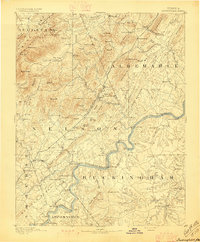
1892 · Buckingham
USGS Topo · 1:125,000
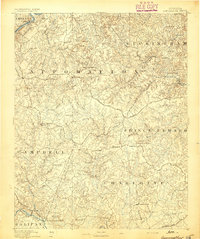
1892 · Appomattox
USGS Topo · 1:125,000
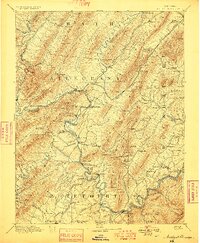
1894 · Natural Bridge
USGS Topo · 1:125,000
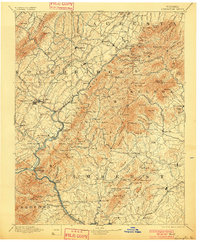
1894 · Lexington
USGS Topo · 1:125,000
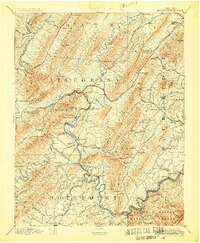
1894 · Natural Bridge
USGS Topo · 1:62,500
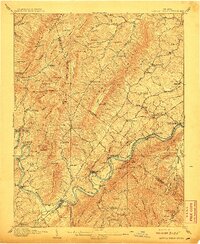
1907 · Natural Bridge Special
USGS Topo · 1:62,500
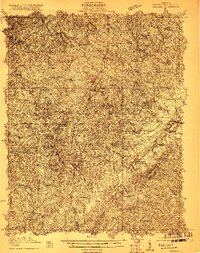
1921 · Chatham
USGS Topo · 1:48,000