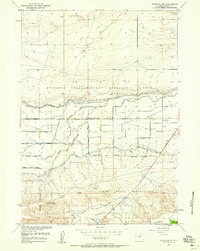
1957 Map of Riverton NE
USGS Topo · Published 1958About this map
The Wind River Indian Reservation dominates the southern landscape of this 1957 survey, where a complex network of irrigation infrastructure transformed the high desert for settlement. The Pilot Canal and Riverton Valley Canal snake across the terrain, feeding the agricultural development of the Missouri Valley. This expansion was supported by the Riverton Reclamation Withdrawal Area, a vast tract set aside for water resource management. Local community life centers around the Missouri Valley Church and the primary thoroughfare of Missouri Valley Road. The natural drainage of the region, defined by Fivemile Creek and Sand Gulch, contrasts with the engineered precision of the siphons and laterals that sustain the Riverton Valley. Traces of local industry appear in the Gravel Pits and various pipelines that cut across the northern slopes of the reservation boundary.
Find a feature on this map
15 named features on this map. Tap any name to fly to it.
Don’t see what you’re looking for? This feature index may not catch every label — zoom into the map to look around manually.
Map Details
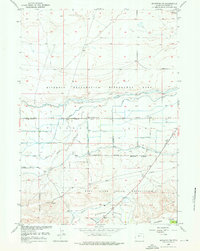
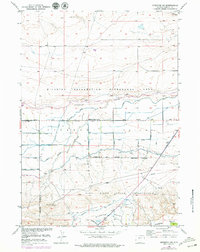
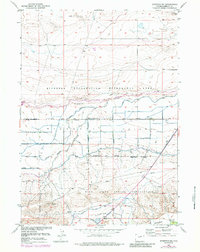
Editions of this 1957 Riverton NE Map
4 editions found
Other maps of this area
1950 · Riverton East
USGS Topo · 1:24,000
1950 · Mexican Pass SW
USGS Topo · 1:24,000
1950 · Bonneville SW
USGS Topo · 1:24,000
1951 · Mexican Pass SE
USGS Topo · 1:24,000
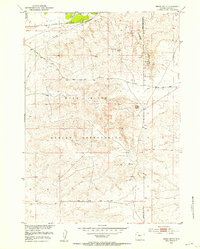
1951 · Indian Butte
USGS Topo · 1:24,000
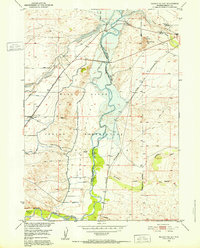
1951 · Hidden Valley
USGS Topo · 1:24,000
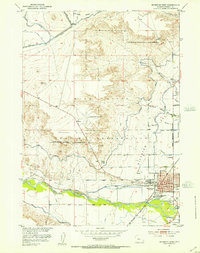
1951 · Riverton West
USGS Topo · 1:24,000
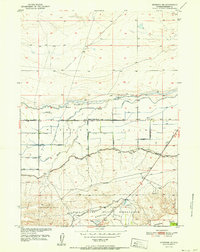
1952 · Riverton NE
USGS Topo · 1:24,000
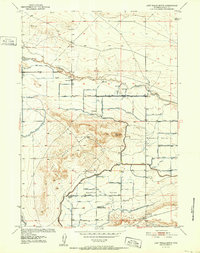
1952 · Lost Wells Butte
USGS Topo · 1:24,000
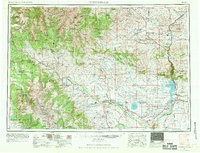
1955 · Thermopolis
USGS Topo · 1:250,000