1950s Maps of Pinal County, Arizona
Explore 43 historic maps of Pinal County from the 1950s. These maps offer a rare glimpse into what life looked like during the 1950s — showing old roads, neighborhoods, homes, and landmarks that have changed or disappeared over time.
Whether you're researching your family's past, planning a metal detecting trip, or studying how Pinal County's landscape evolved across the 1950s, these high-resolution maps are a powerful tool for exploring the history of this region.
- Focus on a specific era: All maps on this page are from the 1950s, giving you a focused view of this time period.
- See what’s changed: Compare century-old streets, trails, and buildings to today's modern landscape using overlays and satellite layers.
- Research with precision: Use these maps for genealogy, historical research, land use analysis, or educational projects.
- View, download, or print: Maps are fully viewable online in high resolution, and can be downloaded or printed for your own records.
Start exploring Pinal County's history through authentic maps from the 1950s. This is your window into the past.
Pinal County, AZ maps
(43)- 1950 Map of Crozier Peak
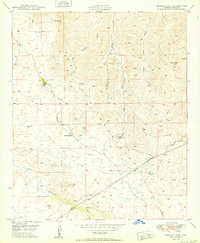 1950 Crozier Peak1950 Print · USGSThe Tortilla Mountains of Pinal County are shown in the mid-twentieth century as a landscape of isolated ranches and active mineral prospects. Researchers can trace the footprints of the Silver Queen Mine, the Tony Lopez Ranch, and the Ripsey Ranch ruins.
 - 1950 Map of Lookout Mtn
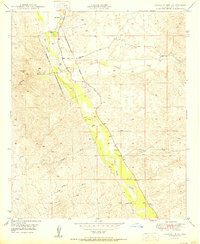 1950 Lookout Mtn1950 Print · USGSPinal County ranching and military history converge in this mid-century survey of the San Pedro River valley. Researchers can trace the boundaries of the Old Camp Grant Military Reservation (Aban'd) or locate the PZ Ranch and Mine near the rugged slopes of Lookout Mtn.
 - 1950 Map of Putnam Wash
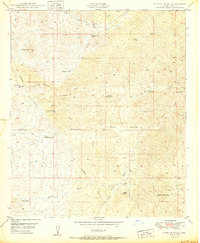 1950 Putnam Wash1950 Print · USGSArizona ranching and water infrastructure are captured here at the mid-century, long before modern development altered this Pinal County landscape. Researchers can trace the layout of remote outposts like Cactus Hill Ranch and vital water points such as Yellowjacket Well and Cowhead Tank.
 - 1950 Map of Black Mountain
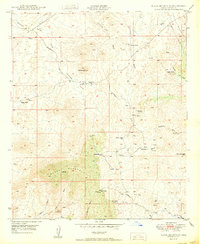 1950 Black Mountain1950 Print · USGSPinal County ranching life in the late 1940s is centered around isolated water sources and livestock outposts among the high ridges. Genealogists and historians can trace the foundations of Barkerville (Site) and name-bearing landmarks like Haydon Ranch and Jewell Well.
 - 1950 Map of Saddle Mtn.
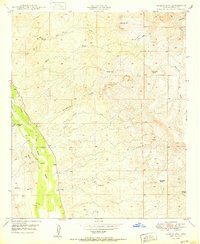 1950 Saddle Mtn.1950 Print · USGSArizona's copper and cattle country comes into focus in the early post-war years, centered on the high desert terrain of Pinal County. Historians and genealogists can trace family footprints at Eskiminzin Ranch, find the site of the Finch Sch (Aban'd), or locate the Gypsum Mines.
 - 1950 Map of Winkelman
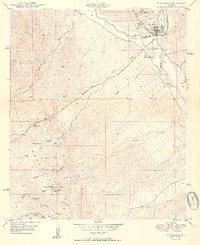 1950 Winkelman1950 Print · USGSThe confluence of the Gila and San Pedro Rivers comes alive in this mid-century survey of Gila and Pinal Counties. Researchers can trace the industrial footprint of Hayden and Winkelman, or locate remote sites like Antelope Mine and Flying UW Ranch.2 unique versions available
 - 1950 Map of Brandenburg Mtn
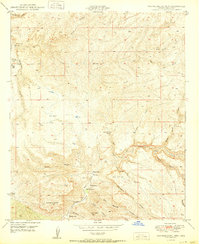 1950 Brandenburg Mtn1950 Print · USGSArizona ranching and canyon life are well-documented in this 1950s survey of the Aravaipa region. Researchers can trace the footprints of family outposts like Painted Cave Ranch, Wagner Ranch, and the high-elevation Lion Camp.
 - 1950 Map of Holy Joe Peak
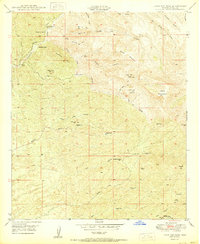 1950 Holy Joe Peak1950 Print · USGSPinal County's high desert peaks and canyons are shown at the mid-century during a period of ranching and early mining transition. Genealogists and researchers can locate family outposts like Reese Ranch and Mounterest Ranch or the Vale District Sch (Aban'd).
 - 1951 Map of Mammoth
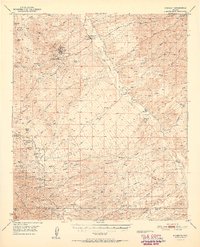 1951 Mammoth1951 Print · USGSThe mining and ranching culture of southern Arizona is captured here at mid-century, before the San Manuel smelter transformed the valley. Genealogists and researchers can trace family-named sites like Kannally Ranch, the remote American Flag Ranch, and workings at Tiger.2 unique versions available
 - 1951 Map of Winkelman
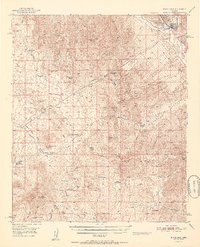 1951 Winkelman1951 Print · USGSWinkelman and the lower Gila River valley are documented here at mid-century, capturing the intersection of industrial mining and desert ranching. Researchers can trace historic family operations like the Flying UW Ranch and locate old mining claims such as the Ripsey Mine and Silver Queen Mine.2 unique versions available
 - 1952 Map of Gila Butte SE, 1957 Print
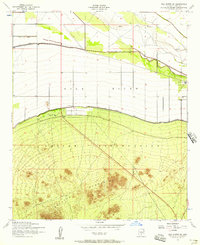 1952 Gila Butte SE1957 Print · USGSThe Gila River Valley in the early fifties shows a landscape of desert irrigation and reservation life before modern expansion. Genealogists and historians can locate the Pima Hosp, trace the Casa Blanca Canal, and find a lone mining Prospect.3 unique versions available
 - 1952 Map of Maricopa, 1957 Print
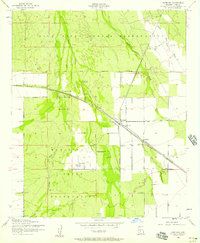 1952 Maricopa1957 Print · USGSPinal County at the dawn of the fifties shows a desert landscape shaped by tribal lands and the railroad. Genealogists and researchers can locate Ak Chin, the St Francis Mission, and the rail infrastructure in Maricopa.3 unique versions available
 - 1952 Map of Sacaton Butte, 1957 Print
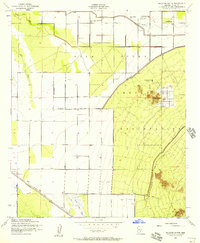 1952 Sacaton Butte1957 Print · USGSThe Gila River Indian Reservation and its mid-century irrigation networks are mapped here just after the war. Local historians can trace the community of Casa Blanca, its Cemetery, and the operations at the Papago Gin.3 unique versions available
 - 1952 Map of Gila Butte NW, 1957 Print
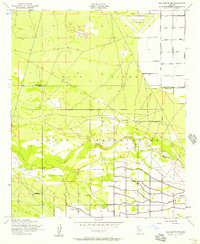 1952 Gila Butte NW1957 Print · USGSThe Gila River valley in the early fifties shows a landscape balancing desert geography with growing military and tribal infrastructure. Genealogists can locate residents near Snaketown, the St Francis Borgia Ch, and the Goodyear Air Force Auxiliary Airfield.3 unique versions available
 - 1952 Map of Gila Butte, 1957 Print
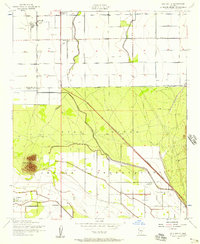 1952 Gila Butte1957 Print · USGSThe Pinal County desert landscape in the early fifties shows a transition from railway outposts to established reservation communities. Genealogists and historians can trace community roots at St Peters Mission Sch, the Goodyear Cem, and through settlements like Bapchule and Santan.4 unique versions available
 - 1952 Map of Laveen, 1957 Print
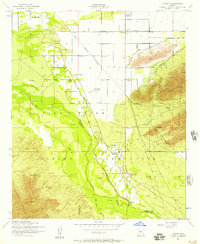 1952 Laveen1957 Print · USGSThe Gila River Valley south of Phoenix comes to life in the early fifties, showing the desert as a patchwork of reservation lands and irrigation projects. Genealogists can locate specific homesteads near Komatke, the St Johns Indian Sch, and the riverside site of Gila Crossing.5 unique versions available
 - 1952 Map of Pima Butte, 1957 Print
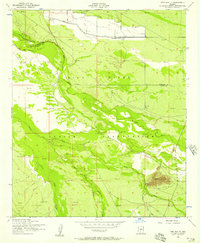 1952 Pima Butte1957 Print · USGSThe Gila River valley south of Phoenix appears here in the early fifties, showing the desert landscape before modern urbanization. Genealogists and historians can trace the irrigation networks of the Hoover Ditch and the terrain surrounding Pima Butte and Lone Butte Ranch.3 unique versions available
 - 1952 Map of Montezuma Peak, 1957 Print
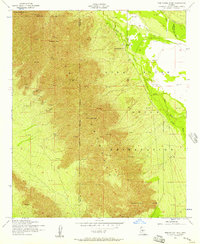 1952 Montezuma Peak1957 Print · USGSThe Sierra Estrella range and Gila River Indian Reservation are captured here in the early fifties before modern expansion. Historians and genealogists can trace early landmarks like St Catherines Ch, the Crushed Mica Quarry, and the Santa Cruz settlement along the Santa Cruz Wash.3 unique versions available
 - 1952 Map of Enid, 1957 Print
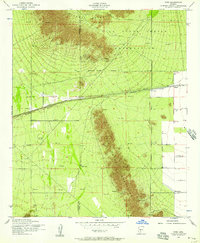 1952 Enid1957 Print · USGSThe Pinal County desert comes into focus in the early 1950s, showing the intersection of tribal lands and railroad expansion. Researchers can trace the rail stops at Enid and Heaton or locate historical sites like Wiley Ranch and a Race Track (Aban'd).3 unique versions available
 - 1952 Map of Maricopa, 1959 Print
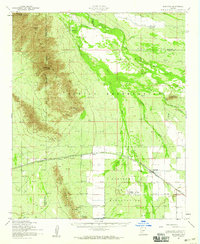 1952 Maricopa1959 Print · USGSArizona's Sonoran Desert meets the iron rail in the early 1950s, showing a landscape defined by tribal reservations and mountain peaks. Researchers can trace the Southern Pacific line through Maricopa or locate the St Francis Mission and Wiley Ranch.2 unique versions available
 - 1952 Map of Gila Butte, 1960 Print
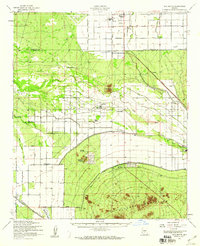 1952 Gila Butte1960 Print · USGSCentral Arizona's desert valleys show a distinct transition during the early fifties as irrigation canals reshaped the Gila River basin. Genealogists can trace family footprints at Bapchule, St Peters Mission Sch, and the Goodyear Cemetery.2 unique versions available
 - 1952 Map of Phoenix, 1960 Print
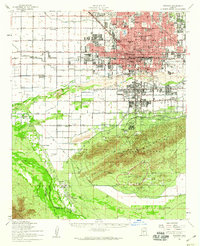 1952 Phoenix1960 Print · USGSCentral Arizona's desert valley is shown in the early fifties as the city expands toward the Salt River. Genealogists can trace family names and sites from Maricopa Village to Alhambra, including local landmarks like St Johns Indian Sch.2 unique versions available
 - 1953 Map of Ajo, 1971 Print
 1953 Ajo1971 Print · USGSThe Arizona desert at mid-century reveals a landscape of massive copper mines, tribal reservations, and military testing grounds. Genealogists and historians can trace rail stopovers like Dateland and Mohawk or locate remote sites like the Reward Mine and Gu Achi (Santa Rosa).2 unique versions available
 - 1954 Map of Phoenix, 1964 Print
 1954 Phoenix1964 Print · USGSMid-century Arizona is captured here as the Phoenix metropolitan area begins its rapid expansion into the surrounding desert. Genealogists and historians can trace the development of agricultural hubs like Buckeye and Tolleson, or locate remote landmarks like the Vulture Mine and Nottbusch Cem.5 unique versions available
 - 1954 Map of Mesa, 1968 Print
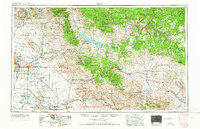 1954 Mesa1968 Print · USGSCentral Arizona in the mid-fifties reveals the rapid growth of the Valley of the Sun alongside the deep-rooted mining districts of the eastern mountains. Genealogists and researchers can trace the expansion of Mesa and Chandler or locate legacy operations at Inspiration Mine and the Magma Arizona railroad.4 unique versions available
Showing maps 1-25 of 43
Top cities of Pinal County
- San Tan Valley historical maps
- Maricopa historical maps
- Casa Grande historical maps
- Apache Junction historical maps
- Florence historical maps
- Eloy historical maps
See more
Frequently asked questions
- What are the different types of historical maps available for Pinal County?
- What is the oldest map of Pinal County?
- Where can I purchase historical maps of Pinal County for my home or office?
- Where can I download high-res historical maps of Pinal County?
- Are there historical topographic maps available for Pinal County?
- Is there historical aerial imagery available for Pinal County?
- Where are historical maps of Pinal County sourced from?