Old Maps of Riley County, Kansas for Academic Research
Study the evolution of Riley County with 153 high-resolution historic maps. Whether you're teaching, researching, or modeling changes in land use, these maps provide essential visual documentation of urban, environmental, and geographic change.
- Analyze long-term change: Track patterns in development, transportation, and natural features.
- Ideal for environmental or urban studies: Support academic projects with primary historical map data.
- Use in the classroom or lab: Educators and researchers rely on these maps to bring historical context to life.
These maps are a powerful tool for teaching, research, and visualizing how Riley County has changed over the decades.
Riley County, KS maps
(153)- 1886 Map of Junction City, 1960 Print
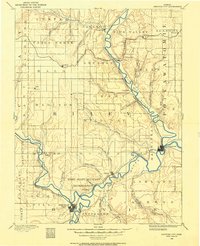 1886 Junction City1960 Print · USGSNortheastern Kansas in the late nineteenth century centers on the strategic military and rail hubs of the Flint Hills. Genealogists can trace the early foundations of Junction City, the sprawling Fort Riley Military Reservation, and rail-stop towns like Garrison and Stockdale.
 - 1889 Map of Wamego
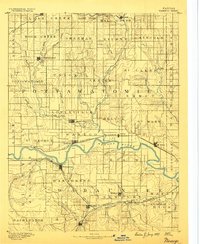 1889 Wamego1889 Print · USGSNortheastern Kansas thrives along the river valleys in the 1880s, where rail networks and river crossings dictated the growth of the prairie. Genealogists can trace family roots in early hubs like Alma, St Marys, and Wamego, or find the path of the Union Pacific Railroad.
 - 1889 Map of Marysville
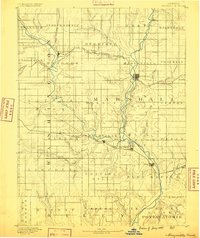 1889 Marysville1889 Print · USGSMarshall County in the late nineteenth century was a bustling nexus of river trade and steam rail expansion. Genealogists and historians can trace early town sites like Marysville, Blue Rapids, and Irving along the Little Blue River and major rail lines.
 - 1889 Map of Junction City
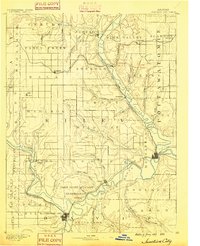 1889 Junction City1889 Print · USGSThe confluence of the Republican and Smoky Hill rivers defines this central Kansas landscape in the late nineteenth century. Genealogists and historians can trace the early footprints of Fort Riley, the rail hubs of Junction City and Manhattan, and vanished stops like Garrison and Bala.
 - 1894 Map of Junction City
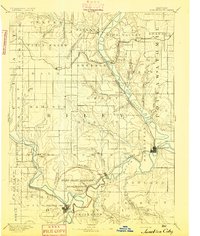 1894 Junction City1894 Print · USGSThe Kansas frontier of the late nineteenth century comes alive as the rail-and-river network expands around Junction City. Genealogists and historians can trace early townships and rural outposts like Riley Center, Bala, and the Fort Riley Military Reservation.7 unique versions available
 - 1894 Map of Marysville
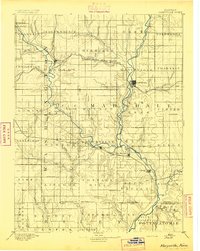 1894 Marysville1894 Print · USGSMarshall County's river valleys and railroad corridors are intricately detailed in the 1880s, before modern highway expansion altered the rural landscape. Genealogists can locate family lands near Ballard Falls, Bremen, or the rail junctions at Marysville.4 unique versions available
 - 1894 Map of Wamego
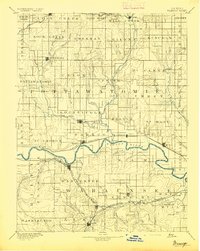 1894 Wamego1894 Print · USGSThe Kansas prairie in the late nineteenth century was a world of steam and river crossings, where the iron horse reshaped the frontier. Genealogists can trace family roots in established towns like Wamego, Alma, or the small settlement of Moodyville along Rock Creek.5 unique versions available
 - 1947 Map of Manhattan, 1954 Print
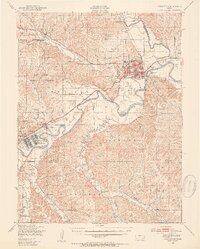 1947 Manhattan1954 Print · USGSManhattan and the surrounding Kansas river valleys are shown here in the years immediately following World War II. Researchers can trace the extensive military works at Camp Funston, local education at College Hill Sch, and pioneer-era sites like St Patricks Cem.2 unique versions available
 - 1947 Map of Fort Riley, 1954 Print
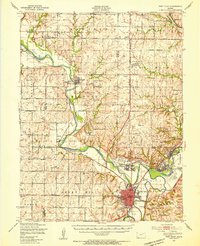 1947 Fort Riley1954 Print · USGSPost-war Kansas comes to life where the Smoky Hill and Republican rivers meet to form the Kansas River. Genealogists and historians can trace the foundations of Fort Riley, early settlements like Milford, and dozens of rural schools including Walla Walla Sch and Acme Sch.2 unique versions available
 - 1950 Map of Keats
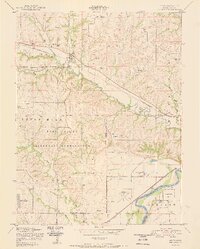 1950 Keats1950 Print · USGSRiley County at the mid-century shows a landscape defined by the expansive Fort Riley Military Reservation and the river valley railroads. Researchers can trace local history through features like the Rebekah IOOF Home, the village of Keats, and the old Rock Quarry near the river.2 unique versions available
 - 1950 Map of Manhattan
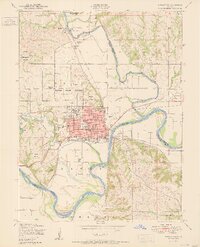 1950 Manhattan1950 Print · USGSManhattan and the surrounding Riley County landscape are captured in the late 1940s, showing a growing college town at the junction of the Kansas and Big Blue Rivers. Researchers can trace the mid-century footprint of Kansas State College, local rural schoolhouses like Oak Grove School, and early aviation at Mankan Airport.2 unique versions available
 - 1950 Map of Junction City
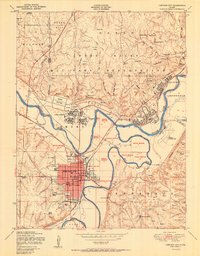 1950 Junction City1950 Print · USGSThe Kansas river forks and the vast Fort Riley complex dominate this mid-century landscape. Researchers can trace local roots through the Highland Cemetery, Grand View School, and the early layout of Camp Forsyth.2 unique versions available
 - 1951 Map of Swede Creek
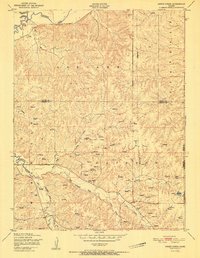 1951 Swede Creek1951 Print · USGSThe rural borderlands of Geary and Riley counties are captured here in the early fifties, showing a landscape shaped by the McDowell Creek watershed. Researchers can trace family history through sites like Ashland Cemetery, Briggs School, and Cleveland School.2 unique versions available
 - 1951 Map of Ogden
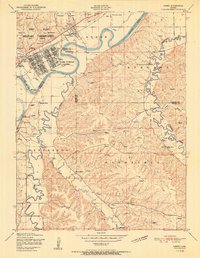 1951 Ogden1951 Print · USGSThe Kansas River valley near Ogden is shown here at mid-century, where the expansion of the military post meets established rural life. Researchers can trace the layout of Camp Funston, find several family burial grounds like St Marys Cemetery, and locate vanished local schools including Tully School and Reynalda School.2 unique versions available
 - 1951 Map of Wind Creek
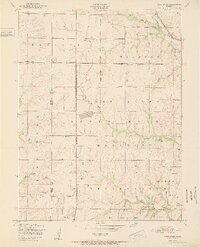 1951 Wind Creek1951 Print · USGSRiley and Geary counties are captured here just after the war, showing the expansion of military lands into traditional Kansas farming territory. Researchers can trace rural landmarks like Liberty Cemetery and Magic School alongside the active vehicle firing range of the Fort Riley Military Reservation.2 unique versions available
 - 1951 Map of Milford
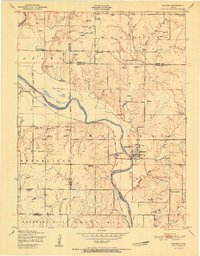 1951 Milford1951 Print · USGSThe Republican River valley remains unchanged in this mid-century portrait of Milford before modern developments altered the local drainage. Genealogists and historians can locate rural landmarks like Acme School District 92 and the Milford Cemetery.
 - 1953 Map of St George, 1954 Print
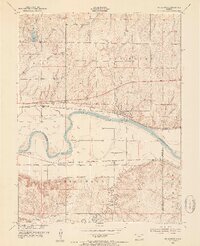 1953 St George1954 Print · USGSMid-century Pottawatomie County is defined here by the twin rail lines of the Union Pacific and the Rock Island flanking the river. Researchers can trace rural life through landmarks like Mt Zion Ch, Sunflower Sch, and the historic Pillsbury Crossing.4 unique versions available
 - 1953 Map of Wamego SW, 1955 Print
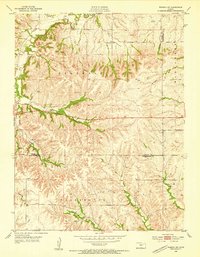 1953 Wamego SW1955 Print · USGSThe Riley and Wabaunsee county line in the early fifties shows a landscape of upland ridges and creek-fed valleys. Researchers can locate local landmarks like the Community Hall, the rural Tabor Sch, and a Windmill marking an early mid-century homestead.3 unique versions available
 - 1955 Map of Ogden
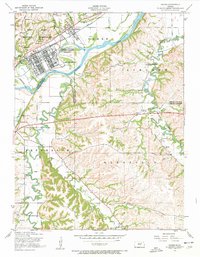 1955 Ogden1955 Print · USGSThe military and rural landscapes of Riley and Geary counties meet here in the mid-1950s where the river bends. Researchers can trace historic burial sites like St Marys Cem and old country schoolhouses including Berry School and Humboldt School.3 unique versions available
 - 1955 Map of Fort Riley NE, 1958 Print
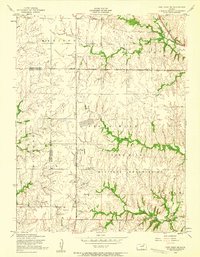 1955 Fort Riley NE1958 Print · USGSRiley and Geary counties are captured here in the mid-fifties, showcasing the expansive military and rural landscape of northeastern Kansas. Researchers can locate family landmarks like Shanks Cemetery and trace vanished school districts such as Magic School or Vinton School.3 unique versions available
 - 1955 Map of Manhattan, 1958 Print
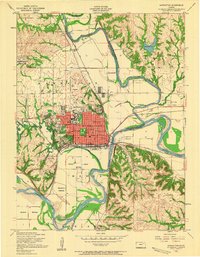 1955 Manhattan1958 Print · USGSManhattan and its surrounding river valleys are captured in the mid-fifties, just before massive hydraulic projects changed the local landscape. Genealogists and historians can trace neighborhood growth near Kansas State College or locate vanished rural landmarks like Hunters Island School and Rocky Ford.4 unique versions available
 - 1955 Map of Swede Creek, 1958 Print
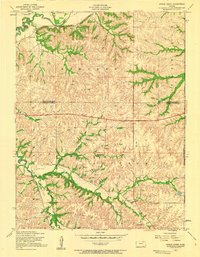 1955 Swede Creek1958 Print · USGSThe rural borderlands of Geary and Riley counties are captured here in the mid-fifties, showing a landscape defined by creek valleys and farm life. Genealogists and researchers can locate landmarks like Ashland Cem, Briggs School, and the junction of McDowell Creek and Swede Creek.3 unique versions available
 - 1955 Map of Milford, 1958 Print
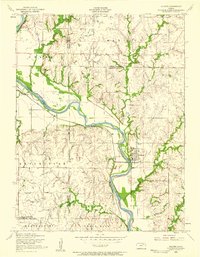 1955 Milford1958 Print · USGSThe Republican River valley in the mid-1950s was a landscape of small schools and prairie churches before major reservoir projects altered the terrain. Genealogists can trace family footprints at Timber Creek Cem, Zoar School, and the Indian Grave Monument.3 unique versions available
 - 1955 Map of Junction City, 1958 Print
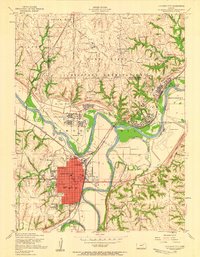 1955 Junction City1958 Print · USGSJunction City and the Fort Riley Military Reservation are captured here in the mid-fifties at the historic meeting of the Republican and Smoky Hill rivers. Researchers can locate civic landmarks like the Courthouse, local schools, and the Kansas First Territorial Capitol.2 unique versions available
 - 1955 Map of Keats, 1958 Print
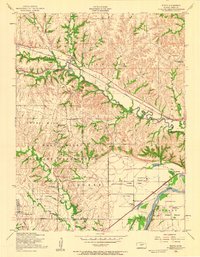 1955 Keats1958 Print · USGSRiley County, Kansas, is captured here in the mid-fifties as it balances military operations and agricultural research. Researchers can trace the path of the Chicago Rock Island and Pacific railroad or locate landmarks like the Rebekah IOOF Home Cem and Elm Hollow Corner.2 unique versions available
Showing maps 1-25 of 153
Top cities of Riley County
- Manhattan historical maps
- Ogden historical maps
- Riley historical maps
- Bala historical maps
- Leonardville historical maps
- Zeandale historical maps
See more
Frequently asked questions
- What are the different types of historical maps available for Riley County?
- What is the oldest map of Riley County?
- Where can I purchase historical maps of Riley County for my home or office?
- Where can I download high-res historical maps of Riley County?
- Are there historical topographic maps available for Riley County?
- Is there historical aerial imagery available for Riley County?
- Where are historical maps of Riley County sourced from?