1950s Maps of Graves County, Kentucky
Explore 22 historic maps of Graves County from the 1950s. These maps offer a rare glimpse into what life looked like during the 1950s — showing old roads, neighborhoods, homes, and landmarks that have changed or disappeared over time.
Whether you're researching your family's past, planning a metal detecting trip, or studying how Graves County's landscape evolved across the 1950s, these high-resolution maps are a powerful tool for exploring the history of this region.
- Focus on a specific era: All maps on this page are from the 1950s, giving you a focused view of this time period.
- See what’s changed: Compare century-old streets, trails, and buildings to today's modern landscape using overlays and satellite layers.
- Research with precision: Use these maps for genealogy, historical research, land use analysis, or educational projects.
- View, download, or print: Maps are fully viewable online in high resolution, and can be downloaded or printed for your own records.
Start exploring Graves County's history through authentic maps from the 1950s. This is your window into the past.
Graves County, KY maps
(22)- 1951 Map of Kirksey, 1955 Print
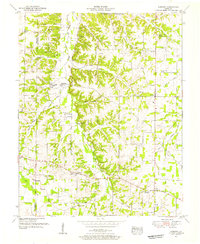 1951 Kirksey1955 Print · USGSCalloway County and the surrounding river bottoms are documented here in the early fifties, showing a rural Kentucky landscape of crossroads towns and family farms. Researchers can locate early church sites like Mt Hebron Church and vanished features like the Clay Pits near Kirksey.3 unique versions available
 - 1951 Map of Farmington, 1955 Print
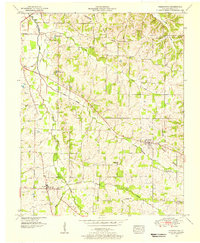 1951 Farmington1955 Print · USGSGraves County, Kentucky, is shown in detail during the early fifties, following the ridge of the Tennessee Valley Divide. Researchers can trace family roots through numerous local landmarks, including Sedalia Sch, Bethlehem Church, and Swann Cem.3 unique versions available
 - 1951 Map of Oak Level, 1955 Print
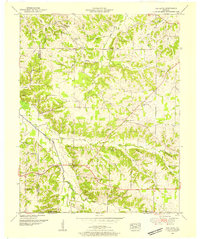 1951 Oak Level1955 Print · USGSIn the early fifties, the rural communities of Marshall and Graves County remained centered on family-named hilltops and country parishes. Genealogists can trace family roots through numerous sites like Bondurant Cem, Oak Level Church, and Harvey.
 - 1951 Map of Melber, 1956 Print
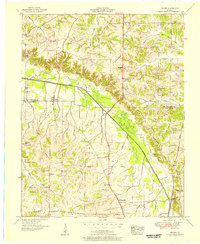 1951 Melber1956 Print · USGSThe rural borderlands of Graves and McCracken Counties come into focus in this early 1950s study of the western Kentucky landscape. Genealogists can trace family names across dozens of sites like Tittsworth Cem and Allcock Cem, or locate rural landmarks like Diggs Chapel and the Illinois Central rail line.2 unique versions available
 - 1951 Map of Hickory, 1956 Print
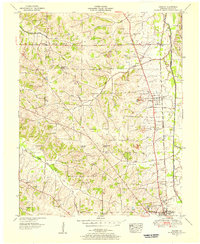 1951 Hickory1956 Print · USGSGraves County at mid-century centers on the busy Illinois Central Railroad and the rural communities north of Mayfield. Researchers can trace dozens of family burial sites like Albritton Cem or visit local landmarks like the County War Memorial Fairgrounds.2 unique versions available
 - 1951 Map of Elva, 1956 Print
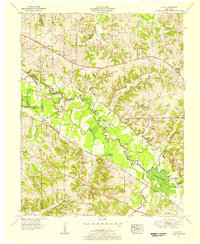 1951 Elva1956 Print · USGSWestern Kentucky's rural river bottoms and early highway corridors are captured here in the early fifties. Genealogists can trace family landmarks and community centers such as Bethlehem Ch, Belton Cem, and the crossing at McCoy Ford Bridge.2 unique versions available
 - 1951 Map of Symsonia, 1956 Print
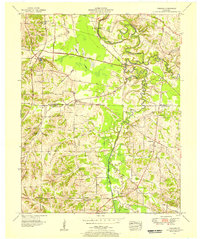 1951 Symsonia1956 Print · USGSWestern Kentucky at the start of the fifties shows a landscape of river forks and small settlements like Symsonia and Hardmoney. Genealogists can trace family names through landmarks like Thompson Cem, Neece Chapel, and the Freemont Sch.2 unique versions available
 - 1951 Map of Westplains, 1956 Print
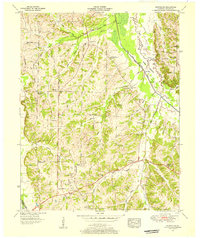 1951 Westplains1956 Print · USGSGraves County in the early 1950s is a landscape of high ridges and winding river bottoms divided by the Tennessee Valley Divide. Researchers can locate numerous family landmarks and rural hubs, including Spence Chapel, the Hardeman Sch, and the Old Casey Bridge.2 unique versions available
 - 1951 Map of Hickory, 1957 Print
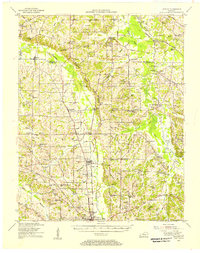 1951 Hickory1957 Print · USGSIn the early 1950s, this area of Graves and McCracken County was a patchwork of small tobacco farms and rail-stop towns. Researchers can locate hundreds of family sites, from the Clay Pits near Hickory to remote landmarks like Neece Chapel and Old Casey Bridge.
 - 1951 Map of Murray, 1957 Print
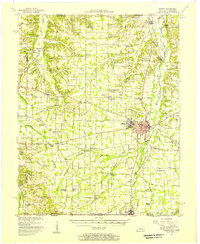 1951 Murray1957 Print · USGSMid-century Calloway County centers on the growing campus of Murray State Teachers College and the vital Nashville Chattanooga and St Louis rail line. Researchers can trace rural family sites at Taylors Store, Backusburg, and the many cemeteries like Bazzell Cem scattered across the Tennessee Valley Divide.
 - 1951 Map of Lynn Grove, 1964 Print
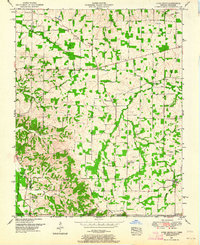 1951 Lynn Grove1964 Print · USGSCalloway County and the Tennessee borderlands appear here in the early 1950s, a rural landscape shaped by the Tennessee Valley Divide. Researchers can trace old family sites near Lynn Grove, Wiswell, and Taylors Store, or find local heritage at Sinking Spring Church and Brush Island Cem.2 unique versions available
 - 1952 Map of Mayfield, 1953 Print
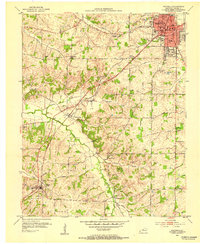 1952 Mayfield1953 Print · USGSMid-century Graves County is centered on the industrial and rail hub of Mayfield, where the railroad connects the town to its rural southern neighbors. Genealogists can locate family names and burial sites at Maplewood Cem, Bethel Cem, and the small settlement of Pryorsburg.
 - 1952 Map of Dublin, 1953 Print
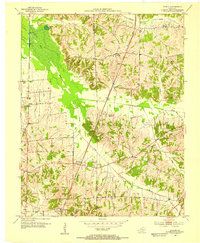 1952 Dublin1953 Print · USGSGraves and Hickman counties come together in this early 1950s survey of the Jackson Purchase. Genealogists can trace family names and rural hubs including Dublin, the Illinois Central rail line, and numerous landmarks like McClure Chapel and Mason Cem.
 - 1952 Map of Cuba, 1953 Print
 1952 Cuba1953 Print · USGSWestern Kentucky and Northwest Tennessee meet in the early fifties along a borderland of productive farmsteads and rural crossroads. Genealogists and local historians can trace family roots at Old Bethlehem Cem, Poyners Chapel, and the divided community of Dukedom.
 - 1952 Map of Fancy Farm, 1953 Print
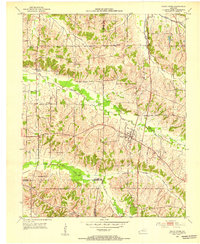 1952 Fancy Farm1953 Print · USGSFancy Farm and the surrounding rural crossroads of Western Kentucky are captured here in the early fifties. Genealogists and local historians can trace family roots through sites like Emmaus Cem, the village of Kirbyton, and the Illinois Central rail line.
 - 1952 Map of Water Valley, 1953 Print
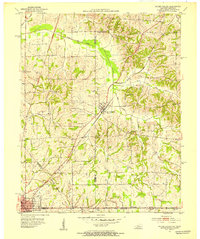 1952 Water Valley1953 Print · USGSIn the early 1950s, the border between Kentucky and Tennessee was a landscape of rail-driven towns and winding bayous. Genealogists and historians can trace family roots through landmarks like Camp Beauregard Cem, the settlement of Feliciana, and the Illinois Central rail line.
 - 1952 Map of Mayfield, 1957 Print
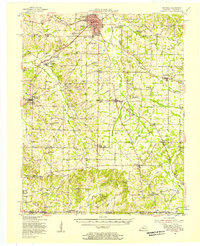 1952 Mayfield1957 Print · USGSGraves County, Kentucky, was a bustling network of rail-side towns and rural parishes at the mid-century. Researchers can trace family history through dozens of landmarks like Rozzell Cem, follow the Illinois Central Railroad, or locate the County Farm.
 - 1952 Map of Water Valley, 1957 Print
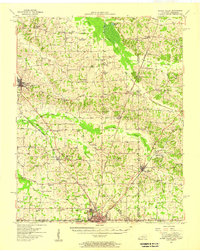 1952 Water Valley1957 Print · USGSWestern Kentucky and northern Tennessee are captured here in the early fifties as the Illinois Central railroad linked farming hubs and small towns. Genealogists can trace family names through dozens of landmarks like Camp Beauregard Cem, McWhort Cem, and Shiloh Sch Ch.
 - 1952 Map of Fancy Farm, 1958 Print
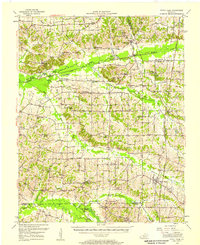 1952 Fancy Farm1958 Print · USGSWestern Kentucky's rural landscapes are documented here in the early fifties, showing the tight-knit farming communities of Graves and Carlisle counties. Trace family history through local landmarks like Fancy Farm, St Charles Sch, and Milburn Cem.
 - 1952 Map of Lynnville, 1973 Print
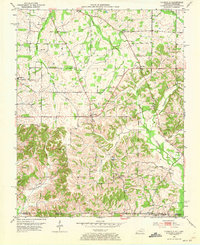 1952 Lynnville1973 Print · USGSSouthern Graves County and the Tennessee borderlands are captured in the early fifties, showing a landscape defined by small farming hamlets and family homesteads. Genealogists can trace rural lifelines through sites like Burnett Chapel, Cuba High Sch, and dozens of burial grounds like Tibbs Cem.
 - 1955 Map of Benton, 1957 Print
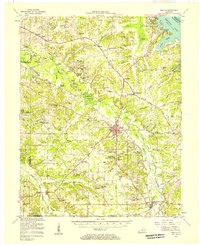 1955 Benton1957 Print · USGSWestern Kentucky in the mid-fifties shows a landscape redefined by the rising waters of Kentucky Lake and the legacy of the Kentucky Dam. Genealogists can trace family names through dozens of rural landmarks like Church Grove Ch, Oak Level Sch, and Steam Mill Bend.
 - 1956 Map of Dyersburg, 1960 Print
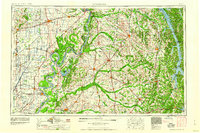 1956 Dyersburg1960 Print · USGSThe Four Rivers region comes alive in the mid-fifties, capturing the intricate borderlands of Tennessee, Kentucky, and Missouri. Genealogists and historians can trace the rail-and-river networks connecting Dyersburg, Caruthersville, and the shoreline of Reelfoot Lake.4 unique versions available
End of results
Showing maps 1-22 of 22
Top cities of Graves County
Frequently asked questions
- What are the different types of historical maps available for Graves County?
- What is the oldest map of Graves County?
- Where can I purchase historical maps of Graves County for my home or office?
- Where can I download high-res historical maps of Graves County?
- Are there historical topographic maps available for Graves County?
- Is there historical aerial imagery available for Graves County?
- Where are historical maps of Graves County sourced from?