Old Maps of Wolf Point District, Montana for Academic Research
Study the evolution of Wolf Point District with 155 high-resolution historic maps. Whether you're teaching, researching, or modeling changes in land use, these maps provide essential visual documentation of urban, environmental, and geographic change.
- Analyze long-term change: Track patterns in development, transportation, and natural features.
- Ideal for environmental or urban studies: Support academic projects with primary historical map data.
- Use in the classroom or lab: Educators and researchers rely on these maps to bring historical context to life.
These maps are a powerful tool for teaching, research, and visualizing how Wolf Point District has changed over the decades.
Wolf Point District, MT maps
(155)- 1910 Map of Todd Lakes, 1975 Print
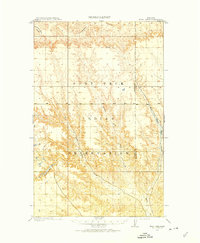 1910 Todd Lakes1975 Print · USGSNortheastern Montana before the Great War is captured here as a sprawling expanse of the Fort Peck Indian Reservation. Trace the intricate drainage of Wolf Creek and locate the natural basins of Todd Lakes in this early ranching-era landscape.2 unique versions available
 - 1910 Map of Cuskers, 1975 Print
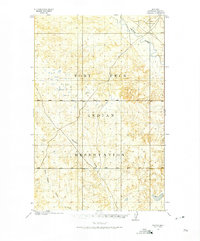 1910 Cuskers1975 Print · USGSNortheastern Montana lands are documented here during the early years of the twentieth century, showing the topography of the Fort Peck Indian Reservation. Genealogists and historians can trace the Poplar River and identify the specific site of the Cuskers House.2 unique versions available
 - 1912 Map of Chelsea
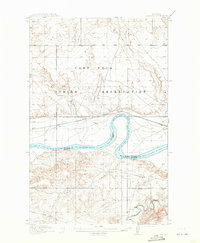 1912 Chelsea1912 Print · USGSNortheastern Montana at the start of the twentieth century shows the intersection of the Fort Peck Indian Reservation and the Great Plains rail economy. Trace early settlements like Chelsea and Nickwall along the Missouri River and the Great Northern tracks.2 unique versions available
 - 1915 Map of Tule Valley
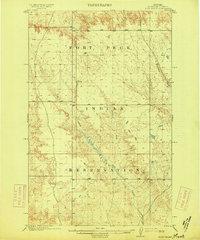 1915 Tule Valley1915 Print · USGSNortheastern Montana is surveyed just before the mid-century as the high plains landscape was defined by open grazing lands and essential waterways. Researchers can trace the original drainage patterns of the Fort Peck Indian Reservation and locate features like Tule Creek and the lone Spring.2 unique versions available
 - 1915 Map of Oswego
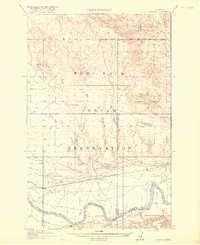 1915 Oswego1915 Print · USGSNortheast Montana at the height of the homesteading era centers on the Oswego rail stop and the wide Missouri River. Genealogists and historians can trace early land patterns across the Fort Peck Indian Reservation and locate landmarks like Three Buttes and the Great Northern rail line.2 unique versions available
 - 1915 Map of Cuskers
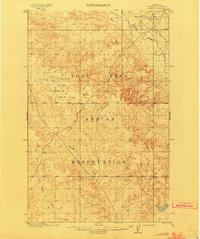 1915 Cuskers1915 Print · USGSNortheastern Montana lands within the Fort Peck Indian Reservation appear here in the early twentieth century. Genealogists and researchers can trace the isolated Cuskers House and follow the natural drainages of the Poplar River and Boxelder Creek.
 - 1915 Map of Todd Lakes
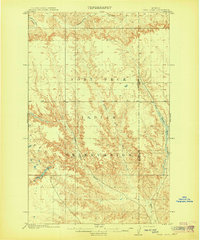 1915 Todd Lakes1915 Print · USGSNortheastern Montana lands within the Fort Peck Indian Reservation appear here during the early twentieth century. Researchers can trace the original Valley Sheridan county line and the winding courses of Wolf Creek and Little Porcupine Creek.
 - 1916 Map of Wolf Point
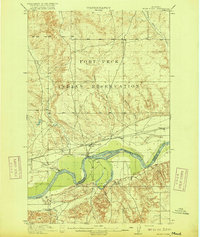 1916 Wolf Point1916 Print · USGSWolf Point and the Missouri River valley are captured here in the years before the First World War. Researchers can trace the early railroad corridor of the Great Northern and find rural landmarks like Oldtown, Macon, and the Randolph School.2 unique versions available
 - 1954 Map of Wolf Point, 1967 Print
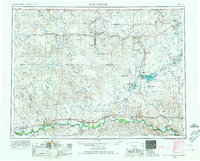 1954 Wolf Point1967 Print · USGSNortheastern Montana and the North Dakota borderlands are shown here in the mid-fifties, dominated by the Missouri River and the Fort Peck Indian Reservation. Genealogists and historians can trace the Great Northern rail line through river towns like Poplar and Culbertson or locate northern border outposts like the U S Custom Office at Raymond.2 unique versions available
 - 1958 Map of Wolf Point
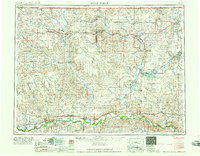 1958 Wolf Point1958 Print · USGSNortheastern Montana is shown during the mid-fifties, featuring the extensive Fort Peck Indian Reservation and the Missouri River valley. Researchers can trace the Great Northern railroad through Wolf Point or locate sites like Slab Crossing and the Coal Mine near Medicine Lake.
 - 1972 Map of Flynn Creek North, 1975 Print
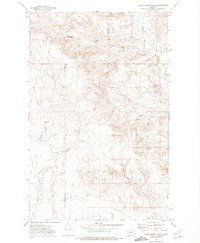 1972 Flynn Creek North1975 Print · USGSThe Fort Peck Indian Reservation in the early 1970s was a landscape defined by the winding drainages of Wolf Creek and Flynn Creek. Researchers can trace the Valley and Roosevelt County boundary through Badger Hole and across the East Fork Flynn Creek.
 - 1972 Map of Chelsea SW, 1975 Print
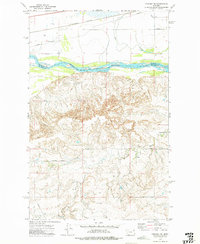 1972 Chelsea SW1975 Print · USGSMcCone and Roosevelt counties are shown here in the early 1970s as industrial pipelines and railroads began to cross the Missouri River breaks. Genealogists and researchers can trace the Fort Peck Indian Reservation Boundary and find local landmarks like Nickwall Dam and the Burlington Northern rail line.
 - 1972 Map of Wolf Point, 1975 Print
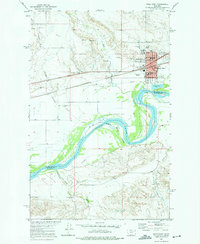 1972 Wolf Point1975 Print · USGSWolf Point thrives as a river and rail center during the early seventies, positioned along the banks of the Missouri River. Genealogists and historians can trace local institutions like Northside Sch, Greenwood Cem, and the Community Hall.
 - 1972 Map of Macon, 1975 Print
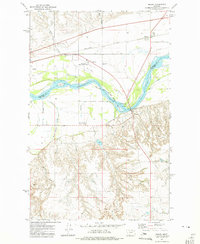 1972 Macon1975 Print · USGSThe Missouri River valley near the Fort Peck Indian Reservation is captured here in the early seventies as a hub of transport and grain. Trace the local community through landmarks like Macon, Courchene Cem, and the Frontier Sch.
 - 1972 Map of Chelsea NW, 1975 Print
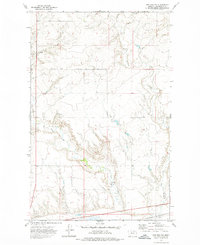 1972 Chelsea NW1975 Print · USGSNortheastern Montana lands within the Fort Peck Indian Reservation are captured here in the early seventies. Researchers can trace the rugged drainages of Tule Creek and Chelsea Creek as they converge near the Burlington Northern railroad and regional Pipeline.
 - 1972 Map of Flynn Creek South, 1975 Print
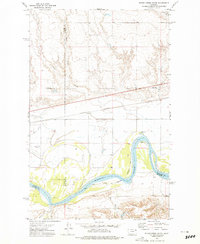 1972 Flynn Creek South1975 Print · USGSThe Missouri River valley at the Fort Peck Indian Reservation is shown here in the 1970s, as the river snakes between multiple county lines. Local researchers can locate the Oswego Ch, a local Cem, and the tracks of the Burlington Northern railroad.2 unique versions available
 - 1972 Map of Wolf Point NE, 1975 Print
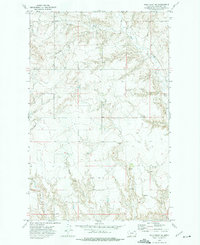 1972 Wolf Point NE1975 Print · USGSThe northern reaches of the Fort Peck Indian Reservation were documented in the early 1970s, showcasing a remote landscape of prairie coulees. Genealogists and researchers can trace drainage patterns along Little Wolf Creek and identify numerous isolated Well and Gravel Pit locations.
 - 1972 Map of Wolf Point NW, 1976 Print
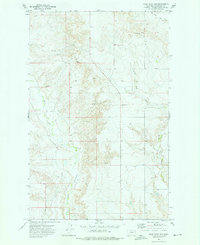 1972 Wolf Point NW1976 Print · USGSRoosevelt County's high plains on the Fort Peck Indian Reservation are captured here in the early 1970s. Researchers can trace the drainages of Wolf Creek and Tule Creek alongside vital water sources like Spring and West Fork No 2.
 - 1973 Map of Peerless 4 NE, 1976 Print
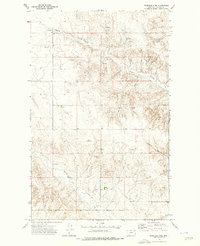 1973 Peerless 4 NE1976 Print · USGSDaniels County ranchlands and tribal borders are captured here in the early 1970s. Trace the Fort Peck Indian Reservation Boundary and the winding paths of Negro Coulee and Police Creek through the plains.2 unique versions available
 - 1973 Map of West Fork NE, 1976 Print
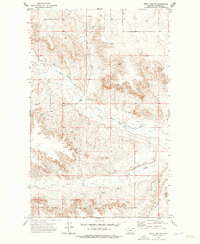 1973 West Fork NE1976 Print · USGSThe Fort Peck Indian Reservation boundary meets the winding waters of northeastern Montana in the early seventies. Researchers can trace the course of the West Fork Poplar River and find landmarks like Hell Creek and Shipstead Coulee.2 unique versions available
 - 1973 Map of Nielsen Coulee, 1976 Print
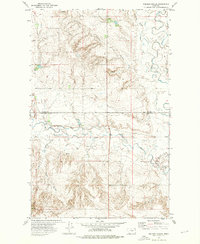 1973 Nielsen Coulee1976 Print · USGSThe high plains along the Daniels and Roosevelt County line are captured here in the early 1970s. Researchers can trace water sources and drainage patterns along the Poplar River, Nielsen Coulee, and West Fork Poplar River.
 - 1973 Map of Cabarett Coulee, 1976 Print
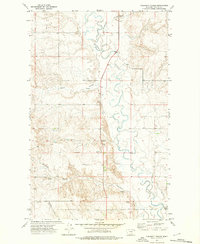 1973 Cabarett Coulee1976 Print · USGSDaniels County in the early seventies is mapped here along the winding Poplar River and the FORT PECK INDIAN RESERVATION BOUNDARY. Genealogists and local historians can locate Fairview Cem, Silver Star Hall, and various named coulees.
 - 1973 Map of Peerless 4 SE, 1976 Print
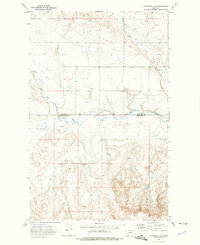 1973 Peerless 4 SE1976 Print · USGSThe high plains of the Fort Peck Indian Reservation are captured here in the early 1970s as the landscape was mapped along the Roosevelt County line. Researchers can trace the winding West Fork Poplar River or locate remote landmarks like the Drill Hole and Police Creek.2 unique versions available
 - 1973 Map of Peerless 4 SW, 1976 Print
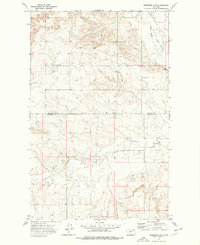 1973 Peerless 4 SW1976 Print · USGSAgricultural life in northeastern Montana takes center stage in the 1970s within the Fort Peck Indian Reservation. Researchers can trace the Daniels and Roosevelt County line while locating landmarks like grain Storage Bins and a Drill Hole.3 unique versions available
 - 1973 Map of Poplar Coulee, 1976 Print
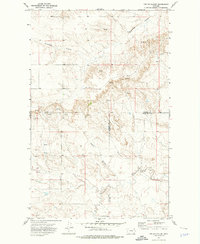 1973 Poplar Coulee1976 Print · USGSNortheast Montana ranching country is captured here in the early seventies, spanning a corner of the Fort Peck Indian Reservation. Trace the rugged drainage of Shipstead Coulee and locate specific water sources like Cottonwood Creek and various Springs.2 unique versions available
Showing maps 1-25 of 155
Top cities near Wolf Point District
Top neighborhoods of Wolf Point District
Frequently asked questions
- What are the different types of historical maps available for Wolf Point District?
- What is the oldest map of Wolf Point District?
- Where can I purchase historical maps of Wolf Point District for my home or office?
- Where can I download high-res historical maps of Wolf Point District?
- Are there historical topographic maps available for Wolf Point District?
- Is there historical aerial imagery available for Wolf Point District?
- Where are historical maps of Wolf Point District sourced from?