1960s Maps of Colfax County, New Mexico
Explore 18 historic maps of Colfax County from the 1960s. These maps offer a rare glimpse into what life looked like during the 1960s — showing old roads, neighborhoods, homes, and landmarks that have changed or disappeared over time.
Whether you're researching your family's past, planning a metal detecting trip, or studying how Colfax County's landscape evolved across the 1960s, these high-resolution maps are a powerful tool for exploring the history of this region.
- Focus on a specific era: All maps on this page are from the 1960s, giving you a focused view of this time period.
- See what’s changed: Compare century-old streets, trails, and buildings to today's modern landscape using overlays and satellite layers.
- Research with precision: Use these maps for genealogy, historical research, land use analysis, or educational projects.
- View, download, or print: Maps are fully viewable online in high resolution, and can be downloaded or printed for your own records.
Start exploring Colfax County's history through authentic maps from the 1960s. This is your window into the past.
Colfax County, NM maps
(18)- 1962 Map of Ash Mountain, 1964 Print
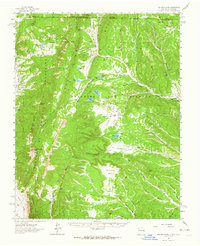 1962 Ash Mountain1964 Print · USGSThe Sangre de Cristo Mountains and the historic Maxwell Land Grant are captured here in the early sixties. Researchers can trace high-altitude ranching and mining history through sites like the Van Lint Mine, Penatlor Ruins, and family-named landmarks like Banning Place.3 unique versions available
 - 1962 Map of Casa Grande, 1965 Print
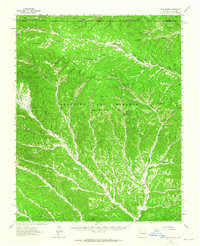 1962 Casa Grande1965 Print · USGSThe Maxwell land grant area of Colfax County is shown in the early sixties as a rugged network of ranching camps and old timber routes. Researchers can locate the Catskill (Site), trace the Old Railroad Grade, and find historic Charcoal Kilns.2 unique versions available
 - 1963 Map of Wheeler Peak, 1967 Print
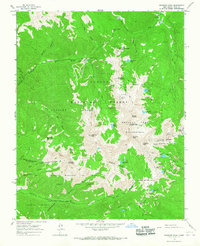 1963 Wheeler Peak1967 Print · USGSThe Sangre de Cristo Mountains rise to their highest New Mexico point in the early 1960s, revealing a landscape of high-altitude mining and wilderness. Trace the old mining operations at Twining and the Bull of the Woods Pasture Mines or locate remote outposts like Ditch Cabin.2 unique versions available
 - 1963 Map of Eagle Nest, 1967 Print
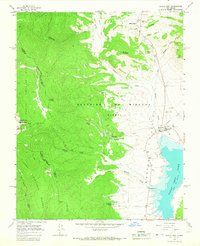 1963 Eagle Nest1967 Print · USGSThe Moreno Valley and the Sangre de Cristo high country come into focus during the early sixties, centered on the waters of Eagle Nest Lake. Local historians can trace the Maxwell Grant boundaries and find remote sites like the Klondike Mine and Idlewild.3 unique versions available
 - 1963 Map of Red River Pass, 1967 Print
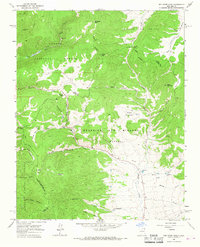 1963 Red River Pass1967 Print · USGSHigh in the Sangre de Cristo range during the early sixties, this area shows a landscape of mountain passes and mining history. Researchers can locate remote high-altitude sites like Memphis, explore mines near Bitter Creek, and trace the early roads through Red River Pass.2 unique versions available
 - 1964 Map of Stony Lake, 1966 Print
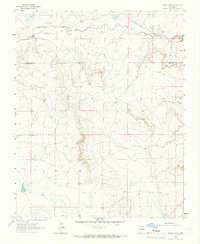 1964 Stony Lake1966 Print · USGSThe high plateau of Mora and Colfax counties comes to life in the mid-1960s, showing a landscape defined by ranching and historic passage. Researchers can trace the legendary Santa Fe Trail and locate family-owned landmarks like the Red River Ranch near Ocate Creek.
 - 1964 Map of Colmor, 1966 Print
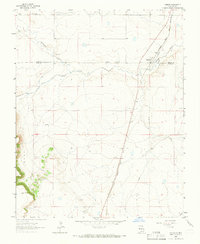 1964 Colmor1966 Print · USGSMora County ranching and rail activity are captured here in the mid-sixties, dominated by the Atchison Topeka and Santa Fe corridor. Researchers can trace local roots at the Sweetwater Cem or locate the old stations at Colmor and Nolan.
 - 1964 Map of Pinon Hills, 1967 Print
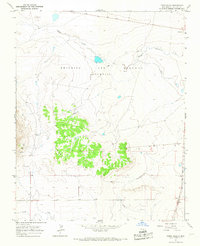 1964 Pinon Hills1967 Print · USGSColfax County's high plains and rugged uplands are captured here in the mid-1960s, showing the intersection of historic land grants and modern transport. Trace the legacy of the Beaubien and Miranda (Maxwell) grant alongside the Atchison Topeka and Santa Fe railroad and the Charette Lake Canal.
 - 1965 Map of Sauble Circle Dot Ranch, 1967 Print
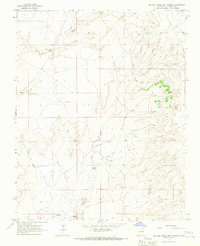 1965 Sauble Circle Dot Ranch1967 Print · USGSRanching life in Colfax County is captured here in the mid-sixties, showing an era of open grazing and isolated homesteads. Researchers can locate family-named landmarks like Sauble Circle Dot Ranch, Langely Ranch, and the Jumping Divide.
 - 1965 Map of Abbott NW, 1967 Print
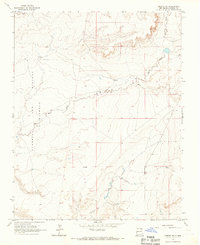 1965 Abbott NW1967 Print · USGSColfax County's high plains and land grant territories are captured here in the mid-1960s, showing a landscape defined by water and ranching. Researchers can trace the winding Rio del Plano and locate landmarks like the Drill Hole or Alkali Arroyo across the historic Beaubien and Maxwell grant.
 - 1965 Map of French, 1967 Print
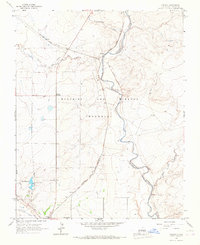 1965 French1967 Print · USGSColfax County's high plains landscape is captured in the mid-1960s, showing the intersection of rail history and river systems. Genealogists and historians can trace the tracks of the Atchison Topeka and Santa Fe through French or locate the State Boys School and local Cemetery.
 - 1965 Map of Springer Lake, 1967 Print
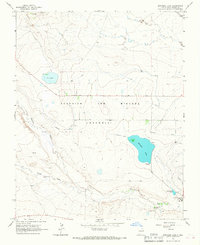 1965 Springer Lake1967 Print · USGSColfax County's ranching and irrigation systems are frozen in time here during the mid-sixties. Researchers can trace the massive Beaubien and Miranda (Maxwell) grant boundaries alongside the TX Ranch and the A T & S F Ry rail line.
 - 1965 Map of Taylor Springs, 1967 Print
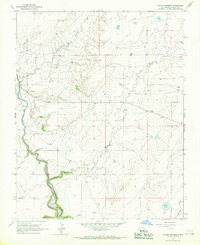 1965 Taylor Springs1967 Print · USGSNorthern New Mexico in the mid-1960s reveals a landscape defined by historic routes and river valleys. Researchers can trace the Santa Fe Trail as it crosses Chico Creek and locate early sites like Taylor Springs and a remote Cem.
 - 1965 Map of Abbott, 1967 Print
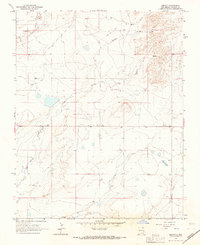 1965 Abbott1967 Print · USGSColfax County's high plains ranching country is captured here in the mid-1960s as a landscape of historic transit and seasonal water. Genealogists and historians can trace the path of the SANTA FE TRAIL and locate the Abbott Cem or the basin of East Lake.
 - 1965 Map of Springer, 1967 Print
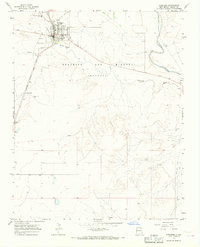 1965 Springer1967 Print · USGSHigh plains ranching and rail history meet in the mid-1960s at the intersection of the Santa Fe Trail and the Cimarron River. Trace the development of Springer and its local landmarks, from the State Boys School Area 1 to the Rodeo Ground.
 - 1965 Map of Osha Mountain, 1968 Print
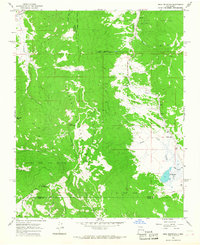 1965 Osha Mountain1968 Print · USGSHigh-altitude New Mexico terrain meets historic land grants in the 1960s near Black Lake. Genealogists and historians can trace old Pack Trails and Jeep Trails connecting the San Antonio Ch to landmarks like Osha Mountain.2 unique versions available
 - 1965 Map of Palo Flechado Pass, 1968 Print
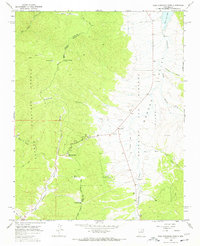 1965 Palo Flechado Pass1968 Print · USGSThe high mountain passes and historic land grants of the Sangre de Cristo range are frozen in time during the mid-1960s. Genealogists and researchers can trace the old Kit Carson Trail and identify property boundaries within the Maxwell Land Grant Boundary near Agua Fria.
 - 1966 Map of Charette Lake, 1968 Print
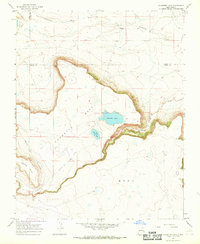 1966 Charette Lake1968 Print · USGSMora and Colfax counties come alive in the mid-1960s, showing a landscape defined by historic transit and vital water management. Genealogists and historians can trace the Santa Fe Trail (Mountain Route) and locate landmarks like Bedford Ranch and Charette Lake.
End of results
Showing maps 1-18 of 18
Top cities of Colfax County
- Raton historical maps
- Angel Fire historical maps
- Springer historical maps
- Cimarron historical maps
- Eagle Nest historical maps
Frequently asked questions
- What are the different types of historical maps available for Colfax County?
- What is the oldest map of Colfax County?
- Where can I purchase historical maps of Colfax County for my home or office?
- Where can I download high-res historical maps of Colfax County?
- Are there historical topographic maps available for Colfax County?
- Is there historical aerial imagery available for Colfax County?
- Where are historical maps of Colfax County sourced from?