1960s Maps of Emmons County, North Dakota
Explore 11 historic maps of Emmons County from the 1960s. These maps offer a rare glimpse into what life looked like during the 1960s — showing old roads, neighborhoods, homes, and landmarks that have changed or disappeared over time.
Whether you're researching your family's past, planning a metal detecting trip, or studying how Emmons County's landscape evolved across the 1960s, these high-resolution maps are a powerful tool for exploring the history of this region.
- Focus on a specific era: All maps on this page are from the 1960s, giving you a focused view of this time period.
- See what’s changed: Compare century-old streets, trails, and buildings to today's modern landscape using overlays and satellite layers.
- Research with precision: Use these maps for genealogy, historical research, land use analysis, or educational projects.
- View, download, or print: Maps are fully viewable online in high resolution, and can be downloaded or printed for your own records.
Start exploring Emmons County's history through authentic maps from the 1960s. This is your window into the past.
Emmons County, ND maps
(11)- 1962 Map of Sugarloaf Butte, 1963 Print
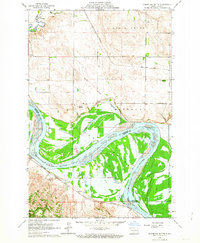 1962 Sugarloaf Butte1963 Print · USGSThe Missouri River bottoms south of Bismarck were in transition during the early sixties as reservoir waters began to rise. Genealogists and historians can trace the Old Fort Rice Military Road, locate Manning School No 1, and find the Stewardsdale Cem.
 - 1965 Map of Herreid NW, 1966 Print
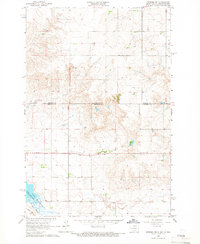 1965 Herreid NW1966 Print · USGSThe borderlands of North and South Dakota meet the rising waters of the Missouri River basin in the mid-sixties. Genealogists and local historians can locate the Spring Creek Cem and trace the original path of Spring Creek before it enters Oahe Reservoir.
 - 1965 Map of Herreid NE, 1966 Print
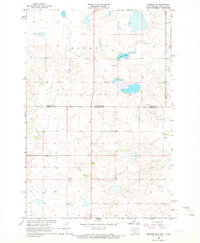 1965 Herreid NE1966 Print · USGSThe northern edge of the South Dakota prairie meets the North Dakota border in the mid-1960s. Genealogists and local historians can locate a rural Cem and trace the shores of Nieuwsma Lake along the Emmons and Campbell county line.
 - 1965 Map of Pollock, 1967 Print
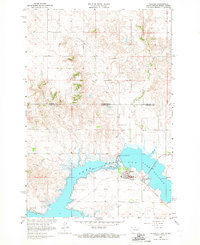 1965 Pollock1967 Print · USGSPollock was a town transformed by the mid-1960s as it adjusted to its new position between Oahe Reservoir and Pocasse Lake. Genealogists and researchers can trace the Soo Line rail route or locate rural burial grounds like Spring Valley Cem.
 - 1966 Map of Mahto NE, 1967 Print
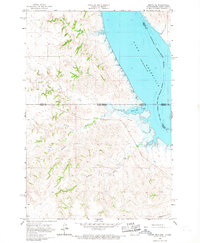 1966 Mahto NE1967 Print · USGSThe Missouri River borderlands in the mid-1960s reveal a landscape shaped by the rising Oahe Reservoir. Genealogists and historians can trace the Standing Rock Indian Reservation Boundary and drainage at Fireheart Creek and Blackfoot Creek.2 unique versions available
 - 1966 Map of Pollock NW, 1967 Print
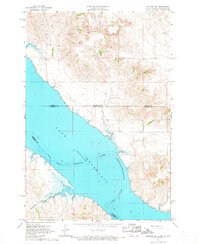 1966 Pollock NW1967 Print · USGSThe Missouri River valley undergoes a massive transition in the mid-1960s as the Oahe Reservoir fills the landscape. Researchers can trace the submerged riverbanks and the Standing Rock Indian Reservation Boundary alongside landmarks like Dale Cem.
 - 1968 Map of Cannon Ball, 1971 Print
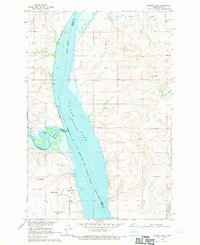 1968 Cannon Ball1971 Print · USGSThe Missouri River valley near the Standing Rock Indian Reservation is shown here in the late sixties as Lake Oahe reshaped the landscape. Trace the local geography of Cannon Ball, from the Cannon Ball Memorial Congregational Cem to the Old Railroad Grade.2 unique versions available
 - 1968 Map of Cannon Ball SE, 1971 Print
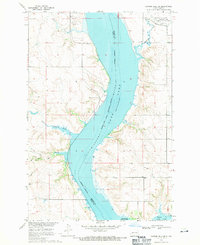 1968 Cannon Ball SE1971 Print · USGSThe Missouri River valley in the late sixties reveals a landscape transformed by the reservoir waters of Lake Oahe. Genealogists and local historians can locate early landmarks like the Old Catholic Cem and St James Ch on the bluffs above the rising water.
 - 1968 Map of Fort Yates NW, 1971 Print
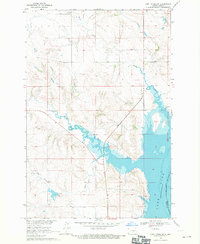 1968 Fort Yates NW1971 Print · USGSThe Missouri River breaks of Sioux County appear here in the late sixties as the waters of Lake Oahe rise. Researchers can trace the boundaries of the Standing Rock Ind Res Bdy and locate St Lukes Cem along the rugged coulees of Porcupine Creek.
 - 1968 Map of Fort Yates SE, 1971 Print
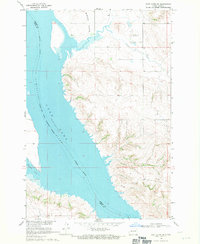 1968 Fort Yates SE1971 Print · USGSThe Missouri River borderlands in the late sixties show a landscape transformed by the rising waters of the newly formed reservoir. Trace the shoreline of Lake Oahe past Winona Flats and the Reierson Landing Strip as it meets the Standing Rock Indian Reservation.
 - 1968 Map of Fort Yates NE, 1971 Print
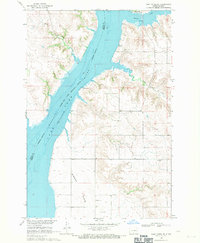 1968 Fort Yates NE1971 Print · USGSThe Missouri River valley in Emmons County is seen here during the late 1960s as the river basin underwent significant transformation. Genealogists and researchers can trace local landmarks like Lutheran Cem and the geography of Winona Flats near Beaver Creek.2 unique versions available
End of results
Showing maps 1-11 of 11
Top cities of Emmons County
- Linton historical maps
- Strasburg historical maps
- Hazelton historical maps
- Hague historical maps
- Braddock historical maps
Frequently asked questions
- What are the different types of historical maps available for Emmons County?
- What is the oldest map of Emmons County?
- Where can I purchase historical maps of Emmons County for my home or office?
- Where can I download high-res historical maps of Emmons County?
- Are there historical topographic maps available for Emmons County?
- Is there historical aerial imagery available for Emmons County?
- Where are historical maps of Emmons County sourced from?