1970s Maps of Kimble County, Texas
Explore 18 historic maps of Kimble County from the 1970s. These maps offer a rare glimpse into what life looked like during the 1970s — showing old roads, neighborhoods, homes, and landmarks that have changed or disappeared over time.
Whether you're researching your family's past, planning a metal detecting trip, or studying how Kimble County's landscape evolved across the 1970s, these high-resolution maps are a powerful tool for exploring the history of this region.
- Focus on a specific era: All maps on this page are from the 1970s, giving you a focused view of this time period.
- See what’s changed: Compare century-old streets, trails, and buildings to today's modern landscape using overlays and satellite layers.
- Research with precision: Use these maps for genealogy, historical research, land use analysis, or educational projects.
- View, download, or print: Maps are fully viewable online in high resolution, and can be downloaded or printed for your own records.
Start exploring Kimble County's history through authentic maps from the 1970s. This is your window into the past.
Kimble County, TX maps
(18)- 1970 Map of Julio Draw, 1973 Print
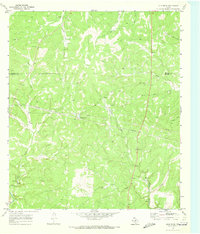 1970 Julio Draw1973 Print · USGSThe Menard and Kimble county line in the early 1970s reveals a ranching landscape carved by deep draws and seasonal washes. Researchers can trace the mid-century infrastructure of Baker Ranch and locate remote sites like the Roadside Park or the Pumping Station.
 - 1970 Map of Rust Ranch, 1973 Print
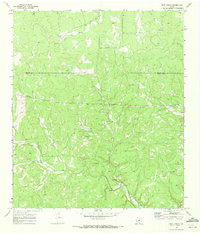 1970 Rust Ranch1973 Print · USGSThe ranching country of the Texas Hill Country appears in the early seventies, spanning the Kimble and Menard county line. Genealogists and land historians can trace family holdings like Rust Ranch and Spiller Ranch alongside the springs and Gravel Pits that supported the local economy.2 unique versions available
 - 1970 Map of Brewer Hollow, 1973 Print
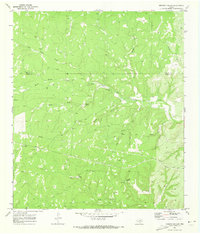 1970 Brewer Hollow1973 Print · USGSThe Kimble and Menard county borderlands are shown here in the early seventies, a landscape of ranching and remote draws. Researchers can trace family history at the Bannowsky Cem or locate old water sources like Iona Spring and Walton Spring.
 - 1970 Map of Elm Slough, 1973 Print
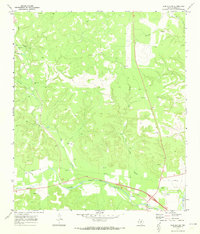 1970 Elm Slough1973 Print · USGSThe Llano River valley in Kimble County is captured here in the early 1970s as ranching and new infrastructure meet. Researchers can locate family landmarks like the Bear Creek Cem and Bolt Ranch alongside the County Airport.2 unique versions available
 - 1970 Map of Stark Creek, 1973 Print
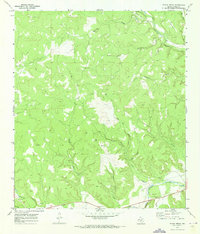 1970 Stark Creek1973 Print · USGSThe Llano River valley in the early seventies reveals a landscape of isolated ranching outposts and seasonal creeks. Researchers can locate the settlement of Cleo, the historic Cem, and rural landmarks like Stark Creek or the Corral north of the river.2 unique versions available
 - 1970 Map of Big Draw, 1973 Print
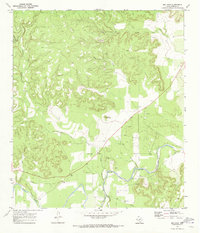 1970 Big Draw1973 Print · USGSThe Llano River valley in the early seventies shows a landscape of ranching and early energy infrastructure. Researchers can locate the Gentry Creek Cem and natural landmarks like Teacup Mountain and Gorman Spring.2 unique versions available
 - 1974 Map of Telegraph, 1977 Print
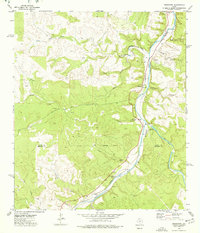 1974 Telegraph1977 Print · USGSKimble County's river-fed ranch lands are documented here in the mid-1970s, centered on the settlement of Telegraph. Researchers can locate family landmarks like Wooten Cem, Paint Creek Ranch, and the unique Seven Hundred Springs along the South Llano River.
 - 1974 Map of Junction, 1977 Print
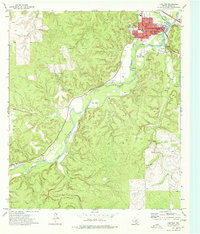 1974 Junction1977 Print · USGSThe confluence of the Llano rivers in the 1970s reveals a growing community centered around the Junction townsite and its riverbanks. Researchers can trace the mid-century footprint of the Texas Tech University Center, find local landmarks like Lovers Leap, and locate the Cem near the city center.
 - 1974 Map of Junction SE, 1977 Print
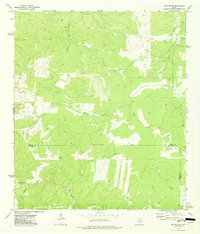 1974 Junction SE1977 Print · USGSThe Texas Hill Country at the intersection of Kimble, Edwards, and Kerr Counties is captured here in the mid-1970s. Researchers can trace land-use patterns across Chalk Creek or locate local water sources like Boiling Springs and the Preserve.
 - 1974 Map of Noxville, 1977 Print
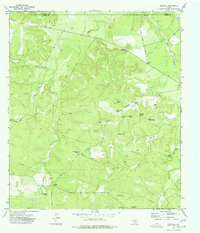 1974 Noxville1977 Print · USGSThe rural crossing at Noxville and the winding James River define this Kimble County landscape in the 1970s. Genealogists and local historians can locate remote landmarks like North Trap Windmill and family-named springs such as Walker Spring.
 - 1974 Map of Tobe Branch, 1977 Print
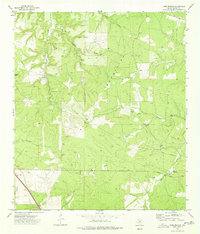 1974 Tobe Branch1977 Print · USGSKimble County ranch land is captured here in the mid-1970s, showing a rugged landscape shaped by the Blue Mountains. Researchers can trace old water sources and rural routes like Tobe Spring, Holden Hollow, and the winding Noxville Road.
 - 1974 Map of Harper West, 1977 Print
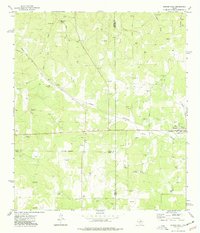 1974 Harper West1977 Print · USGSThe Pedernales River headwaters area comes alive in the 1970s, showing a landscape defined by ranching and gravel extraction. Trace local family history through landmarks like Bur Oak Windmill, Shin Oak Spring, and the settlement of Harper.
 - 1974 Map of Allen Creek, 1977 Print
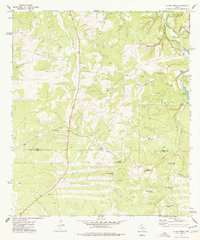 1974 Allen Creek1977 Print · USGSRanching life on the Kimble and Kerr county line is captured here in the mid-1970s. Genealogists and historians can trace family-named landmarks like the Bee Waterhole Windmill, the Cem on Segovia Road, and the isolated Two Dot Windmill.2 unique versions available
 - 1974 Map of The Falls, 1977 Print
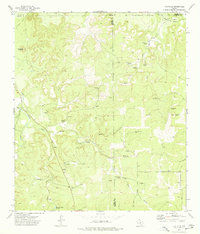 1974 The Falls1977 Print · USGSThe rugged junction of Mason, Kimble, and Gillespie counties is captured here in the mid-1970s. Researchers can trace family ranching roots through the Anderegg Cem, Rock House Windmill, and Hermans Point.
 - 1974 Map of Segovia, 1977 Print
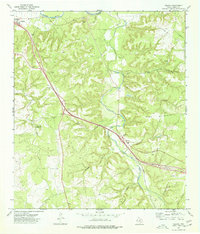 1974 Segovia1977 Print · USGSKimble County in the mid-1970s shows a landscape of deep canyons and evolving roads as the modern highway began to bypass traditional routes. Genealogists and local historians can trace family-named sites like Schrier Cem, Nethery, and the Old Segovia Road.
 - 1974 Map of Bailey Creek, 1977 Print
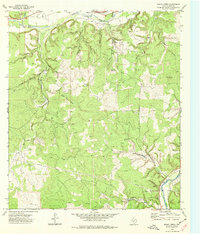 1974 Bailey Creek1977 Print · USGSKimble County's high-divide country is mapped here in the mid-seventies, showing a landscape defined by the North Llano River and South Llano River. Genealogists and historians can trace land use through family-named landmarks like Allison Mountain and Bailey Spring Creek.2 unique versions available
 - 1974 Map of Old Noxville, 1977 Print
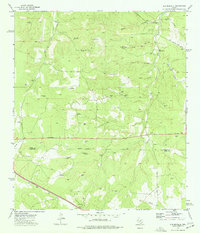 1974 Old Noxville1977 Print · USGSThe ranching country of the Texas Hill Country is captured here in the mid-seventies, spanning the Kimble and Kerr county line. Researchers can trace the legacy of Old Noxville through the Noxville Cem and numerous named water sources like The Big Springs.
 - 1974 Map of Mudge Draw, 1977 Print
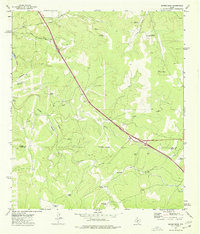 1974 Mudge Draw1977 Print · USGSThe ranchlands of the Texas Hill Country were still defined by water and wind in the mid-seventies. Genealogists and local historians can trace family-named sites like Bierschwale Windmill and Garrett Windmill along the Kimble Co Kerr Co boundary.
End of results
Showing maps 1-18 of 18
Top cities of Kimble County
Frequently asked questions
- What are the different types of historical maps available for Kimble County?
- What is the oldest map of Kimble County?
- Where can I purchase historical maps of Kimble County for my home or office?
- Where can I download high-res historical maps of Kimble County?
- Are there historical topographic maps available for Kimble County?
- Is there historical aerial imagery available for Kimble County?
- Where are historical maps of Kimble County sourced from?