1950s Maps of Utah
Explore 571 historic maps of Utah from the 1950s. These maps offer a rare glimpse into what life looked like during the 1950s — showing old roads, neighborhoods, homes, and landmarks that have changed or disappeared over time.
Whether you're researching your family's past, planning a metal detecting trip, or studying how Utah's landscape evolved across the 1950s, these high-resolution maps are a powerful tool for exploring the history of this region.
- Focus on a specific era: All maps on this page are from the 1950s, giving you a focused view of this time period.
- See what’s changed: Compare century-old streets, trails, and buildings to today's modern landscape using overlays and satellite layers.
- Research with precision: Use these maps for genealogy, historical research, land use analysis, or educational projects.
- View, download, or print: Maps are fully viewable online in high resolution, and can be downloaded or printed for your own records.
Start exploring Utah's history through authentic maps from the 1950s. This is your window into the past.
Utah maps
(571)- 1950 Map of Orem
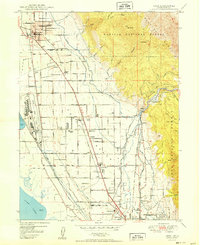 1950 Orem1950 Print · USGSIn the shadow of the Wasatch Range after the war, this area shows the heavy industrialization of the lakeshore and the complex irrigation of the benchlands. Trace the footprint of the Geneva Steel Plant, the rail lines at Orem Sta, and local landmarks like Lincoln High Sch.
 - 1950 Map of Aspen Grove
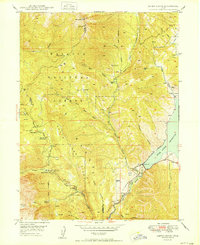 1950 Aspen Grove1950 Print · USGSThe high Wasatch Range at the mid-point of the century shows a landscape defined by mountain recreation and education. Genealogists and historians can trace the foundations of Aspen Grove, the Alpine Summer School (B. Y. U.), and the early rail route of the Rio Grande and Western.
 - 1950 Map of Woodside
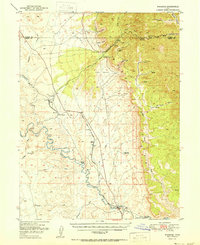 1950 Woodside1950 Print · USGSEmery County was a landscape of deep canyons and rail-side outposts at the midpoint of the twentieth century. Researchers can trace the industrial footprint of the Geneva Coal Mine or locate early settlements and family landmarks like Woodside, Silvagni Ranch, and the local Cem.2 unique versions available
 - 1950 Map of Timpanogos Cave
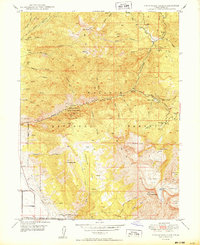 1950 Timpanogos Cave1950 Print · USGSThe high Wasatch Range comes into sharp focus during the mid-twentieth century, centered on the dramatic American Fork Canyon. Geologists and local historians can trace early mountain infrastructure including the Salt Lake City Aqueduct, Mutual Dell, and Timpooneke Guard Sta.
 - 1950 Map of Provo
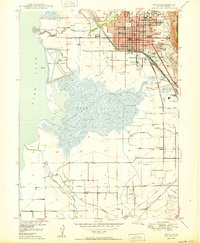 1950 Provo1950 Print · USGSProvo and the surrounding valley are captured here at a moment of significant mid-century expansion between the lake and the forest. Researchers can trace the layout of the B. Y. U. (Upper Campus), locate the City Cemetery, and find smaller settlements like Palmyra.
 - 1950 Map of Cedar City NW
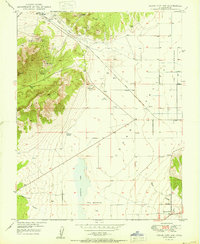 1950 Cedar City NW1950 Print · USGSIron County ranching and mining meet in the mid-century Cedar Valley, where the Union Pacific railroad connects small settlements and desert basins. Researchers can trace the layout of Hamiltons Fort, explore the numerous workings of the Great Western Mine, or locate Quichapa Lake.
 - 1950 Map of Bridal Veil Falls
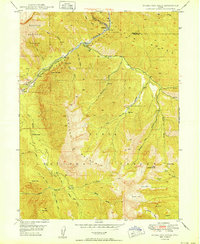 1950 Bridal Veil Falls1950 Print · USGSThe Provo River canyon was a bustling corridor for the Denver & Rio Grande Western and mountain travelers in the 1950s. Trace old settlements like Vivian Park, Springdell, and the landmark Bridal Veil Falls.
 - 1950 Map of Springville
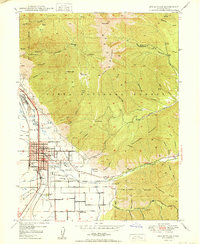 1950 Springville1950 Print · USGSSpringville and Mapleton sit at the foot of the Wasatch Range in the 1950s, showing a transition from town life to mountain wilderness. Genealogists can locate family sites near Evergreen Cem or trace industry along the Utah Railway and Ironton.
 - 1950 Map of Kanarraville
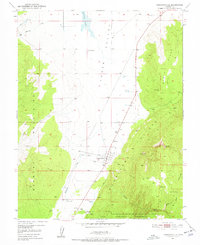 1950 Kanarraville1950 Print · USGSSouthern Utah ranching and settlement life are captured here at mid-century, where the town of Kanarraville meets the Hurricane Cliffs. Trace old pathways like the Rock Trail or locate family sites near Kanarra Creek and the local Cemetery.5 unique versions available
 - 1950 Map of Spanish Fork
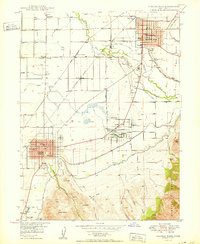 1950 Spanish Fork1950 Print · USGSThe Utah Valley at mid-century shows a thriving agricultural and industrial corridor shaped by irrigation and rail. Researchers can trace family roots through the Benjamin Cem, locate old schoolhouses like Rees Sch, or find the historic Sugar Refinery.
 - 1950 Map of West Mountain, 1951 Print
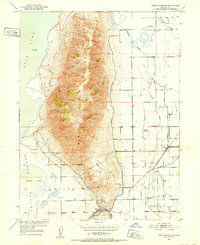 1950 West Mountain1951 Print · USGSThe foothills of the Wasatch Range meet the shores of Utah Lake in the early 1950s. Genealogists and industrial historians can trace the tracks of the Denver and Rio Grande Western through Goshen Gap to the Keigley Quarry.3 unique versions available
 - 1950 Map of Burnt Cabin Gorge, 1952 Print
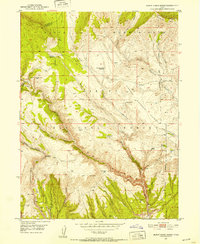 1950 Burnt Cabin Gorge1952 Print · USGSThe high Uinta backcountry of 1950 shows a working landscape of stock reservoirs and deep canyons. Trace the history of high-country ranching at the Diamond Counting Corral or explore the rugged depths of Burnt Cabin Gorge.2 unique versions available
 - 1950 Map of Antelope Peak, 1952 Print
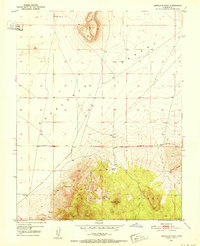 1950 Antelope Peak1952 Print · USGSIron County in the early fifties is captured here as a landscape of remote desert ranges and essential water holes. Researchers can trace the path of Antelope Road and locate critical desert waypoints like Antelope Springs and Table Butte.2 unique versions available
 - 1950 Map of Blair Basin, 1952 Print
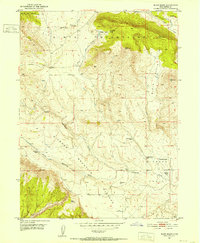 1950 Blair Basin1952 Print · USGSUintah County ranching life is preserved in the early fifties, showing the high-country homesteads of the Diamond Mountain Plateau. Genealogists and historians can trace family operations at the Carl Searle Ranch, Willis Ranch, and Goodrich Ranch.2 unique versions available
 - 1950 Map of Goshen Valley North, 1952 Print
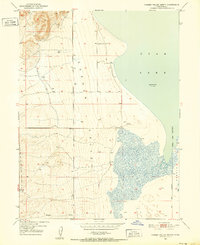 1950 Goshen Valley North1952 Print · USGSThe western shores of Utah Lake meet the Goshen Valley in the early fifties, showing a landscape of transition. Trace historical water use through the Abandoned Canal, Pinyon Creek, and early Genola Town Boundary.3 unique versions available
 - 1950 Map of Enoch, 1952 Print
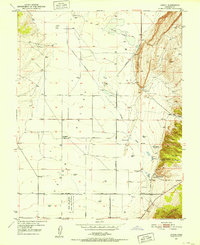 1950 Enoch1952 Print · USGSSettlement and irrigation projects define this mid-century look at the Iron County desert as the community of Enoch expanded. Researchers can trace early land history through Stevensville (Site), the Enoch Cem, and family outposts like Adams Ranch.3 unique versions available
 - 1950 Map of Dyer Mountain, 1952 Print
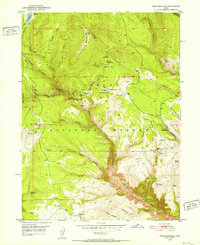 1950 Dyer Mountain1952 Print · USGSUintah County's high-country mining and forest management are captured here during the early fifties. Researchers can locate the historic Bullionville (Site), trace the Government Ditch, and explore the area around the Dyer Mines.3 unique versions available
 - 1950 Map of Cedar City, 1952 Print
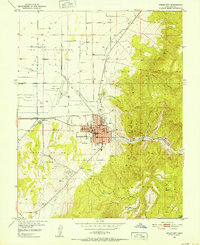 1950 Cedar City1952 Print · USGSCedar City at mid-century is a thriving mountain-valley hub where the railroad and early aviation meet. Genealogists and local historians can trace the town's development through landmarks like the Branch Agricultural College, the Stock Yards, and the local Cemetery.6 unique versions available
 - 1950 Map of Soldiers Pass, 1952 Print
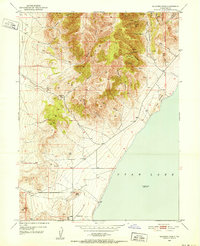 1950 Soldiers Pass1952 Print · USGSThe western shores of Utah Lake appear at mid-century, featuring the remnants of early settlement and mountain passage. Genealogists and historians can trace the Mosida (Site) area and locate industrial markers like the Mine Tunnel and Pumice Pit.3 unique versions available
 - 1950 Map of Enoch, 1957 Print
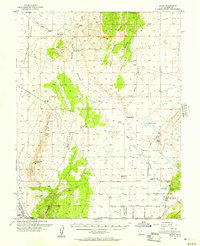 1950 Enoch1957 Print · USGSIron County ranching and mining operations are captured here at mid-century as the landscape transitioned between historic forts and modern industry. Researchers can locate the Fort Johnson site, the old Union Pacific corridor, and the waters of Rush Lake.2 unique versions available
 - 1950 Map of Pelican Point, 1958 Print
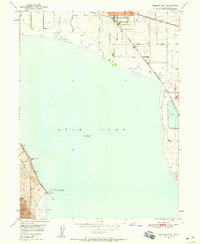 1950 Pelican Point1958 Print · USGSThe western shores of Utah Lake and the northern outskirts of American Fork are shown here during the early fifties. Genealogists and historians can trace the paths of the Union Pacific through Wing or locate the Calcite Quarry and waterfront Pumping Sta.3 unique versions available
 - 1950 Map of Fort Douglas, 1958 Print
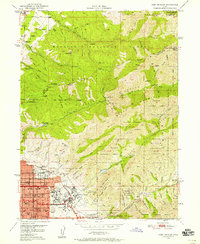 1950 Fort Douglas1958 Print · USGSThe eastern benches of Salt Lake City meet the Wasatch foothills in the early fifties, showing a city expanding toward the canyons. Genealogists and historians can locate the City Cemetery, the University of Utah, and the This Is the Place Monument.
 - 1950 Map of Lincoln Point, 1958 Print
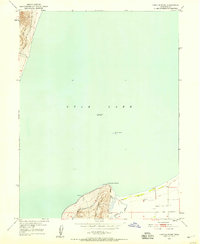 1950 Lincoln Point1958 Print · USGSUtah Lake's southern shores are captured here at mid-century, showing the relationship between the rising terrain and the water. Researchers can trace the path of an Abandoned Canal and locate benchmarks near Lincoln Point and West Mountain.2 unique versions available
 - 1950 Map of West Mountain, 1959 Print
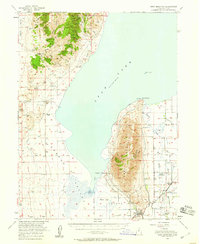 1950 West Mountain1959 Print · USGSThe shores of Utah Lake and the industrial corridors of the southern valley come into focus during the mid-century. Genealogists and historians can trace the rail lines of the Union Pacific and locate historic sites like Mosida (Site) and the Keigley Quarry.2 unique versions available
 - 1950 Map of Iron Mountain, 1959 Print
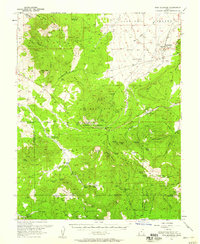 1950 Iron Mountain1959 Print · USGSSouthern Utah's mining and ranching heritage is on full display in the 1950s as industry expands across the Harmony Mountains. Researchers can locate specific operations like the Columbia Steel Mine alongside historical landmarks such as Old Irontown and Page Ranch.
Showing maps 1-25 of 571
Top cities of Utah
- Salt Lake City historical maps
- West Valley City historical maps
- West Jordan historical maps
- Provo historical maps
- Orem historical maps
- Sandy historical maps
See more
Top counties of Utah
- Salt Lake County historical maps
- Utah County historical maps
- Davis County historical maps
- Weber County historical maps
- Washington County historical maps
- Cache County historical maps
See more
Frequently asked questions
- What are the different types of historical maps available for Utah?
- What is the oldest map of Utah?
- Where can I purchase historical maps of Utah for my home or office?
- Where can I download high-res historical maps of Utah?
- Are there historical topographic maps available for Utah?
- Is there historical aerial imagery available for Utah?
- Where are historical maps of Utah sourced from?