1950s Maps of Okanogan County, Washington
Explore 31 historic maps of Okanogan County from the 1950s. These maps offer a rare glimpse into what life looked like during the 1950s — showing old roads, neighborhoods, homes, and landmarks that have changed or disappeared over time.
Whether you're researching your family's past, planning a metal detecting trip, or studying how Okanogan County's landscape evolved across the 1950s, these high-resolution maps are a powerful tool for exploring the history of this region.
- Focus on a specific era: All maps on this page are from the 1950s, giving you a focused view of this time period.
- See what’s changed: Compare century-old streets, trails, and buildings to today's modern landscape using overlays and satellite layers.
- Research with precision: Use these maps for genealogy, historical research, land use analysis, or educational projects.
- View, download, or print: Maps are fully viewable online in high resolution, and can be downloaded or printed for your own records.
Start exploring Okanogan County's history through authentic maps from the 1950s. This is your window into the past.
Okanogan County, WA maps
(31)- 1950 Map of Grand Coulee Dam
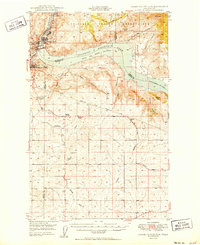 1950 Grand Coulee Dam1950 Print · USGSThe Grand Coulee region during the late 1940s reveals a landscape transformed by the new reservoir and the massive engineering of the dam. Researchers can trace local history through the Lafollette Cem, the community at Elmer City, and rural sites like the Grand Coulee Grange.2 unique versions available
 - 1950 Map of Nespelem, 1952 Print
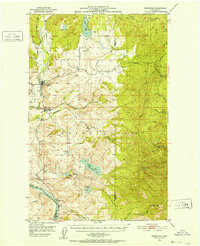 1950 Nespelem1952 Print · USGSWithin the Colville Indian Reservation at mid-century, this area shows the transition from mountain lakes to the Columbia River shore. You can trace early settlements and agency sites like Nespelem, Koontzville, and the Colville Indian Agency during a period of significant regional change.4 unique versions available
 - 1950 Map of Boot Mtn, 1952 Print
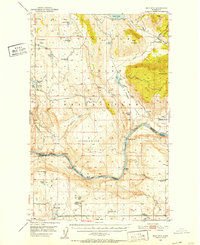 1950 Boot Mtn1952 Print · USGSThe Okanogan highlands meet the Columbia River in the early 1950s within the Colville Indian Reservation. Trace rural life through the Condon Ferry (Site) and several remote schoolhouses like Long Lake Sch.3 unique versions available
 - 1950 Map of Alameda Flat, 1965 Print
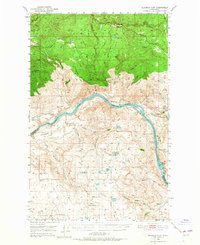 1950 Alameda Flat1965 Print · USGSThe Columbia River flows through Okanogan and Douglas counties in the early 1950s, defining the rugged boundary of the Colville Indian Reservation. Genealogists and local historians can locate the Rex Grange Hall, Del Rio Cemetery, and several legacy mining sites like the Apache Mine.2 unique versions available
 - 1951 Map of Wauconda
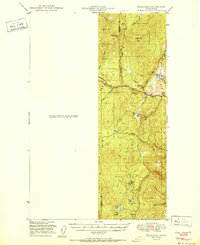 1951 Wauconda1951 Print · USGSOkanogan and Ferry counties were centers of high-country mining and forestry during the early fifties. Genealogists and historians can locate the Knob Hill Mine, Tom Thumb Mine, and the Lookout at Sheep Mtn alongside the remote Sheridan Road.2 unique versions available
 - 1951 Map of Bodie Mountain
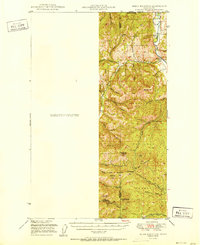 1951 Bodie Mountain1951 Print · USGSNorthern Washington mountain life and mining are documented here at mid-century as the forest services mapped the high ridges. Trace local sites like the Sheridan Mine, the settlement of Toroda, and peaks from Harvard Mtn to Hardscrabble Mtn.
 - 1952 Map of Alameda Flat
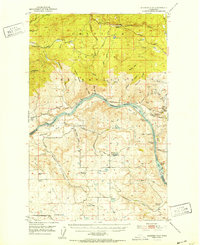 1952 Alameda Flat1952 Print · USGSOkanogan County settlement and industry are captured here in the early fifties along the Columbia River. Genealogists and historians can trace several closed schools like Rex School and remote mining sites including the Apache Mine.
 - 1952 Map of Disautel, 1954 Print
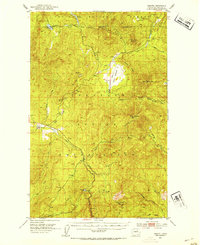 1952 Disautel1954 Print · USGSHigh in the Okanogan country during the early fifties, this area shows the intersection of the Colville Indian Reservation and federal forest lands. Researchers can locate the settlement of Disautel and trace old mountain routes past Moses Mountain and Crawfish Lake.3 unique versions available
 - 1953 Map of Bald Knob, 1955 Print
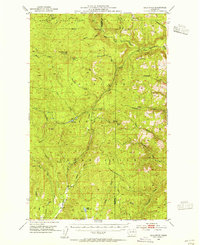 1953 Bald Knob1955 Print · USGSThe Okanogan highlands in the early 1950s show a landscape of tribal lands and national forests at the peak of the fire lookout era. Genealogists and historians can trace the Colville Indian Reservation boundaries and find remote sites like Bungalow Mine or Owhi Lake.3 unique versions available
 - 1953 Map of Omak Lake, 1956 Print
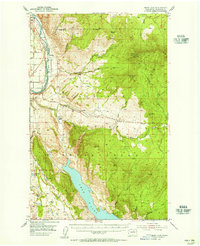 1953 Omak Lake1956 Print · USGSThe Okanogan River valley and the Colville Indian Reservation are captured here in the early fifties, showing the region's transition into the modern era. Genealogists and historians can trace the Great Northern rail line and locate landmarks like St Marys Mission and the settlement of Riverside.2 unique versions available
 - 1953 Map of Ritzville, 1966 Print
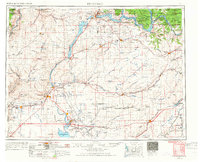 1953 Ritzville1966 Print · USGSEastern Washington was undergoing a massive agricultural and industrial transformation in the mid-fifties as irrigation from the Grand Coulee Dam reached the plateau. Researchers can trace the mid-century rail network of the Great Northern and locate vital local sites like Larson Air Force Base and Odessa.3 unique versions available
 - 1954 Map of Okanogan, 1964 Print
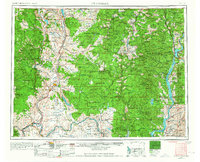 1954 Okanogan1964 Print · USGSNorth Central Washington’s interior comes into focus during the mid-fifties, showing the rise of the Columbia River reservoir system. Genealogists and historians can trace the Great Northern rail line and locate historical mining operations at the Mountain Lion Mine or Gold Hill Mine.2 unique versions available
 - 1955 Map of Concrete, 1967 Print
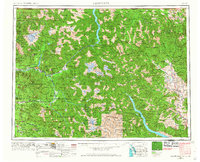 1955 Concrete1967 Print · USGSThe North Cascades in the mid-fifties reveal a landscape of deep glacier-fed lakes and riverside timber towns. You can trace the Great Northern rail lines through Granite Falls or locate remote outposts like Stehekin and Marblemount along the Skagit and Chelan waters.
 - 1956 Map of Loup Loup, 1959 Print
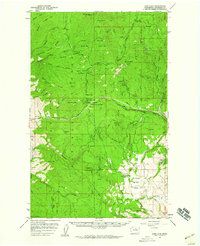 1956 Loup Loup1959 Print · USGSThe Okanogan highlands in the mid-1950s come to life on this sheet through a rugged landscape of mining claims and mountain ranching. Researchers can trace the legacy of the Red Shirt Mine or locate family homesteads like Stout Ranch and Olema.2 unique versions available
 - 1956 Map of Loomis, 1959 Print
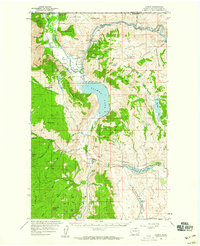 1956 Loomis1959 Print · USGSOkanogan County near the Canadian border is shown here in the mid-fifties, dominated by mining and ranching infrastructure. Historians can trace the Great Northern rail line and locate dozens of mineral claims including the Black Bear and Kabba Texas.3 unique versions available
 - 1956 Map of Tiffany Mountain, 1959 Print
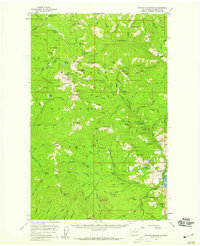 1956 Tiffany Mountain1959 Print · USGSThe Okanogan highlands in the late fifties show a transition from active mining to alpine recreation. Genealogists and historians can locate remote family sites like Meyer Ranch or trace the mining boom through the Bernhardt Mine and Gubser Mine.2 unique versions available
 - 1956 Map of Horseshoe Basin, 1959 Print
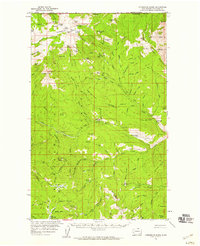 1956 Horseshoe Basin1959 Print · USGSThe high Okanogan backcountry along the Canadian border is captured here in the mid-1950s, a landscape of remote peaks and seasonal outposts. Researchers can trace the locations of old wilderness sites like the Duncan James Cabin, Coyote Camp, and the uniquely named Skull and Crossbones Road.3 unique versions available
 - 1957 Map of Okanogan
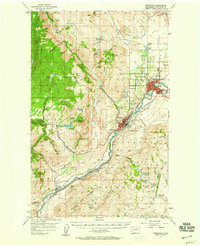 1957 Okanogan1957 Print · USGSThe Okanogan River valley comes alive in this late-fifties survey, capturing the region's growth along the Great Northern rail line. Trace the development of Okanogan and Omak, or locate family sites at Malott, the Ruby mining site, and Okanogan Cemetery.2 unique versions available
 - 1957 Map of Bridgeport, 1958 Print
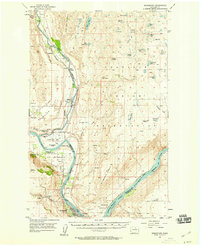 1957 Bridgeport1958 Print · USGSThe Columbia River valley underwent significant change in the late fifties following the completion of the Chief Joseph Dam. You can trace the historic Ft Okanogan (Site), locate the Bedard Sch (Aban'd), and see the route of the Great Northern railway.2 unique versions available
 - 1957 Map of Conconully, 1958 Print
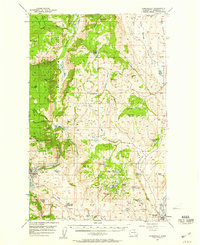 1957 Conconully1958 Print · USGSOkanogan County in the late fifties shows a landscape of mountain mining and valley ranching defined by the Salmon River drainage. Researchers can trace the Great Northern rail line and find historic sites like the Silver Mts Mine and Beeman School.3 unique versions available
 - 1957 Map of Mt. Bonaparte, 1958 Print
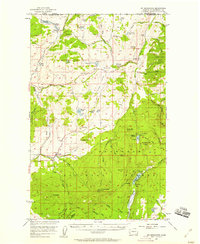 1957 Mt. Bonaparte1958 Print · USGSUpper Okanogan County and the Canadian borderland are seen here in the late fifties, showcasing a landscape of high-altitude mining and timber camps. Researchers can trace the remnants of the Bolster (Site), the remote Poland China Mine, and the social hub at Knobhill Grange.2 unique versions available
 - 1957 Map of Tonasket, 1958 Print
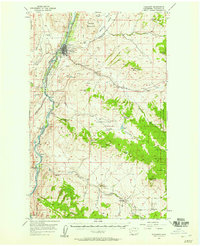 1957 Tonasket1958 Print · USGSThe Okanogan River valley in the late fifties was a vital corridor of rail and river industry. Genealogists and historians can trace the foundations of local life through the Great Northern rail stops, the Chewiliken Sch, and ancient Petroglyphs near Anglin.2 unique versions available
 - 1957 Map of Oroville, 1959 Print
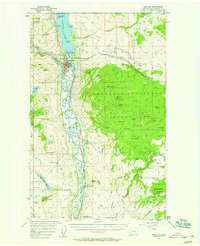 1957 Oroville1959 Print · USGSThe Okanogan Valley at the close of the 1950s shows a frontier landscape defined by the convergence of the Similkameen and Okanogan rivers. Local historians can trace the Great Northern Railway route past the Lucky Knock Mine and through early settlements like Oroville and Ellisforde.3 unique versions available
 - 1957 Map of Brewster, 1959 Print
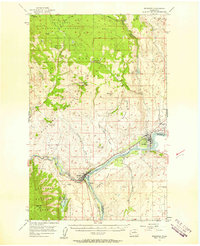 1957 Brewster1959 Print · USGSThe confluence of the Columbia and Methow rivers comes alive in this late-fifties survey of the Okanogan valley. Local historians can trace the Northern Pacific RR through Brewster and Pateros or locate the old Gambles Mill (Site).2 unique versions available
 - 1957 Map of Aeneas Valley, 1959 Print
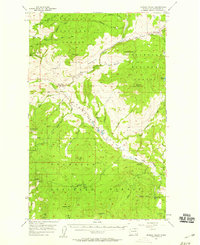 1957 Aeneas Valley1959 Print · USGSOkanogan County’s high valley and timberlands are captured here in the late fifties, during a period of active mountain forestry. Genealogists and historians can locate the Sunny Slope Grange Hall, the Aeneas Guard Sta, and the mountain waters of Lyman Lake.3 unique versions available
Showing maps 1-25 of 31
Top cities of Okanogan County
- Omak historical maps
- Okanogan historical maps
- Brewster historical maps
- Oroville historical maps
- Tonasket historical maps
- Twisp historical maps
See more
Frequently asked questions
- What are the different types of historical maps available for Okanogan County?
- What is the oldest map of Okanogan County?
- Where can I purchase historical maps of Okanogan County for my home or office?
- Where can I download high-res historical maps of Okanogan County?
- Are there historical topographic maps available for Okanogan County?
- Is there historical aerial imagery available for Okanogan County?
- Where are historical maps of Okanogan County sourced from?