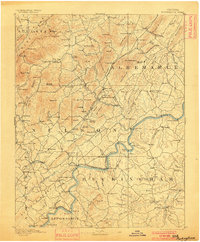
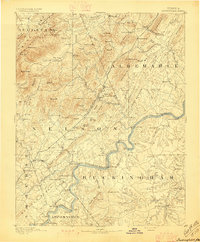
1892 Map of Buckingham
USGS Topo · Published 1900About this map
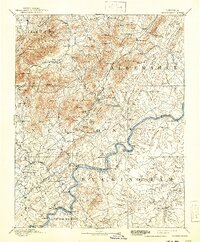
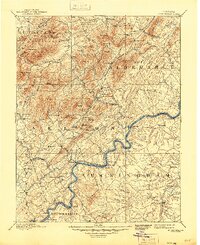
The Lovingston district and the surrounding Blue Ridge foothills define this late 19th-century landscape, where the agricultural economy of Virginia met the emerging industrial potential of the James River valley. Early industrial sites such as the Soap Stone Quarry near Schuyler and local milling centers like Faber Mills and Variety Mills highlight the era's reliance on local natural resources. The transportation network is anchored by the Virginia Midland Railroad and the Chesapeake and Ohio Railroad, which facilitated the movement of goods and people between rural depots like New Glasgow Depot and Buffalo Springs Station. Cultural landmarks, including the Kleinburg School and Bagby Church, serve as vital anchors for genealogical research in these small communities. The topography is dominated by prominent heights such as Green Mt. and Findlay Mountain, which funneled settlement toward the banks of the Buffalo River and the Tye River.
Find a feature on this map
170 named features on this map. Tap any name to fly to it.
Don’t see what you’re looking for? This feature index may not catch every label — zoom into the map to look around manually.
Map Details
Editions of this 1892 Buckingham Map
7 editions found
Other maps of this area
1891 · Palmyra
USGS Topo · 1:125,000
1891 · Farmville
USGS Topo · 1:125,000
1892 · Lynchburg
USGS Topo · 1:125,000
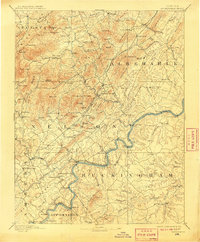
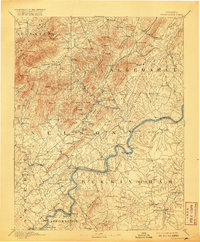
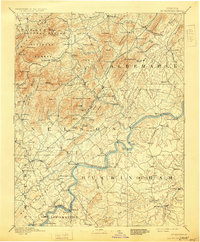
1892 · Buckingham
USGS Topo · 1:125,000
1892 · Appomattox
USGS Topo · 1:125,000
1892 · Gordonsville
USGS Topo · 1:125,000
1892 · Harrisonburg
USGS Topo · 1:125,000
1893 · Farmville
USGS Topo · 1:125,000
1894 · Staunton
USGS Topo · 1:125,000
1894 · Lexington
USGS Topo · 1:125,000