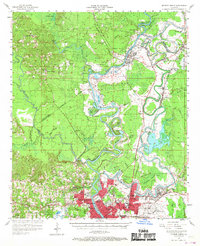
1957 Map of Monroe North
USGS Topo · Published 1967About this map
The Ouachita River meanders through the heart of this North Louisiana landscape, defining the boundaries and development of West Monroe and Monroe during the late 1950s. The urban core is detailed with institutional landmarks such as NE Louisiana State College and the Sanitarium, while the industrial and transportation footprint is marked by the Missouri Pacific and the Selman Airport. Beyond the city limits, the terrain transitions into a complex network of bayous and lakes, including the expansive Black Bayou Lake and the winding Chauvin Bayou.
Find a feature on this map
102 named features on this map. Tap any name to fly to it.
Don’t see what you’re looking for? This feature index may not catch every label — zoom into the map to look around manually.
Map Details
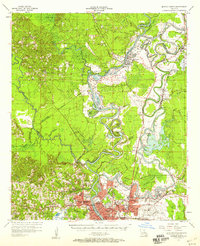
Editions of this 1957 Monroe North Map
2 editions found
Other maps of this area
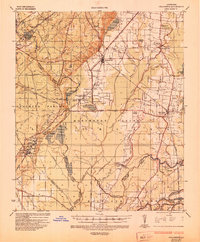
1935 · Collinston
USGS Topo · 1:62,500
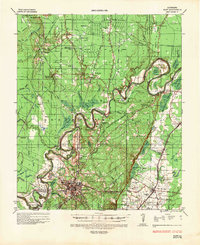
1935 · Naff
USGS Topo · 1:62,500
1935 · Alto
USGS Topo · 1:62,500
1935 · Drew
USGS Topo · 1:62,500
1935 · Haile
USGS Topo · 1:62,500
1940 · Monroe
USGS Topo · 1:62,500
1952 · Calhoun
USGS Topo · 1:62,500
1952 · Farmerville
USGS Topo · 1:62,500
1953 · Chatham
USGS Topo · 1:62,500
1955 · Jackson
USGS Topo · 1:250,000