1900s (20th Century) Maps of Cheyenne County, Colorado
Explore 59 historic maps of Cheyenne County from the 1900s (20th Century). These maps offer a rare glimpse into what life looked like during the 1900s — showing old roads, neighborhoods, homes, and landmarks that have changed or disappeared over time.
Whether you're researching your family's past, planning a metal detecting trip, or studying how Cheyenne County's landscape evolved across the 1900s, these high-resolution maps are a powerful tool for exploring the history of this region.
- Focus on a specific era: All maps on this page are from the 1900s, giving you a focused view of this time period.
- See what’s changed: Compare century-old streets, trails, and buildings to today's modern landscape using overlays and satellite layers.
- Research with precision: Use these maps for genealogy, historical research, land use analysis, or educational projects.
- View, download, or print: Maps are fully viewable online in high resolution, and can be downloaded or printed for your own records.
Start exploring Cheyenne County's history through authentic maps from the 1900s. This is your window into the past.
Cheyenne County, CO maps
(59)- 1954 Map of Limon
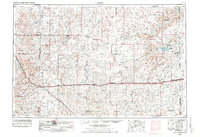 1954 Limon1954 Print · USGSThe Eastern Colorado plains and the Kansas borderlands come alive in the mid-fifties, showing the vital rail-and-road corridor through Limon. Genealogists and historians can trace the Chicago Rock Island & Pacific line through Burlington and find remote outposts like Arickaree and Anton.4 unique versions available
 - 1954 Map of Lamar, 1964 Print
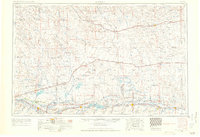 1954 Lamar1964 Print · USGSSoutheastern Colorado and the Kansas borderlands appear here in the mid-fifties, dominated by the vital Arkansas River irrigation network. Researchers can trace the development of river towns like Lamar and La Junta alongside the Amity Cemetery and several major reservoirs.3 unique versions available
 - 1957 Map of Limon
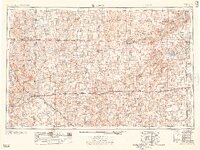 1957 Limon1957 Print · USGSThe High Plains of Eastern Colorado and Western Kansas come alive in the mid-1950s, showing the vital rail-and-road connections of the era. You can trace the path of the Chicago Rock Island and Pacific through towns like Limon, Stratton, and Burlington or find the early footprint of Bonny Reservoir.
 - 1958 Map of Limon
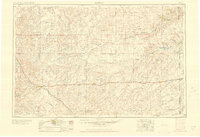 1958 Limon1958 Print · USGSEastern Colorado and the Kansas border meet in this late-fifties study of High Plains rail and river systems. Researchers can trace the path of the Chicago Rock Island and Pacific through Limon and Burlington, or locate the Bonny Dam and Bonny Reservoir.
 - 1958 Map of Lamar
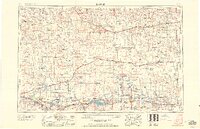 1958 Lamar1958 Print · USGSThe High Plains of Eastern Colorado and Western Kansas in the late fifties reveal a landscape tied to the Arkansas River and the rails. Trace the heritage of the river valley through Fort Lyon, the Atchison Topeka and Santa Fe RR, and rural landmarks like Kendrick Church.2 unique versions available
 - 1969 Map of Arapahoe SE, 1971 Print
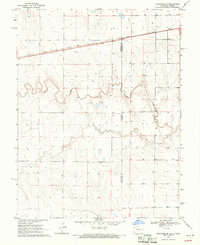 1969 Arapahoe SE1971 Print · USGSThe high plains of the Colorado-Kansas border come into focus in the late sixties, highlighting the vital rail corridor of the Union Pacific. Researchers can trace the path of Ladder Creek and locate numerous family ranch assets including scattered Well sites and surveyed fence lines.
 - 1969 Map of Cheyenne Wells 4 NE, 1971 Print
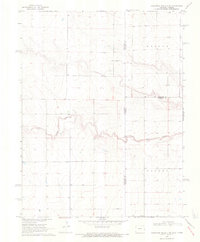 1969 Cheyenne Wells 4 NE1971 Print · USGSThe Colorado and Kansas borderlands meet in the late sixties along the winding path of South Ladder Creek. Genealogists and researchers can trace township boundaries and find family-named landmarks like Wells or the remote Colony and Weskan districts.3 unique versions available
 - 1969 Map of Cheyenne Wells 4 SE, 1971 Print
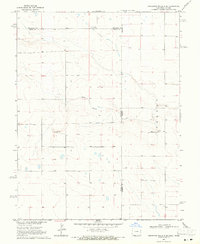 1969 Cheyenne Wells 4 SE1971 Print · USGSHigh plains life at the Colorado and Kansas border is captured here during the late sixties. Genealogists and local historians can trace the rural landscape near Colony, locating the local Cem and the winding path of White Woman Creek.3 unique versions available
 - 1969 Map of Arapahoe NE, 1971 Print
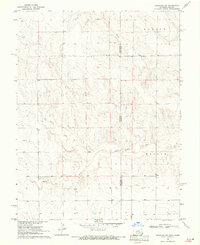 1969 Arapahoe NE1971 Print · USGSThe High Plains of the Colorado-Kansas border come into focus in the late sixties, where the Smoky Hill River defines the landscape. Genealogists and researchers can trace early water sources like Wells and the terrain of Morton and Weskan.
 - 1969 Map of Mount Sunflower SW, 1972 Print
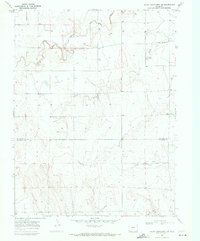 1969 Mount Sunflower SW1972 Print · USGSHigh plains ranching along the Kansas border comes into focus in the late sixties. Researchers can trace the North Fork Smoky Hill River and locate remote outposts like Beverage Ranch and the Monotony terrain.
 - 1969 Map of Burlington 3 SE, 1972 Print
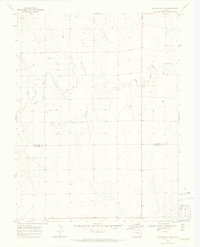 1969 Burlington 3 SE1972 Print · USGSThe eastern Colorado plains meet the high prairie in the late sixties, where the North Fork Smoky Hill River carves its way through the borderlands. Researchers can trace the section lines across Kit Carson Co and Cheyenne Co to locate numerous named wells and rural roads.5 unique versions available
 - 1969 Map of Mount Sunflower, 1972 Print
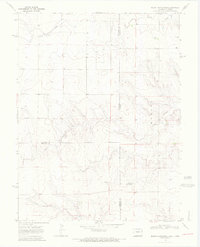 1969 Mount Sunflower1972 Print · USGSThe High Plains border of Colorado and Kansas comes into focus in this late 1960s survey. Genealogists and historians can locate the highest point in Kansas at Mount Sunflower and trace the sparse prairie settlements like Hitchcock and the drainages of Goose Creek.2 unique versions available
 - 1969 Map of Alpine Ranch, 1972 Print
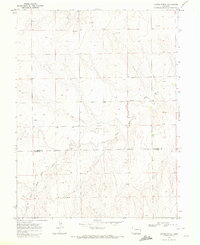 1969 Alpine Ranch1972 Print · USGSThe eastern Colorado plains at the boundary of Kit Carson and Cheyenne Counties are captured here just before the 1970s. Researchers can trace rural landmarks like Alpine Ranch, the settlement at Perry, and numerous Well sites along the North Fork Smoky Hill River.
 - 1969 Map of Burlington 3 SW, 1972 Print
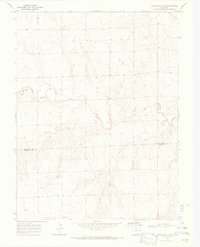 1969 Burlington 3 SW1972 Print · USGSEastern Colorado ranching country is documented here in the late sixties, where the border of Kit Carson Co and Cheyenne Co meets. Genealogists and researchers can trace the North Fork Smoky Hill River and locate landmarks like Windrift Ranch and several rural wells.5 unique versions available
 - 1978 Map of Galatea NE
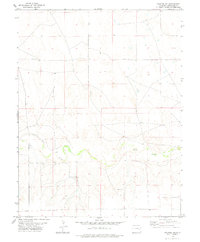 1978 Galatea NE1978 Print · USGSCheyenne County ranching lands are captured in the late 1970s, showing a landscape defined by water scarcity and open range. Researchers can trace the named settlement of Jacobs and the crucial water infrastructure of Rush Creek and various Wells.
 - 1978 Map of Aroya
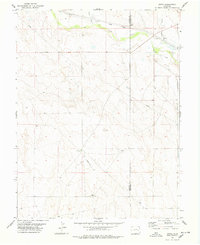 1978 Aroya1978 Print · USGSLincoln County ranching and rail transport converge in the late 1970s along the Union Pacific line. Researchers can trace the layout of the Aroya settlement and find family landmarks like Rush Creek Ranch or the local Cem.
 - 1978 Map of Galatea SW
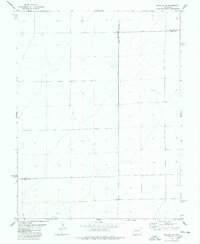 1978 Galatea SW1978 Print · USGSThe high plains of eastern Colorado meet in the late seventies at a unique juncture of three counties. Genealogists and land researchers can trace the intersection of Lincoln Co Kiowa Co and Lincoln Co Cheyenne Co, locating remote landmarks like Well and BM 4575.
 - 1978 Map of Sanders Ranch
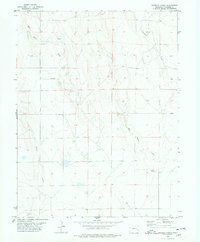 1978 Sanders Ranch1978 Print · USGSCheyenne County ranching lands are captured here in the late seventies, showing the sparse but vital water networks of the high plains. Genealogists and local historians can locate the isolated Grave and trace the cattle operations around Sanders Ranch and Adobe Gulch.
 - 1978 Map of Stacy Lakes Draw
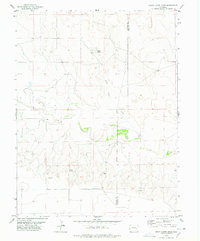 1978 Stacy Lakes Draw1978 Print · USGSThe Colorado high plains near the Lincoln and Cheyenne county line are captured here in the late seventies. Genealogists and historians can trace the specific locations of Brown Mill Ranch, the settlement at Trade, and local water sources like Stacy Spring.
 - 1978 Map of Wild Horse
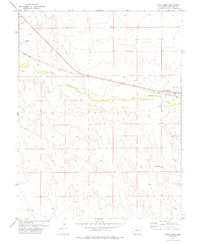 1978 Wild Horse1978 Print · USGSThe high plains of Cheyenne County are captured in the late 1970s, focused on the railroad corridor and the Big Sandy Creek valley. Genealogists and historians can locate the Wild Horse Cem and trace the original Union Pacific rail lines and local Landing Strips.
 - 1978 Map of Galatea
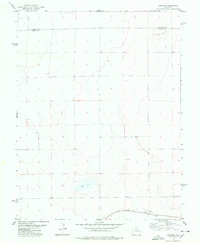 1978 Galatea1978 Print · USGSKiowa County during the late 1970s reveals a quiet agricultural landscape centered on the Missouri Pacific railroad. Genealogists and historians can locate the community of Galatea, the local Cem, and rural water features like Red Lake.
 - 1978 Map of Schafer Reservoir
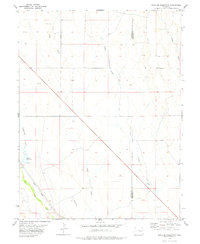 1978 Schafer Reservoir1978 Print · USGSThe Eastern Plains of Colorado in the late 1970s are shown here as a vast network of drainage gulches and rail lines. Genealogists and historians can locate a remote Grave or trace the Union Pacific line as it follows Big Sandy Creek.
 - 1979 Map of Stratton 3 SE
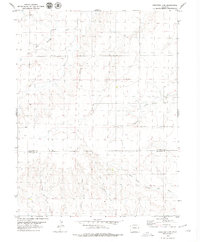 1979 Stratton 3 SE1979 Print · USGSThe eastern Colorado high plains are captured here in the late 1970s, showcasing the transition between Kit Carson and Cheyenne counties. Researchers can trace the intricate network of prairie waterways including Landsman Creek and Little Spring Creek, alongside rural points like Duncan and Mills.2 unique versions available
 - 1979 Map of Hugo 4 SE
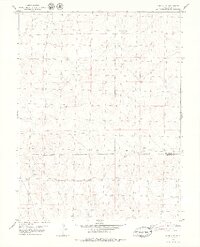 1979 Hugo 4 SE1979 Print · USGSThe high plains of eastern Colorado are captured here in the late 1970s along the Kit Carson and Cheyenne county line. Historians can trace the drainage of Bellyache Creek and Sand Creek past isolated landmarks like Well and Spring sites.2 unique versions available
 - 1979 Map of Stratton 3 SW
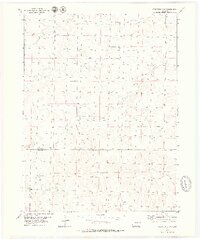 1979 Stratton 3 SW1979 Print · USGSEastern Colorado ranchlands are captured here in the late seventies, showing the open country along the Kit Carson and Cheyenne county line. Researchers can trace the courses of East Branch Spring Creek and Big Spring Creek or locate local Springs.3 unique versions available
Showing maps 1-25 of 59
Top cities of Cheyenne County
Frequently asked questions
- What are the different types of historical maps available for Cheyenne County?
- What is the oldest map of Cheyenne County?
- Where can I purchase historical maps of Cheyenne County for my home or office?
- Where can I download high-res historical maps of Cheyenne County?
- Are there historical topographic maps available for Cheyenne County?
- Is there historical aerial imagery available for Cheyenne County?
- Where are historical maps of Cheyenne County sourced from?