1950s Maps of Shoshone County, Idaho
Explore 23 historic maps of Shoshone County from the 1950s. These maps offer a rare glimpse into what life looked like during the 1950s — showing old roads, neighborhoods, homes, and landmarks that have changed or disappeared over time.
Whether you're researching your family's past, planning a metal detecting trip, or studying how Shoshone County's landscape evolved across the 1950s, these high-resolution maps are a powerful tool for exploring the history of this region.
- Focus on a specific era: All maps on this page are from the 1950s, giving you a focused view of this time period.
- See what’s changed: Compare century-old streets, trails, and buildings to today's modern landscape using overlays and satellite layers.
- Research with precision: Use these maps for genealogy, historical research, land use analysis, or educational projects.
- View, download, or print: Maps are fully viewable online in high resolution, and can be downloaded or printed for your own records.
Start exploring Shoshone County's history through authentic maps from the 1950s. This is your window into the past.
Shoshone County, ID maps
(23)- 1950 Map of Twin Crags, 1980 Print
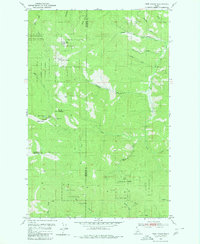 1950 Twin Crags1980 Print · USGSThe high Idaho ridges of Shoshone and Kootenai counties are captured here in the early 1950s, showing a landscape of lookouts and mining claims. Trace the reach of the Palisade Mine, locate the high Frost Peak Lookout, and follow the many forks of Pine Creek.
 - 1951 Map of Packsaddle Mtn
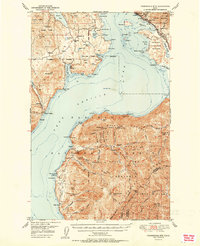 1951 Packsaddle Mtn1951 Print · USGSLake Pend Oreille was a hub of mining and rail transit in the early fifties, with many settlements and extraction sites lining its shores. Researchers can locate the Broten PO, trace the Northern Pacific tracks, and find operations like the Green Monarch Mine.2 unique versions available
 - 1951 Map of Clark Fork, 1952 Print
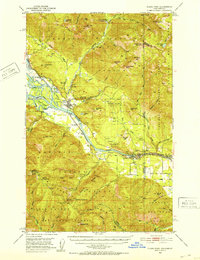 1951 Clark Fork1952 Print · USGSThe Idaho-Montana borderlands are captured here in the early 1950s just as the river valley was preparing for major hydroelectric changes. Researchers can trace the legacy of local mining at Whitedelf Mine or locate early school sites like the River Echo Sch (Aband).4 unique versions available
 - 1952 Map of Twin Crags
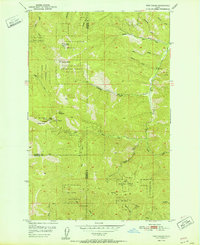 1952 Twin Crags1952 Print · USGSHigh peaks and mining claims define this Shoshone County wilderness in the early fifties, where the national forest boundaries meet at the St Joe Divide. Local historians can trace the geography of early industry at the Palisade Mine and the timbered basins of Pine Creek.
 - 1955 Map of Pullman, 1963 Print
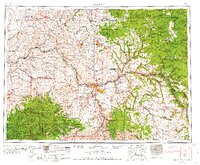 1955 Pullman1963 Print · USGSThe Palouse and Clearwater regions are captured here in the mid-1950s, showing the height of the rail-and-river economy. Genealogists and historians can trace rail lines like the Camas Prairie RR, find local landmarks like Whitman County Memorial Cem, and locate early academic centers at Washington State University and the University of Idaho.3 unique versions available
 - 1955 Map of Spokane, 1965 Print
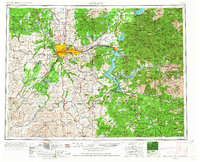 1955 Spokane1965 Print · USGSInland Empire life in the fifties and sixties centers on the growth of Spokane and the heavy mining industry of northern Idaho. Trace mid-century landmarks like Fairchild Air Force Base, the Bunker Hill Mine, and early campuses such as Gonzaga University.2 unique versions available
 - 1956 Map of Cooper Gulch, 1958 Print
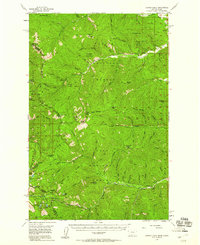 1956 Cooper Gulch1958 Print · USGSThe Bitterroot Range highlands along the Montana-Idaho border are captured here during the mid-fifties, showing a landscape defined by forest service outposts and remote mining claims. Researchers can trace the high-country paths through Thompson Pass or locate the Montana Mine and USFS Fire Station.3 unique versions available
 - 1956 Map of Saltese, 1959 Print
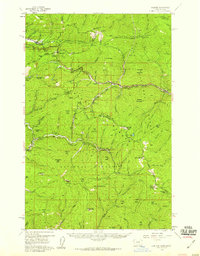 1956 Saltese1959 Print · USGSThe Montana-Idaho border highlands are captured here in the mid-1950s, showing a rugged landscape defined by heavy industry and mountain transit. Genealogists and historians can trace the deep-seated mining heritage through the Silver Cable Mine, the historic Old Mullan Road, and the isolated rail stop at Roland.3 unique versions available
 - 1956 Map of Wallace, 1966 Print
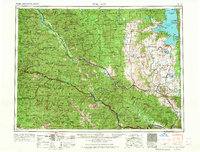 1956 Wallace1966 Print · USGSWestern Montana and the Idaho panhandle meet in this mid-century survey of the Bitterroot and Cabinet Mountains. Genealogists and historians can trace the rail-and-river economy through the Northern Pacific line and settlements like Thompson Falls or St. Ignatius.3 unique versions available
 - 1956 Map of Hamilton, 1970 Print
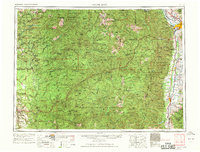 1956 Hamilton1970 Print · USGSThe Bitterroot Valley and surrounding high country are captured here during the mid-fifties, showing the region's transition into a modern forest-and-rail hub. Genealogists and historians can trace family-named sites and early infrastructure from Fort Missoula to towns like Stevensville and Darby along the Northern Pacific line.2 unique versions available
 - 1957 Map of Illinois Peak, 1959 Print
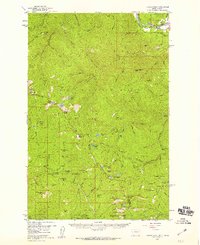 1957 Illinois Peak1959 Print · USGSThe Bitterroot and Coeur d'Alene mountain ranges meet in the late fifties at this junction of three National Forests. Prospectors and local historians can trace legacy mining claims like the Silver King Mine and Gildersleeve Mine near Illinois Peak.2 unique versions available
 - 1957 Map of Kingston, 1959 Print
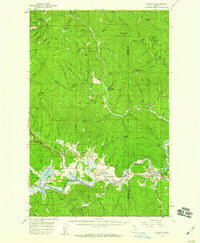 1957 Kingston1959 Print · USGSThe river valley between Kootenai and Shoshone counties is captured here in the late fifties, showing the vital transport links along the Coeur d'Alene River. Researchers can trace local landmarks like the Cataldo Mission, Canyon School, and the Union Pacific Railroad line.3 unique versions available
 - 1957 Map of Burke, 1959 Print
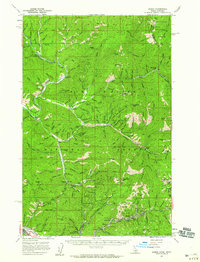 1957 Burke1959 Print · USGSShoshone County is captured here during the peak of its mid-century mining era, showing the remarkable density of the Silver Valley canyons. Genealogists and historians can trace family roots at Burke and Gem, locate the Beaver School, or identify specific industrial sites like the Tiger-Poorman Mine.2 unique versions available
 - 1957 Map of Haugan, 1959 Print
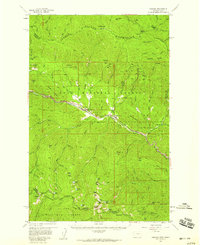 1957 Haugan1959 Print · USGSMineral County mining and railroading are at their peak in the late fifties as two major rail lines traverse the St. Regis River valley. Genealogists and historians can locate old mountain settlements like De Borgia and trace the proximity of the Saltese Consolidated Mine to early forest service outposts like Up Up Lookout.2 unique versions available
 - 1957 Map of Wallace, 1959 Print
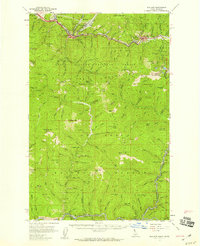 1957 Wallace1959 Print · USGSShoshone County mining towns and the rugged St. Joe watershed are frozen in time during the late fifties. Genealogists and industrial historians can trace the foundations of the Silver Valley via the Miners Union Cemetery, Morning Mine, and the Milwaukee Road.3 unique versions available
 - 1957 Map of Simmons Peak, 1959 Print
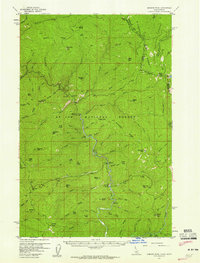 1957 Simmons Peak1959 Print · USGSThe Idaho-Montana borderlands are captured here in the mid-fifties, featuring the high ridges of the Bitterroot Range. Researchers can trace the early Forest Service footprint at the Red Ives Ranger Sta or locate historic camps like Gold Creek Campground.2 unique versions available
 - 1957 Map of Kellogg, 1959 Print
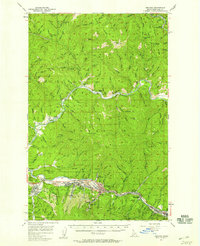 1957 Kellogg1959 Print · USGSShoshone County mining towns and mountain ridges are documented here during the late 1950s. Genealogists can trace family roots in Wardner and Pinehurst or locate industrial sites like the Bunker Hill Mine and Page Mine.2 unique versions available
 - 1957 Map of Calder, 1959 Print
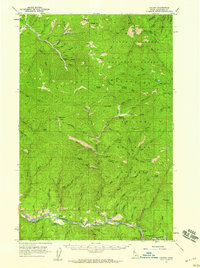 1957 Calder1959 Print · USGSThe St Joe River valley in the late fifties was a remote corridor of rail transport and forest management. Researchers can trace the path of the Chicago Milwaukee St Paul and Pacific railroad through Calder and Herrick, or locate former settlements like Masonia (Site).2 unique versions available
 - 1957 Map of St. Joe, 1960 Print
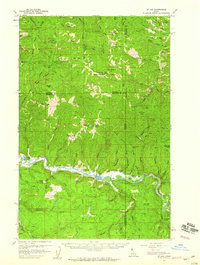 1957 St. Joe1960 Print · USGSThe St. Joe River valley was a hub of rail and river activity in the late fifties, dominated by the timber and mining industries. Researchers can trace the path of the Chicago Milwaukee St Paul and Pacific Road past Omega and the Palisade Mine.3 unique versions available
 - 1958 Map of Spokane
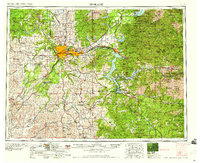 1958 Spokane1958 Print · USGSThe Inland Empire is shown at a mid-century peak of industrial and military activity, from the rail hubs of Spokane to the deep silver mines of northern Idaho. Researchers can trace the sprawling rail lines of the Union Pacific RR or locate landmarks like Fairchild Air Force Base and the Bunker Hill Smelter & Mine.
 - 1958 Map of Pullman
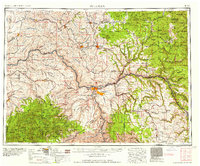 1958 Pullman1958 Print · USGSThe Palouse and Clearwater regions are captured here in the late fifties, showing the vital river-and-rail connection between eastern Washington and northern Idaho. Local historians can trace the paths of the Camas Prairie RR and Union Pacific RR as they serve towns like Colfax, Kamiah, and Nezperce.2 unique versions available
 - 1958 Map of Sandpoint, 1966 Print
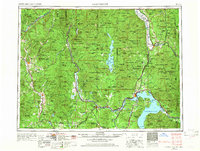 1958 Sandpoint1966 Print · USGSThe Idaho Panhandle and Northeast Washington are shown here in the late fifties, when timber and hydroelectric power drove the local economy. Trace family roots in rail-side towns like Cusick or Metaline Falls, and locate landmarks like the Albeni Falls Dam or Falls Ranger Station.2 unique versions available
 - 1959 Map of Hamilton
 1959 Hamilton1959 Print · USGSThe Bitterroot Valley and surrounding wilderness are captured in the late fifties, showing a landscape defined by forestry and river-based settlement. Researchers can trace the Lolo Trail or locate historical points like Fort Missoula and the Fred Burr Reservoir.
End of results
Showing maps 1-23 of 23
Top cities of Shoshone County
- Kellogg historical maps
- Pinehurst historical maps
- Osburn historical maps
- Wallace historical maps
- Mullan historical maps
- Smelterville historical maps
See more
Frequently asked questions
- What are the different types of historical maps available for Shoshone County?
- What is the oldest map of Shoshone County?
- Where can I purchase historical maps of Shoshone County for my home or office?
- Where can I download high-res historical maps of Shoshone County?
- Are there historical topographic maps available for Shoshone County?
- Is there historical aerial imagery available for Shoshone County?
- Where are historical maps of Shoshone County sourced from?