Old Maps of Sumner County, Kansas for Genealogy
Trace your family roots with 190 historic maps of Sumner County. These high-res maps reveal old neighborhoods, homesites, landmarks, and streets — helping you uncover where your ancestors lived and how the area evolved over time.
- Explore historic neighborhoods: Identify where your relatives may have lived in the 1800s or 1900s.
- Compare maps over time: Trace the changes in streets, buildings, and landmarks for multi-generational research.
- Perfect for genealogy & ancestry research: Used by family historians and researchers to map out lineage and migration.
These maps are an incredible resource for exploring your personal connection to Sumner County's past.
Sumner County, KS maps
(190)- 1889 Map of Caldwell, 1957 Print
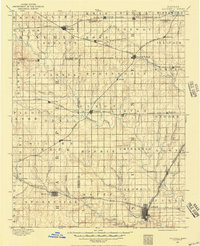 1889 Caldwell1957 Print · USGSSouthern Kansas is captured in the late 1880s as the arrival of several major railroads began to spur the growth of new prairie towns. Researchers can locate early depots and homesteads in Caldwell, Conway Springs, and Runnymede.
 - 1890 Map of Wellington
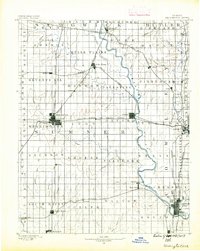 1890 Wellington1890 Print · USGSSumner and Cowley counties are captured here in the late nineteenth century as a dense network of railroads and river towns transformed the Kansas prairie. Genealogists and historians can trace the early layouts of Wellington, Oxford, and Geuda Springs before the turn of the century.6 unique versions available
 - 1893 Map of Caldwell
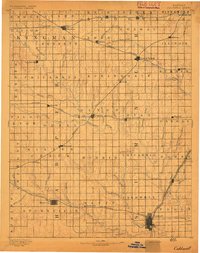 1893 Caldwell1893 Print · USGSSouthern Kansas is captured during the rapid railroad expansion of the late nineteenth century, showing a landscape defined by new towns and steel rails. Genealogists can trace family roots through early settlements like Caldwell, Conway Springs, and Bluff City along the Chicaskia River.
 - 1897 Map of Caldwell
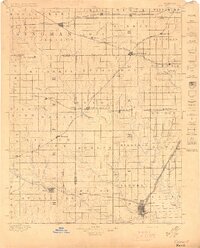 1897 Caldwell1897 Print · USGSThe Kansas borderlands come alive in the late nineteenth century as a bustling network of railroads and prairie settlements. Genealogists and researchers can trace early homesteads and rail stops near Caldwell, Argonia, and the notable colonial experiment of Runnymede.10 unique versions available
 - 1955 Map of Belle Plaine, 1956 Print
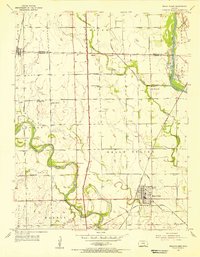 1955 Belle Plaine1956 Print · USGSSumner County in the mid-fifties is captured at a crossroads of tradition and modern transit as the new Kansas Turnpike spans the prairie. Researchers can locate vanished landmarks like New Salem Sch and Council Hill Ch or trace the Old Indian Boundary across the Arkansas River valley.2 unique versions available
 - 1955 Map of Zyba, 1956 Print
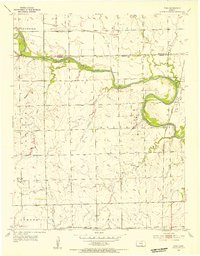 1955 Zyba1956 Print · USGSSumner County farmland and the winding Ninnescah River valley are captured here in the mid-fifties as the local oil industry began to shape the landscape. Researchers can trace the path of the Chicago Rock Island and Pacific railroad to the settlement of Zyba or locate family plots at Worden Cem and Porter Cem.2 unique versions available
 - 1955 Map of Mulvane, 1956 Print
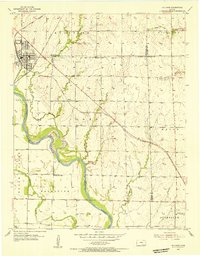 1955 Mulvane1956 Print · USGSThe rail-and-river landscape surrounding mid-century Mulvane is captured here at the intersection of four Kansas counties. Researchers can trace the original Atchison Topeka and Santa Fe corridor and locate local landmarks like Littleton Cem and Central Sch.
 - 1955 Map of Wichita, 1959 Print
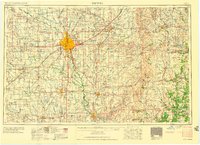 1955 Wichita1959 Print · USGSSouth-central Kansas comes alive in the mid-1950s as Wichita grows into its role as a regional industrial and military powerhouse. Trace the rail-and-river network connecting El Dorado and Arkansas City through the Atchison Topeka and Santa Fe lines.3 unique versions available
 - 1955 Map of Enid, 1966 Print
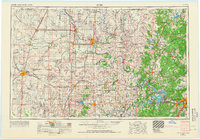 1955 Enid1966 Print · USGSNorth-central Oklahoma's transition from open plains to the blackjack hills of the Osage Indian Reservation is captured in the mid-1950s. Researchers can trace the development of the Naval Reserve Oil Field, the grounds of Vance AFB, and the early footprints of Tulsa and Stillwater.4 unique versions available
 - 1958 Map of Enid
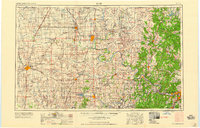 1958 Enid1958 Print · USGSNorthern Oklahoma is mapped here in the late fifties, showcasing a dense network of petroleum production and historic tribal lands. Researchers can trace the legacy of the Osage Indian Reservation, early energy hubs like the Cushing Oil Field, and the Chilocco Indian Agricultural School.2 unique versions available
 - 1958 Map of Wichita
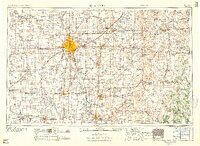 1958 Wichita1958 Print · USGSSouth Central Kansas in the late fifties was a landscape of aviation industry, oil exploration, and expanding turnpikes. Researchers can trace mid-century growth through McConnell Air Force Base, major facilities for Cessna Aircraft Company, and the active El Dorado Oil Field.
 - 1964 Map of South Haven NE, 1966 Print
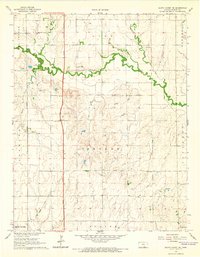 1964 South Haven NE1966 Print · USGSSumner County in the mid-1960s shows a rural landscape adapting to the modern era as the new turnpike bisects traditional farmsteads. Genealogists and local historians can locate several country schoolhouses like Union Sch and Plainview Sch, or trace family sites near Jordan Cem.
 - 1964 Map of Dalton, 1966 Print
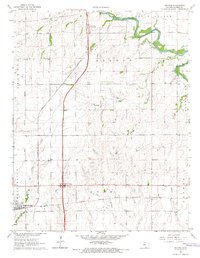 1964 Dalton1966 Print · USGSSumner County in the mid-sixties shows a landscape defined by the intersection of the new Kansas Turnpike and historic rail lines. Genealogists can trace the rural legacy of Pink Sch and the development of the Interchange Oil Field near Dalton.
 - 1965 Map of Portland, 1966 Print
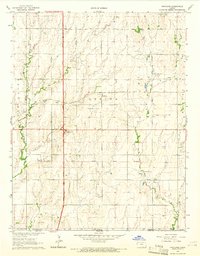 1965 Portland1966 Print · USGSSumner County during the mid-1960s reveals a landscape defined by petroleum production and the legacy of the Indian Treaty Boundary. Researchers can trace the rail-and-road economy through the Portland settlement, the Kansas Turnpike, and the Forest Hill Cem.2 unique versions available
 - 1965 Map of Adamsville, 1966 Print
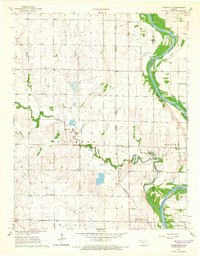 1965 Adamsville1966 Print · USGSSumner and Cowley counties at the mid-point of the sixties show a landscape where the river bend economy meets the oil field. Genealogists and local researchers can locate Oak Grove Sch, Adamsville, and the Geuda Springs Cem along the winding Arkansas River.
 - 1965 Map of South Haven, 1966 Print
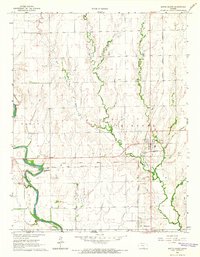 1965 South Haven1966 Print · USGSThe Kansas-Oklahoma borderlands in the mid-1960s reveal a landscape of rail-dependent towns and historic territorial lines. Trace the Old Indian Treaty Boundary as it passes between the settlements of South Haven and Hunnewell.
 - 1965 Map of Geuda Springs, 1966 Print
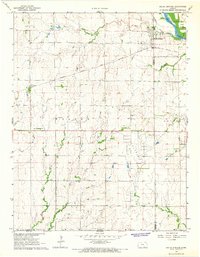 1965 Geuda Springs1966 Print · USGSSumner and Cowley counties come together along the Arkansas River in this mid-1960s survey of the Kansas prairie. Genealogists and historians can trace the Old Indian Treaty Boundary and locate family landmarks like Mt Hope Cem or Centerview Sch.
 - 1965 Map of Rome, 1966 Print
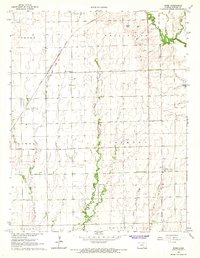 1965 Rome1966 Print · USGSSumner County, Kansas, is captured here in the mid-1960s, showing a landscape defined by the intersection of major railroads and prairie waterways. Genealogists and historians can locate family landmarks like the Attebery Cem and the Dusty Corners Sch or trace the early footprint of the Perth Oil Field.
 - 1965 Map of Wellington, 1966 Print
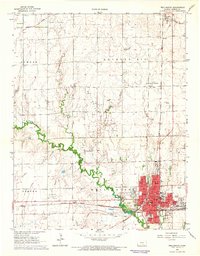 1965 Wellington1966 Print · USGSWellington thrived in the mid-1960s as a major railroad crossroads and oil production center in Sumner County. Genealogists and researchers can trace local landmarks like Fairview Cem, several historic campus sites such as Slate Valley Sch, and the layout of the Anson Southeast Oil Field.2 unique versions available
 - 1965 Map of Oxford, 1966 Print
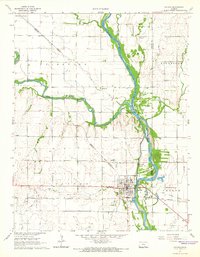 1965 Oxford1966 Print · USGSThe river-and-rail hub of Oxford comes into sharp focus during the mid-1960s at the junction of the Arkansas River and Ninnescah River. Genealogists can locate family sites near Ninnescah Cem or trace industrial roots at the Slick-Carson Oil Field.2 unique versions available
 - 1967 Map of Braman, 1970 Print
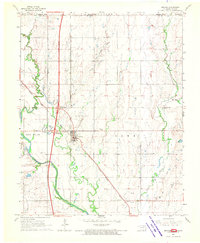 1967 Braman1970 Print · USGSBraman and its surrounding oil fields are captured in the late sixties at the intersection of traditional rail and new interstate travel. Genealogists and local historians can trace the Braman Cem, the rural settlement of Sumpter, and the course of the Chikaskia River.2 unique versions available
 - 1968 Map of Blackwell NW, 1970 Print
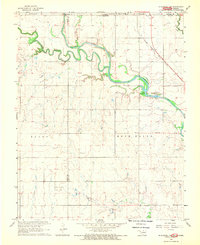 1968 Blackwell NW1970 Print · USGSThe Oklahoma-Kansas borderlands are captured here in the late sixties, where the Chikaskia River winds through the northern prairie. Researchers can trace rural genealogy and industry through sites like Triumph Cem, the Asbury Ch, and the extensive Webb North Oil Field.2 unique versions available
 - 1968 Map of Renfrow, 1970 Print
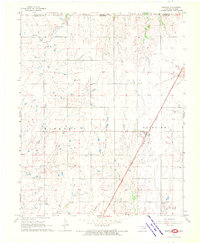 1968 Renfrow1970 Print · USGSNorthern Oklahoma prairie life in the late sixties centers on the rail corridor and expanding energy fields. Researchers can trace the Chicago Rock Island and Pacific line through Renfrow or locate the Richland Cem and early Gas Wells.
 - 1968 Map of Medford NE, 1970 Print
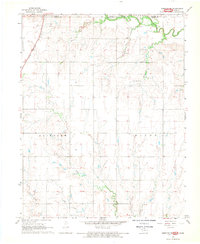 1968 Medford NE1970 Print · USGSThe Kansas-Oklahoma border comes to life in the late sixties as the Chicago and Rock Island Pacific railroad connects local industry and agriculture. Researchers can trace rural community roots at North Star Ch or locate mid-century landmarks like the Drive-in Theater and Spring Creek Cem.2 unique versions available
 - 1968 Map of Wakita NE, 1970 Print
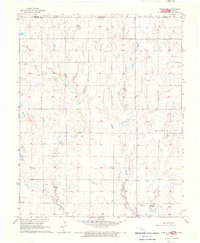 1968 Wakita NE1970 Print · USGSThe Oklahoma-Kansas borderlands in the late sixties reveal a landscape of rural townships and active energy exploration. Genealogists and local historians can trace the Wakita Trend Gas Field and family sites near Springdale Cem or Pond Creek.
Showing maps 1-25 of 190
Top cities of Sumner County
- Wellington historical maps
- Belle Plaine historical maps
- Conway Springs historical maps
- Caldwell historical maps
- Oxford historical maps
- Argonia historical maps
See more
Frequently asked questions
- What are the different types of historical maps available for Sumner County?
- What is the oldest map of Sumner County?
- Where can I purchase historical maps of Sumner County for my home or office?
- Where can I download high-res historical maps of Sumner County?
- Are there historical topographic maps available for Sumner County?
- Is there historical aerial imagery available for Sumner County?
- Where are historical maps of Sumner County sourced from?