1940s Maps of Plaquemines Parish, Louisiana
Explore 36 historic maps of Plaquemines Parish from the 1940s. These maps offer a rare glimpse into what life looked like during the 1940s — showing old roads, neighborhoods, homes, and landmarks that have changed or disappeared over time.
Whether you're researching your family's past, planning a metal detecting trip, or studying how Plaquemines Parish's landscape evolved across the 1940s, these high-resolution maps are a powerful tool for exploring the history of this region.
- Focus on a specific era: All maps on this page are from the 1940s, giving you a focused view of this time period.
- See what’s changed: Compare century-old streets, trails, and buildings to today's modern landscape using overlays and satellite layers.
- Research with precision: Use these maps for genealogy, historical research, land use analysis, or educational projects.
- View, download, or print: Maps are fully viewable online in high resolution, and can be downloaded or printed for your own records.
Start exploring Plaquemines Parish's history through authentic maps from the 1940s. This is your window into the past.
Plaquemines Parish, LA maps
(36)- 1940 Map of Belle Chasse
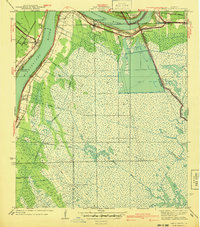 1940 Belle Chasse1940 Print · USGSCoastal Louisiana during the late 1930s is defined here by its intricate canal systems and riverside rail hubs. Trace the local economy through the Sea Train Terminal at Belle Chasse or the marshland paths near Tigers Ridge and Lake Lery.
 - 1940 Map of Bertrandville
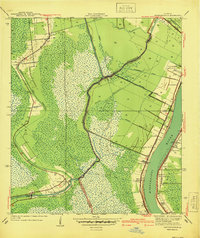 1940 Bertrandville1940 Print · USGSCoastal Louisiana at the start of the 1940s reveals a world of riverfront settlements and canal-driven industry. Genealogists and historians can trace the foundations of Bertrandville, locate St Johns Ch, and find long-standing landmarks like Woodlawn Sch along the Mississippi River.
 - 1941 Map of Black Bay
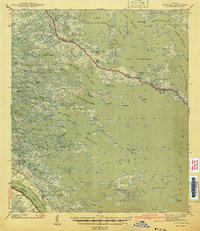 1941 Black Bay1941 Print · USGSCoastal Plaquemines Parish and St. Bernard Parish are shown in detail at the end of the 1930s, when river life and marsh navigation defined the region. Researchers can locate riverfront settlements like City Price and Happy Jack or trace the waterways of Lake Coquille and Petain Lagoon.
 - 1941 Map of Empire
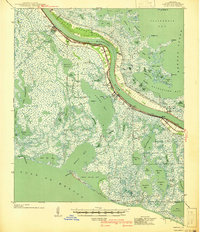 1941 Empire1941 Print · USGSPlaquemines Parish comes to life in this pre-war survey of the Mississippi River delta as it transitions into the Gulf. Genealogists and historians can trace the riverfront rail line through Port Sulphur and Buras, or locate landmarks like Pt Pleasant Cem and Swartze Sch.
 - 1941 Map of Delacroix
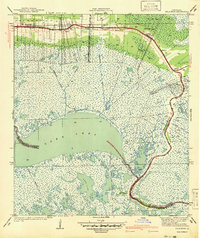 1941 Delacroix1941 Print · USGSCoastal St. Bernard Parish was a world of water and marsh during the late 1930s and early 1940s. Genealogists and local historians can trace the string of settlements along the bayou from St Bernard down to Delacroix, while mapping old waterways like the Magnolia Canal and Howards Ditch.
 - 1941 Map of Barataria
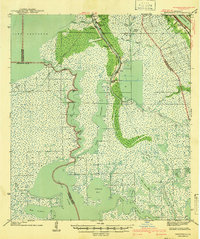 1941 Barataria1941 Print · USGSCoastal Jefferson Parish appears at the dawn of the 1940s, where the Mississippi River meets a vast network of bayous and wetlands. Genealogists can trace family roots in Barataria and Jesuit Bend, or locate historic local landmarks like Fisher Sch No 1 and the Lafitte P O.
 - 1941 Map of Shell Beach
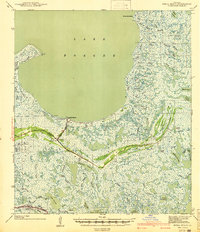 1941 Shell Beach1941 Print · USGSSt. Bernard Parish at the dawn of the 1940s reveals a coastal world of rail-connected fishing outposts and historic fortifications. Genealogists and local historians can trace the foundations of Shell Beach, the Old Bayou Railroad Grade, and the site of Old Ft Beauregard.2 unique versions available
 - 1942 Map of St. Bernard, 1949 Print
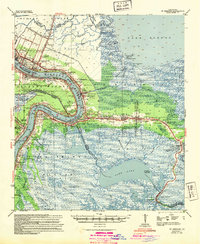 1942 St. Bernard1949 Print · USGSCoastal St. Bernard and Plaquemines Parishes are shown during the early 1940s, capturing the delta’s transition from rural settlements to an industrial oil and rail corridor. Researchers can trace family roots at the Delacroix Island School or locate historic sites like Chalmette National Monument and the Martello Tower.
 - 1944 Map of Barataria
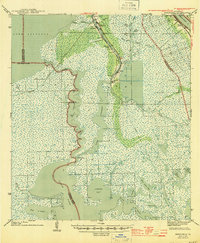 1944 Barataria1944 Print · USGSCoastal Jefferson Parish appears as a intricate network of tidal bayous and marshes in the years during World War II. Genealogists and historians can trace the early settlement footprints of Lafitte P O, Villere, and the local Fisher Sch No 1.
 - 1944 Map of Pointe a La Hache
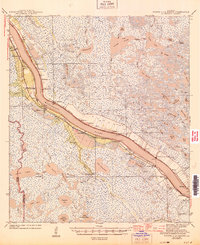 1944 Pointe a La Hache1944 Print · USGSThe Mississippi River delta in the early 1940s shows a landscape of rail-connected river towns and vast marshlands. Trace family roots and local history through Deer Range Cem, St Jude Sch, and settlements like Pointe a la Hache.
 - 1944 Map of Black Bay
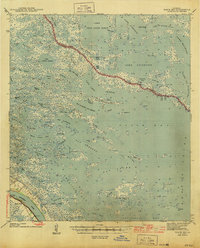 1944 Black Bay1944 Print · USGSCoastal Plaquemines Parish and the Mississippi River bank are documented here during the mid-1940s. Genealogists and historians can trace the riverside corridor near City Price and Happy Jack, or explore the complex bayou network including Lake Jean Louis Robin and Belle Isle.
 - 1944 Map of Empire
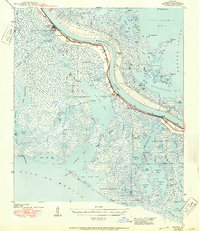 1944 Empire1944 Print · USGSThe Mississippi River delta in the 1940s reveals a fragile line of settlement between the river and the Gulf. Researchers can trace the layout of Port Sulphur, locate the Ft Pleasant Cem, and follow the old Ferry to Pt. a la Hache.2 unique versions available
 - 1945 Map of New Orleans
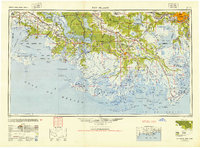 1945 New Orleans1945 Print · USGSCoastal Louisiana and the Mississippi delta are captured here just after the war, showing the region's transition into a modern industrial and transit hub. Genealogists can trace family settlements along Bayou Teche or identify rail stops for the Illinois Central and Texas & Pacific lines.
 - 1946 Map of Pass Du Bois
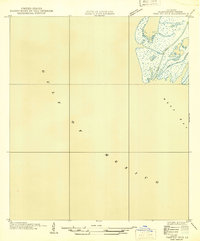 1946 Pass Du Bois1946 Print · USGSCoastal Plaquemines Parish reaches into the Gulf mid-century, showing the fragile delta landscape before decades of shoreline change. Researchers can trace the winding channels of Pass Du Bois and Pass La Graisse as they empty into West Bay.
 - 1946 Map of Mudpan Bayou
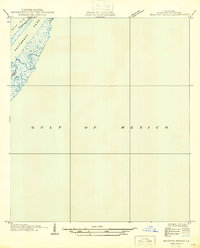 1946 Mudpan Bayou1946 Print · USGSThe tip of the Mississippi delta comes into focus in the mid-1940s, showing the narrow marshes between the river and the sea. Researchers can trace the winding paths of Mudpan Bayou and Burrwood Bayou along the edge of the Southwest Pass.
 - 1946 Map of Pass Tante Phine
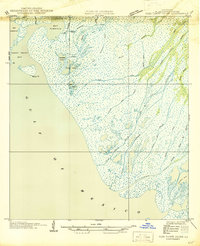 1946 Pass Tante Phine1946 Print · USGSCoastal Plaquemines Parish is mapped here during the mid-1940s, revealing a delta landscape defined by intricate passes and canals. Researchers can trace historical navigation routes and marsh features like Tante Phine Pass, Spanish Pass, and the Company Canal.
 - 1947 Map of Garden Island Pass
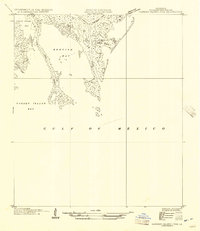 1947 Garden Island Pass1947 Print · USGSCoastal Plaquemines Parish is captured in the late 1940s as a complex network of marsh and distributary channels. Researchers can trace the historical hydrology of the delta through Old Balize Bayou, Francots Bend, and Micale Bayou.
 - 1947 Map of Pass A Loutre West
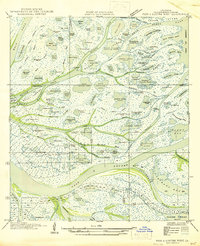 1947 Pass A Loutre West1947 Print · USGSThe Plaquemines Parish wetlands at the mouth of the Mississippi are captured in this mid-century survey of the river's active delta. Trace the intricate network of marsh and water through landmarks like the Delta Duck Club, Dead Women Pass, and Goose Island.
 - 1947 Map of Buras
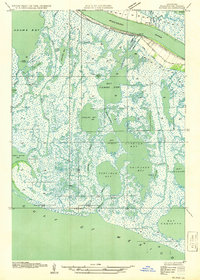 1947 Buras1947 Print · USGSCoastal Plaquemines Parish in the late 1940s is a landscape of river-fronting settlements and sprawling delta marshes. Researchers can trace the rail-and-road corridor through Buras, find the landing at Ostrica, and explore the maze of Bayou Scofield leading to the Gulf.
 - 1947 Map of Venice
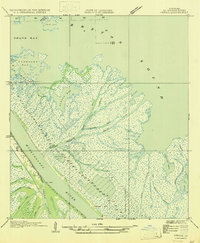 1947 Venice1947 Print · USGSThe Mississippi Delta's southern reaches are captured here in the mid-1940s, centered on the vital river outpost of Venice. Local historians can trace the complex network of delta passes and bays, from the strategic waters of The Jump to Spanish Pass and Grand Pass.
 - 1947 Map of Bertrandville
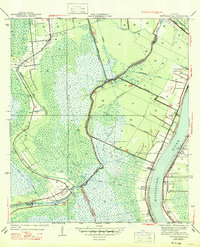 1947 Bertrandville1947 Print · USGSCoastal Louisiana at the edge of the Mississippi delta shows a landscape of river-bend settlements and deep-marsh waterways. Trace family roots and local history at Bertrandville, Crown Point, and Oakville, or locate the St Johns Ch and early schools.
 - 1947 Map of Lake Athanasio
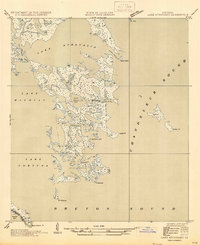 1947 Lake Athanasio1947 Print · USGSCoastal St. Bernard and Plaquemines Parishes are captured here in the mid-1940s, showing the intricate wetlands before extensive modern land loss. Researchers can trace the old marsh boundaries and named waterways like Bayou Frenepiquant, Pass Fernandea, and Gardner I.
 - 1947 Map of Fort St. Philip
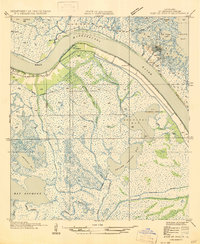 1947 Fort St. Philip1947 Print · USGSCoastal Plaquemines Parish is captured here in the late 1940s, showing the strategic military sites and canal-dependent settlements of the lower delta. Genealogists and historians can trace the foundations of Triumph and Boothville or locate Ft St Philip and Ft Jackson at the river's bend.
 - 1947 Map of Bay Ronquille
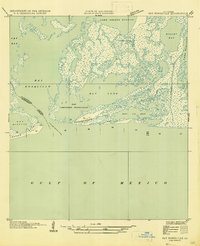 1947 Bay Ronquille1947 Print · USGSCoastal Plaquemines Parish appears as a labyrinth of marshes and estuaries in the late 1940s, just as the regional oil industry was expanding. Trace early energy infrastructure at the Grande Ecaille Oil Field and the shifting shorelines of Grand Terre and Pt Cheniere Ronquille.
 - 1947 Map of Wilkinson Bay
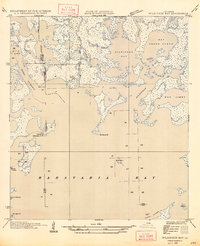 1947 Wilkinson Bay1947 Print · USGSCoastal Plaquemines Parish in the late 1940s reveals a landscape of tidal marshes and isolated fishing outposts. Genealogists and historians can trace the early footprints of Manila Cabinash P O and Camp Dewey among waterways like Wilkinson Canal.
Showing maps 1-25 of 36
Top cities of Plaquemines Parish
Frequently asked questions
- What are the different types of historical maps available for Plaquemines Parish?
- What is the oldest map of Plaquemines Parish?
- Where can I purchase historical maps of Plaquemines Parish for my home or office?
- Where can I download high-res historical maps of Plaquemines Parish?
- Are there historical topographic maps available for Plaquemines Parish?
- Is there historical aerial imagery available for Plaquemines Parish?
- Where are historical maps of Plaquemines Parish sourced from?