1950s Maps of Niagara County, New York
Explore 17 historic maps of Niagara County from the 1950s. These maps offer a rare glimpse into what life looked like during the 1950s — showing old roads, neighborhoods, homes, and landmarks that have changed or disappeared over time.
Whether you're researching your family's past, planning a metal detecting trip, or studying how Niagara County's landscape evolved across the 1950s, these high-resolution maps are a powerful tool for exploring the history of this region.
- Focus on a specific era: All maps on this page are from the 1950s, giving you a focused view of this time period.
- See what’s changed: Compare century-old streets, trails, and buildings to today's modern landscape using overlays and satellite layers.
- Research with precision: Use these maps for genealogy, historical research, land use analysis, or educational projects.
- View, download, or print: Maps are fully viewable online in high resolution, and can be downloaded or printed for your own records.
Start exploring Niagara County's history through authentic maps from the 1950s. This is your window into the past.
Niagara County, NY maps
(17)- 1950 Map of Newfane
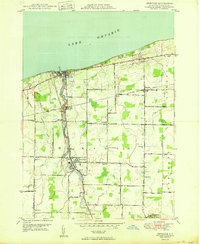 1950 Newfane1950 Print · USGSNiagara County's lakefront and agricultural heartland are captured here at mid-century as the region's rural character remained firmly intact. Researchers can trace family sites near Olcott and Newfane, locating specific landmarks like Sawyer Cem, School No 6, and the New York Central Railroad.
 - 1950 Map of Wolcottsville
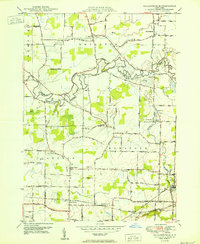 1950 Wolcottsville1950 Print · USGSNiagara and Erie Counties are captured here at the start of the 1950s, showing a transition from rural farming to structured township growth. Researchers can trace family history through numerous district schools and landmarks like Swifts Mills, Akron Junction, and the Clarence Center Church.
 - 1950 Map of Lockport
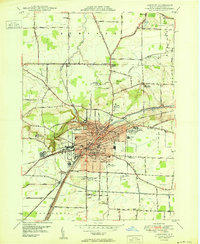 1950 Lockport1950 Print · USGSLockport and its surrounding townships thrive along the Erie Canal in the post-war era. Genealogists and local historians can trace legacy sites like Cold Spring Cem, the Chapel of the Good Shepherd, and the International Railway corridor.
 - 1950 Map of Ransomville
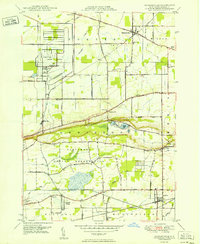 1950 Ransomville1950 Print · USGSMid-century Niagara County is captured here at a time when the Tuscarora Indian Reservation and the New York Central Railroad defined the local landscape. Genealogists can trace family footprints through numerous rural landmarks like St Michaels Cem, Model City, and School No 11.
 - 1950 Map of Clarence Center
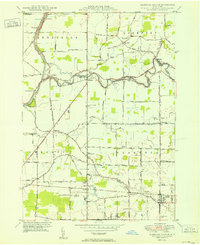 1950 Clarence Center1950 Print · USGSMidcentury Western New York is captured here as rural townships began to evolve around the Erie Canal and Tonawanda Creek. Genealogists and local historians can locate early district schools, the Sulphur Springs Guard Lock, and hamlets like Swormville and Hodgeville Sta.2 unique versions available
 - 1950 Map of Gasport
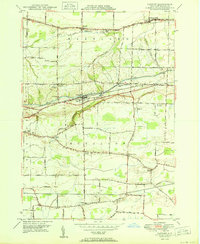 1950 Gasport1950 Print · USGSNiagara County's canal and rail corridor is captured here at mid-century, following the Erie Canal through Gasport. Genealogists and local historians can trace the foundations of several hamlets including Reynales Basin, Terrys Corner, and Orangeport Settlement.
 - 1950 Map of Tonawanda East
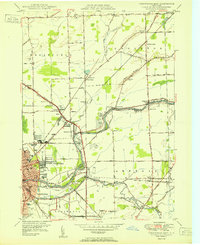 1950 Tonawanda East1950 Print · USGSNiagara and Erie counties meet along the canal and river during this postwar period of industrial activity and suburban expansion. Genealogists and local historians can trace the foundations of Martinsville and Hodgeville, or locate family sites near Wheatfield Cemetery and School No. 10.2 unique versions available
 - 1950 Map of Tonawanda West
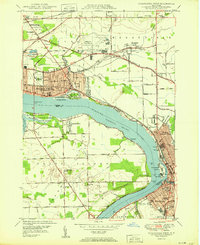 1950 Tonawanda West1950 Print · USGSNiagara Falls and North Tonawanda are captured during a period of major post-war industrial and suburban growth. Researchers can trace the development of Cayuga Island, find local schools like Gratwick Sch, and locate family plots at White Haven Cem.
 - 1950 Map of Lewiston
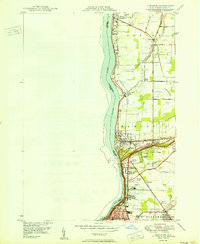 1950 Lewiston1950 Print · USGSThe Niagara frontier at mid-century shows a landscape of growing townships and historic river crossings just north of the falls. Genealogists can locate family sites at Beth Israel Cem, St Bernards Cem, or the campus of Niagara University.
 - 1950 Map of Ft Niagara
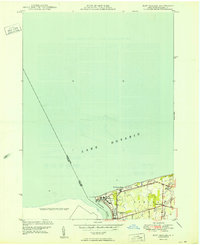 1950 Ft Niagara1950 Print · USGSThe mouth of the Niagara River and the grounds of the historic fortress are captured here in the post-war era. Researchers can trace the village of Youngstown, the old cemetery at Towers Corners, and the layout of Fort Niagara at mid-century.
 - 1950 Map of Medina, 1956 Print
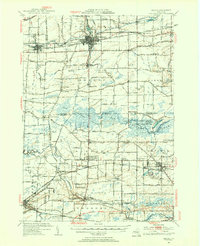 1950 Medina1956 Print · USGSOrleans and Genesee Counties are mapped here in the mid-fifties, showing the industrial pulse of the Erie Canal and New York Central corridor. Genealogists can locate numerous rural schools and landmarks like the Site of Neuter Fort, Boxwood Cem, and the Tonawanda Indian Reservation.2 unique versions available
 - 1950 Map of Ridgeway, 1956 Print
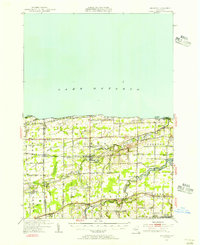 1950 Ridgeway1956 Print · USGSOrleans County, New York, is captured here at mid-century, where Lake Ontario orchards meet the busy corridor of the historic Erie Canal. Researchers can trace the legacy of rural education and community at School No. 16 or locate family plots at Otter Creek Cemetery and Fuller Cemetery.2 unique versions available
 - 1951 Map of Akron
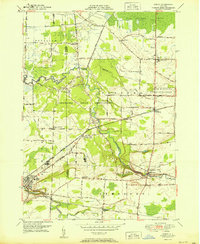 1951 Akron1951 Print · USGSThe Tonawanda Indian Reservation and the village of Akron are documented here at the start of the 1950s. Genealogists can trace family burial sites at Evergreen Cem and Long House Cem, or locate historic civic hubs like the Council House and Basom.2 unique versions available
 - 1951 Map of Lyndonville
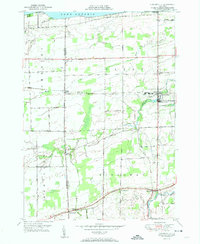 1951 Lyndonville1951 Print · USGSOrleans and Niagara counties meet along this coastal stretch of Lake Ontario during the early fifties. Genealogists and local historians can trace the foundations of these communities through the locations of School No 10, St Patricks Cem, and the rail stops of the New York Central.2 unique versions available
 - 1951 Map of Medina
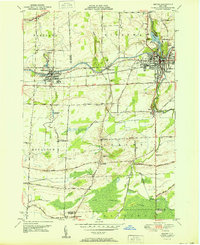 1951 Medina1951 Print · USGSOrleans and Niagara Counties hum with activity in the mid-century as the Erie Canal and rail lines drive the local economy. Genealogists can locate several rural schoolhouses and family plots, such as Boxwood Cem and School No 16.
 - 1952 Map of Toronto, 1954 Print
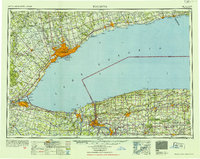 1952 Toronto1954 Print · USGSLake Ontario and the international border define this mid-century landscape of rapid industrial and suburban growth. Researchers can trace the vital shipping and rail corridors of the era, from the Welland Canal to the New York Central Railroad.
 - 1954 Map of Tonawanda West
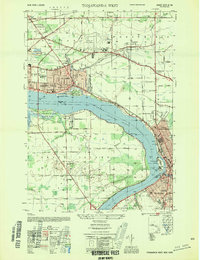 1954 Tonawanda West1954 Print · USGSThe Niagara River corridor and Grand Island are captured during a mid-century period of industrial and suburban growth. Researchers can locate family landmarks like St Johnsburg, Holy Ghost Cem, and Bishop Duffy High Sch.
End of results
Showing maps 1-17 of 17
Top cities of Niagara County
- Niagara Falls historical maps
- North Tonawanda historical maps
- Lockport historical maps
- Lockport historical maps
- Wheatfield historical maps
- Lewiston historical maps
See more
Frequently asked questions
- What are the different types of historical maps available for Niagara County?
- What is the oldest map of Niagara County?
- Where can I purchase historical maps of Niagara County for my home or office?
- Where can I download high-res historical maps of Niagara County?
- Are there historical topographic maps available for Niagara County?
- Is there historical aerial imagery available for Niagara County?
- Where are historical maps of Niagara County sourced from?