1900s (20th Century) Maps of Cimarron County, Oklahoma
Explore 57 historic maps of Cimarron County from the 1900s (20th Century). These maps offer a rare glimpse into what life looked like during the 1900s — showing old roads, neighborhoods, homes, and landmarks that have changed or disappeared over time.
Whether you're researching your family's past, planning a metal detecting trip, or studying how Cimarron County's landscape evolved across the 1900s, these high-resolution maps are a powerful tool for exploring the history of this region.
- Focus on a specific era: All maps on this page are from the 1900s, giving you a focused view of this time period.
- See what’s changed: Compare century-old streets, trails, and buildings to today's modern landscape using overlays and satellite layers.
- Research with precision: Use these maps for genealogy, historical research, land use analysis, or educational projects.
- View, download, or print: Maps are fully viewable online in high resolution, and can be downloaded or printed for your own records.
Start exploring Cimarron County's history through authentic maps from the 1900s. This is your window into the past.
Cimarron County, OK maps
(57)- 1954 Map of Dalhart, 1967 Print
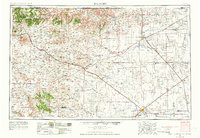 1954 Dalhart1967 Print · USGSThe High Plains at the junction of four states come alive in the mid-fifties, showing a landscape of rail-hub towns and cattle country. Trace the Old Santa Fe Trail or locate mid-century industrial sites like the Dry ice plant and Carbon Dioxide Works.2 unique versions available
 - 1955 Map of La Junta, 1966 Print
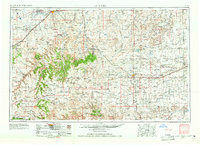 1955 La Junta1966 Print · USGSSoutheastern Colorado during the mid-fifties is captured here as a sprawling network of ranching outposts and rail sidings. Researchers can locate vanished landmarks like the Sunderland School, trace the isolated Lycan Post Office, or find the Bomb target (abandoned) on the western plains.3 unique versions available
 - 1958 Map of La Junta
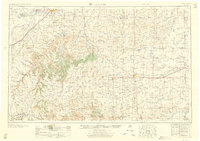 1958 La Junta1958 Print · USGSSoutheast Colorado and the Kansas borderlands appear in the late fifties as a landscape of isolated ranching outposts and vital rail junctions. Researchers can trace the lineage of vanished post offices and rural school sites like the Lycan Post Office and Sunderland School.2 unique versions available
 - 1958 Map of Dalhart
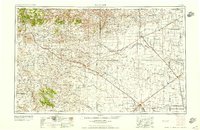 1958 Dalhart1958 Print · USGSThe High Plains of the tri-state border region come alive in this mid-century survey of the ranching and rail territory around the Texas Panhandle. Genealogists and historians can trace the paths of the Atchison Topeka & Santa Fe Ry, military outposts like Dalhart Air Force No 1, and early settlements such as Pasamonte and Texline.2 unique versions available
 - 1962 Map of Dalhart
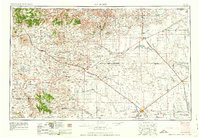 1962 Dalhart1962 Print · USGSThe High Plains and volcanic peaks of the tri-state area are shown in detail during the early sixties. Genealogists and historians can trace the rail corridors of the Fort Worth and Denver and find industrial sites like the Cactus Ordnance Works or the Beaver Meade & Englewood Grain Elevator.
 - 1968 Map of La Junta
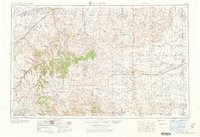 1968 La Junta1968 Print · USGSSoutheastern Colorado and the high plains appear in remarkable detail during the late 1960s, showing the intersection of irrigation, ranching, and rail. Genealogists can trace family footprints at the Lycan Post Office, Konantz Cem, and across numerous named cattle ranches.
 - 1968 Map of Autograph Cliff NW, 1971 Print
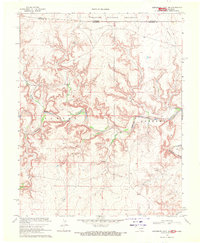 1968 Autograph Cliff NW1971 Print · USGSThe Oklahoma-Colorado borderlands come alive in this late-sixties survey of the Cimarron River valley. Genealogists and historians can trace the rugged topography of the Kenton region, locating a small Cem and the reaches of the Comanche National Grassland.
 - 1968 Map of Kenton, 1971 Print
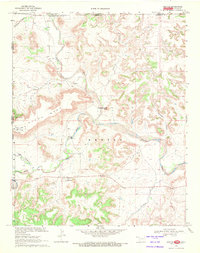 1968 Kenton1971 Print · USGSKenton and the high mesa country of the Oklahoma Panhandle are documented here during the late sixties. Researchers can trace the unique topography of the tri-state border area, locating landmarks like the Kenton Cem, Robbers Roost Peak, and Coopers Trail.3 unique versions available
 - 1969 Map of Boise City, 1971 Print
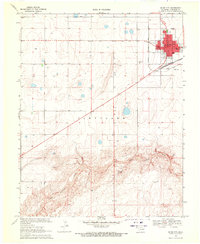 1969 Boise City1971 Print · USGSBoise City stands as a focal point of the Oklahoma Panhandle in the late sixties, where the high plains meet the river breaks. Genealogists and historians can trace the town's civic core, including the Courthouse, High Sch, and the Boise City Cem.2 unique versions available
 - 1969 Map of Felt SW, 1971 Print
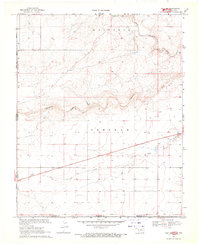 1969 Felt SW1971 Print · USGSThe Oklahoma Panhandle is captured here at the turn of the 1970s, where the high plains meet the New Mexico and Texas borders. Genealogists and historians can trace the remote section lines of Wheeless and Gresham or locate landmarks like Roadside Park.
 - 1969 Map of Boise City NW, 1971 Print
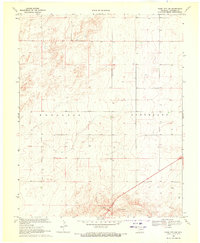 1969 Boise City NW1971 Print · USGSCimarron County in the late sixties reveals the expansive ranching and farming landscape of the Oklahoma Panhandle. Researchers can trace land divisions across Wheeless and Cleveland while locating numerous wells near the North Canadian River.3 unique versions available
 - 1969 Map of Boise City SW, 1971 Print
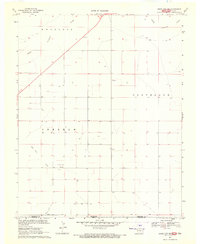 1969 Boise City SW1971 Print · USGSThe Oklahoma Panhandle and Texas borderlands meet in this late-sixties survey of the High Plains. Genealogists and local historians can locate the Bertrand Cem and trace the paths of the North Canadian River and Aqua Fria Creek.
 - 1969 Map of Wheeless, 1971 Print
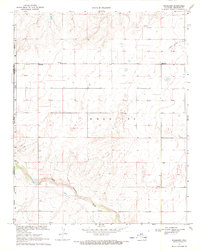 1969 Wheeless1971 Print · USGSThe Oklahoma Panhandle’s western edge is documented here in the late sixties, showing the remote high plains where the state meets New Mexico. Genealogists can locate the community of Mexhoma, the Mexhoma Church, and the winding North Canadian River.2 unique versions available
 - 1969 Map of Felt, 1971 Print
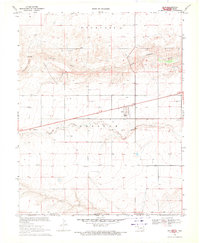 1969 Felt1971 Print · USGSThe Oklahoma Panhandle is captured here in the late sixties, centered on the settlement of Felt near the Texas state line. Researchers can trace rural life through numerous wells, the North Canadian River valley, and landmarks like Gresham.
 - 1969 Map of Flagg Springs, 1971 Print
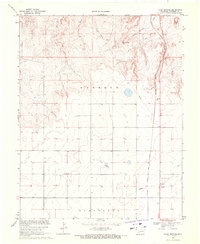 1969 Flagg Springs1971 Print · USGSIn the Cimarron County panhandle during the late sixties, this survey captures a landscape of cattle ranching and rail. Trace the historic route of the Atchison Topeka and Santa Fe past Flagg Springs and the heights of Wolf Mountain.
 - 1969 Map of Boise City SE, 1971 Print
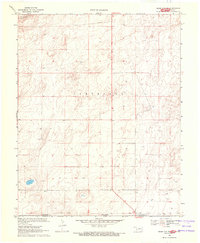 1969 Boise City SE1971 Print · USGSHigh Plains ranching and border history define this Oklahoma Panhandle survey from the late sixties. Researchers can trace the Oklahoma Texas boundary and locate numerous remote ranch sites identified by their Wells and local terrain like Cleveland.2 unique versions available
 - 1969 Map of Felt NE, 1971 Print
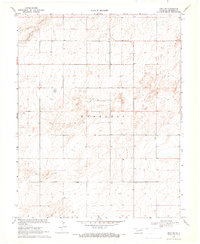 1969 Felt NE1971 Print · USGSCimarron County's high plains near the New Mexico border are captured here in the late sixties, showing a landscape of ranching and resource management. Genealogists and historians can trace the terrain of Wheeless and locate numerous scattered Well sites and the winding Cold Springs Creek.
 - 1969 Map of Kenton SE, 1971 Print
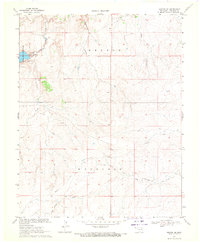 1969 Kenton SE1971 Print · USGSCimarron County, Oklahoma, is shown in the late 1960s at the intersection of western history and high plains geography. Researchers can trace the path of the Santa Fe Trail and locate the Historical Marker near Lake Carl Etling.
 - 1969 Map of Autograph Cliff, 1971 Print
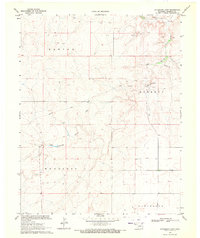 1969 Autograph Cliff1971 Print · USGSThe Oklahoma Panhandle in the late sixties reveals a landscape where the Santa Fe Trail still marks the earth. Genealogists and historians can trace the remote settlements of Kenton, Garrett, and Wheeless near the iconic Autograph Cliff.
 - 1969 Map of Kenton NE, 1971 Print
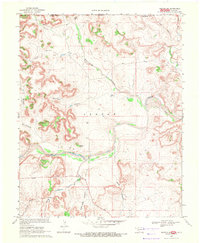 1969 Kenton NE1971 Print · USGSThe Oklahoma Panhandle and Colorado borderlands meet along the river in the late sixties. Researchers can trace the rugged drainage of Gallinas Canon and Carrizo Creek or locate landmarks like Castle Rock and the local Cem.
 - 1969 Map of Kenton SW, 1971 Print
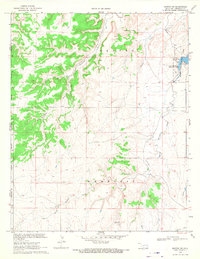 1969 Kenton SW1971 Print · USGSCimarron County's high plains meet the New Mexico border in the late sixties, a landscape where early frontier history and mid-century recreation intersect. Researchers can trace the path of the Santa Fe Trail past the Site of Old Fort Nichols or locate the Basketmakers Cave No 1 and Lake Carl Etling.
 - 1969 Map of Razor Blade Mesa, 1971 Print
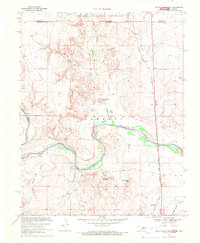 1969 Razor Blade Mesa1971 Print · USGSThe Oklahoma Panhandle's Cimarron River valley is mapped here in the late sixties as the high mesas meet the state line. Genealogists and local historians can locate the Garrett Cemetery, the railroad stop at Castaneda, and the tracks of the Atchison Topeka and Santa Fe.
 - 1971 Map of Griggs SW, 1973 Print
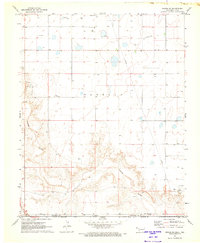 1971 Griggs SW1973 Print · USGSThe Oklahoma-Texas borderlands are captured here in the early seventies as the High Plains drop into the river breaks. Researchers can locate the Marella Cem, trace the Beaver River, and find the rural Plainview Sch near active Oil Fields.
 - 1971 Map of Griggs NE, 1973 Print
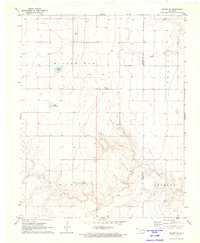 1971 Griggs NE1973 Print · USGSThe Oklahoma Panhandle in the early seventies shows a landscape of cattle ranching and early energy development. Researchers can find family burial sites at Hutsell Cem and trace the paths of Tepee Creek and Sand Creek through the open plains.
 - 1971 Map of Griggs, 1973 Print
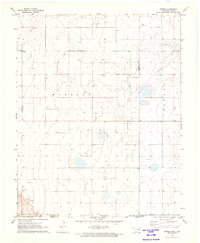 1971 Griggs1973 Print · USGSThe Oklahoma Panhandle is captured here in the early seventies, centered on the small community of Griggs. Researchers can trace the industrial footprint of the Marella Oil and Gas Field and the complex border between Cimarron and Texas counties.
Showing maps 1-25 of 57
Top cities of Cimarron County
Frequently asked questions
- What are the different types of historical maps available for Cimarron County?
- What is the oldest map of Cimarron County?
- Where can I purchase historical maps of Cimarron County for my home or office?
- Where can I download high-res historical maps of Cimarron County?
- Are there historical topographic maps available for Cimarron County?
- Is there historical aerial imagery available for Cimarron County?
- Where are historical maps of Cimarron County sourced from?