Old Maps of Fort Worth, Texas for Genealogy
Trace your family roots with 131 historic maps of Fort Worth. These high-res maps reveal old neighborhoods, homesites, landmarks, and streets — helping you uncover where your ancestors lived and how the area evolved over time.
- Explore historic neighborhoods: Identify where your relatives may have lived in the 1800s or 1900s.
- Compare maps over time: Trace the changes in streets, buildings, and landmarks for multi-generational research.
- Perfect for genealogy & ancestry research: Used by family historians and researchers to map out lineage and migration.
These maps are an incredible resource for exploring your personal connection to Fort Worth's past.
Fort Worth, TX maps
(131)- 1891 Map of Weatherford
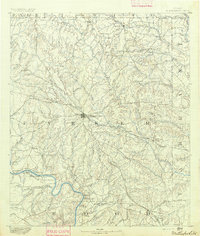 1891 Weatherford1891 Print · USGSParker County and the surrounding ranchlands are shown here in the 1890s as the rail network transformed the region. Researchers can trace early river transport at Powell Ferry or locate vanished sites like Veal Station, Center Mill, and the Bear Creek P.O.
 - 1893 Map of Weatherford
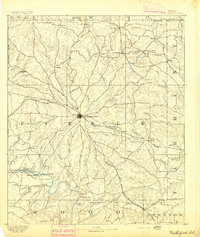 1893 Weatherford1893 Print · USGSParker County was at a pivotal turning point in the late nineteenth century as railroads began to stitch together the North Texas cattle country. Genealogists and local historians can trace early crossings like Powell Ferry and landmarks like Center Mill or Veal Station.5 unique versions available
 - 1894 Map of Fort Worth, 1918 Print
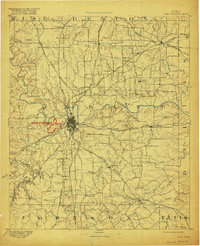 1894 Fort Worth1918 Print · USGSNorth Texas at the end of the nineteenth century centers on a burgeoning Fort Worth and its strategic rail junctions. Researchers can locate early township sites like Johnson Station and Birdville or trace the military footprint of Camp Bowie.3 unique versions available
 - 1931 Map of Grapevine
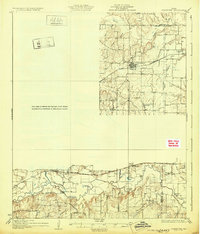 1931 Grapevine1931 Print · USGSTarrant and Dallas Counties appear in the early thirties as a network of rural settlements and rail-bound transit. Genealogists can locate family landmarks like Randalls Mill, the Bedford Bridge, and early school sites including Shady Grove Sch.2 unique versions available
 - 1932 Map of Springtown
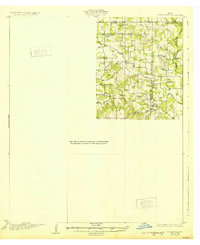 1932 Springtown1932 Print · USGSThe crossroads of North Texas in the 1920s and 30s reveal a landscape of small farming communities and country parishes. Trace the early footprints of Reno, Briar, and Azle, or locate family sites near New Hope Ch and Onion Hill Sch.
 - 1954 Map of Dallas, 1963 Print
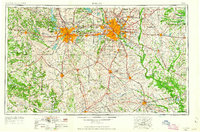 1954 Dallas1963 Print · USGSNorth Texas in the mid-fifties and early sixties reveals a landscape of rapid urban growth and water management. Genealogists and historians can trace the evolution of the metroplex through landmarks like Hensley Field, Boles Orphan Home, and the Texas & Pacific RR.4 unique versions available
 - 1954 Map of Sherman, 1964 Print
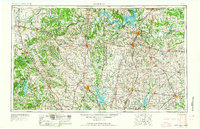 1954 Sherman1964 Print · USGSThe Red River valley and North Texas plains are captured here in the mid-fifties, showing the region as new reservoirs like Lake Texoma and Lavon Reservoir reshaped the land. Genealogists can trace family roots through specific local landmarks like Courtney P O, Pilot Grove Sch, and New Hope Ch.2 unique versions available
 - 1955 Map of Haltom City
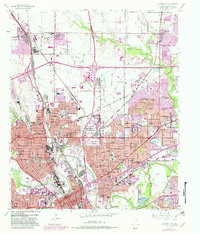 1955 Haltom City1955 Print · USGSTarrant County's industrial and residential expansion is in full view mid-century as the rail-and-river network shapes the suburbs. Researchers can trace family roots through numerous sites like Mount Olivet Cemetery, St George Ch, and local landmarks like the Saginaw Army Aircraft Plant.6 unique versions available
 - 1955 Map of Burleson, 1956 Print
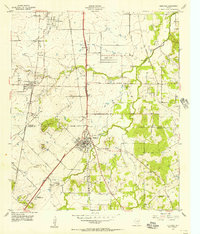 1955 Burleson1956 Print · USGSJohnson County is caught in a moment of post-war transition in the mid-fifties, where expanding settlements like Burleson and Crowley meet a landscape of rural cemeteries and research farms. Researchers can trace ancestral locations through the Prairie Springs Cem, Redchain Research Farm, and the rail corridors of the Missouri Pacific.4 unique versions available
 - 1955 Map of Avondale, 1956 Print
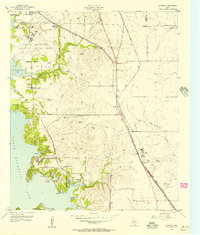 1955 Avondale1956 Print · USGSTarrant County at the midpoint of the century shows a unique mix of military aviation, lakeside recreation, and rural school districts. Genealogists can trace family footprints at Dido Ch, Eagle Mountain Sch, and the historic airfield at Hicks Field.5 unique versions available
 - 1955 Map of Aledo, 1956 Print
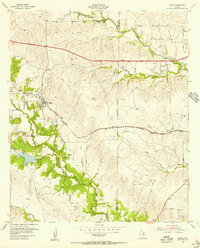 1955 Aledo1956 Print · USGSMid-century Parker and Tarrant Counties are caught just as the postwar era began reshaping the North Texas prairie. Genealogists and local historians can trace family burial grounds like McConnell Cem and Underwood Cemetery or follow the Texas and Pacific rail line.4 unique versions available
 - 1955 Map of Primrose, 1956 Print
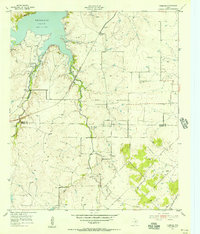 1955 Primrose1956 Print · USGSThe ranchlands of Tarrant and Johnson Counties are captured here in the mid-fifties, just as the landscape was being reshaped by the waters of Benbrook Lake. Researchers can trace the Gulf Colorado and Santa Fe rail line and locate rural landmarks like Primrose and a local Cem.2 unique versions available
 - 1955 Map of Keller, 1956 Print
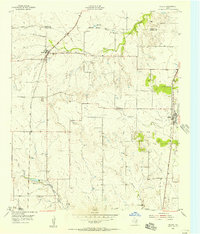 1955 Keller1956 Print · USGSNorth Texas in the mid-fifties is captured here as the ranch lands of Tarrant County began to modernise along the Texas and Pacific rail line. Researchers can trace family sites near Sweets Chapel Cem or locate early landmarks like Blue Mound.5 unique versions available
 - 1955 Map of Lake Worth, 1957 Print
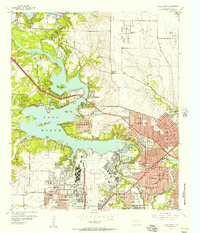 1955 Lake Worth1957 Print · USGSMid-century Tarrant County reveals a landscape shaped by military aviation and lakeside development. Researchers can trace the massive Carswell Air Force Base complex and local landmarks like White Settlement and Indian Oaks Ch.5 unique versions available
 - 1955 Map of Benbrook, 1957 Print
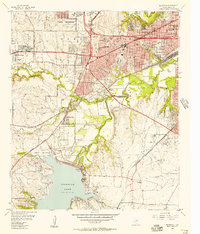 1955 Benbrook1957 Print · USGSTarrant County was undergoing a massive transformation in the mid-fifties as military expansion and new reservoirs reshaped the landscape. Trace the early development of White Settlement, the construction of Benbrook Dam, and landmarks like Carswell Air Force Base.4 unique versions available
 - 1955 Map of Fort Worth, 1957 Print
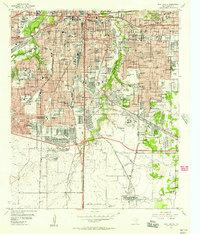 1955 Fort Worth1957 Print · USGSMid-century Fort Worth is captured here just as the highway loops began to redefine its suburban borders. Genealogists can trace family footprints at Laurel Land Memorial Park or locate local institutions like the Masonic Home and School and Texas Wesleyan College.5 unique versions available
 - 1955 Map of Haltom City, 1964 Print
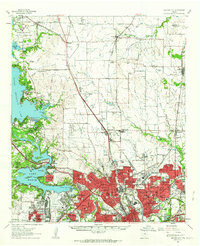 1955 Haltom City1964 Print · USGSTarrant County at the peak of the mid-century aviation and defense boom shows a region rapidly transforming from ranch land into a strategic hub. Genealogists and historians can trace family plots at Mount Olivet Cemetery or the early footprints of Haltom City, Saginaw, and White Settlement.
 - 1955 Map of Springtown SE, 1969 Print
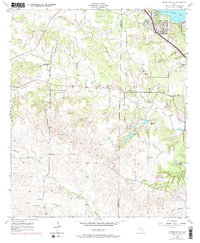 1955 Springtown SE1969 Print · USGSParker and Tarrant counties meet here in the mid-fifties, capturing a landscape in transition from quiet ranchland to lakefront development. Genealogists and local researchers can trace early family sites like Huff Cem, the Bluff Springs Sch, and the cluster of homes at Castle Hill Estate.
 - 1958 Map of Dallas
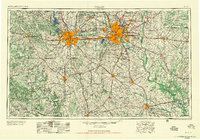 1958 Dallas1958 Print · USGSNorth Texas in the late fifties shows the dramatic expansion of the Metroplex as it absorbs surrounding farm towns. Genealogists and historians can trace old rail lines like the Missouri-Kansas-Texas and locate early lakefront developments at Eagle Mountain Lake and Lake Worth Village.
 - 1958 Map of Sherman, 1959 Print
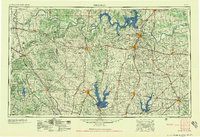 1958 Sherman1959 Print · USGSNorth Texas and Southern Oklahoma were undergoing significant development in the late fifties as the Red River Valley transit networks matured. Researchers can trace historic family-named locations such as Saddler Bend, the grounds of Perrin AFB, and early shoreline developments at Lake Texoma.
 - 1959 Map of Kennedale, 1960 Print
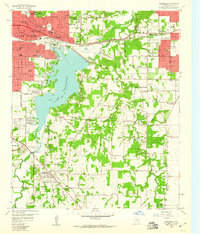 1959 Kennedale1960 Print · USGSThe growing corridor between Fort Worth and Arlington is captured here during the late fifties, just as suburban expansion began to reshape the old rural landscape. Genealogists can locate family-named landmarks like Hawkins Cem, Johnsons Station, and the Masonic Home near the newly formed Lake Arlington.4 unique versions available
 - 1959 Map of Euless, 1960 Print
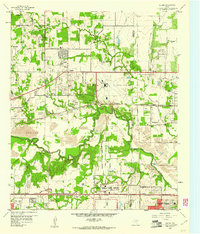 1959 Euless1960 Print · USGSMid-century Tarrant County is captured here during a period of rapid transit and aviation expansion. Genealogists can find numerous burial sites and rural landmarks like Bear Creek Cem, White Chapel, and the Terminal Control Tower at Amon Carter Field.7 unique versions available
 - 1959 Map of Colleyville, 1960 Print
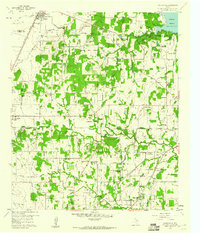 1959 Colleyville1960 Print · USGSTarrant County at the end of the fifties shows a landscape of small farms and emerging townships before the suburban boom. Genealogists can trace family roots at Medlin Cem, Lonesome Dove Ch, and the now-familiar streets of Southlake and Keller.5 unique versions available
 - 1959 Map of Mansfield, 1960 Print
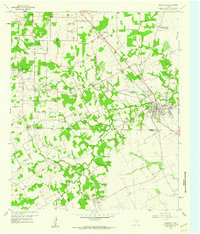 1959 Mansfield1960 Print · USGSNear the close of the 1950s, this area south of Fort Worth shows a rural landscape of small towns and family farms. Researchers can trace the rail corridors of the Missouri Pacific or locate local landmarks like Poverty Knob, Retta, and Mansfield High Sch.5 unique versions available
 - 1959 Map of Arlington, 1961 Print
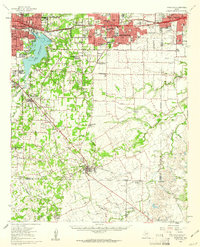 1959 Arlington1961 Print · USGSArlington and Mansfield are caught in a moment of post-war transformation as the suburbs of North Texas begin to bloom. Genealogists and local historians can trace family locations near Rehoboth Cem, study the footprint of Arlington State College, or locate vanished landmarks like Lucas Airport.
Showing maps 1-25 of 131
Top cities near Fort Worth
- Arlington historical maps
- Flower Mound historical maps
- North Richland Hills historical maps
- Mansfield historical maps
- Euless historical maps
- Grapevine historical maps
See more
Top neighborhoods of Fort Worth
- Eagle Mountain historical maps
- Tarrant historical maps
- Lytle historical maps
- Melody Hills historical maps
- Primrose historical maps
- Iona historical maps
See more
Frequently asked questions
- What are the different types of historical maps available for Fort Worth?
- What is the oldest map of Fort Worth?
- Where can I purchase historical maps of Fort Worth for my home or office?
- Where can I download high-res historical maps of Fort Worth?
- Are there historical topographic maps available for Fort Worth?
- Is there historical aerial imagery available for Fort Worth?
- Where are historical maps of Fort Worth sourced from?