1940s Maps of Utah County, Utah
Explore 19 historic maps of Utah County from the 1940s. These maps offer a rare glimpse into what life looked like during the 1940s — showing old roads, neighborhoods, homes, and landmarks that have changed or disappeared over time.
Whether you're researching your family's past, planning a metal detecting trip, or studying how Utah County's landscape evolved across the 1940s, these high-resolution maps are a powerful tool for exploring the history of this region.
- Focus on a specific era: All maps on this page are from the 1940s, giving you a focused view of this time period.
- See what’s changed: Compare century-old streets, trails, and buildings to today's modern landscape using overlays and satellite layers.
- Research with precision: Use these maps for genealogy, historical research, land use analysis, or educational projects.
- View, download, or print: Maps are fully viewable online in high resolution, and can be downloaded or printed for your own records.
Start exploring Utah County's history through authentic maps from the 1940s. This is your window into the past.
Utah County, UT maps
(19)- 1942 Map of Soldier Summit
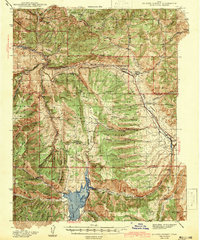 1942 Soldier Summit1942 Print · USGSHigh mountain passes and the rail-driven economy of the Wasatch Range come alive in this early 1940s survey. Genealogists and historians can trace the steep grades of the Denver and Rio Grande Western through old stations at Soldier Summit and Colton.2 unique versions available
 - 1947 Map of Fivemile Pass, 1953 Print
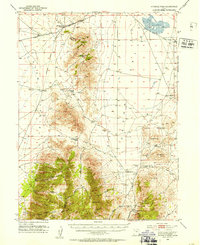 1947 Fivemile Pass1953 Print · USGSUtah's high desert reveals its mining and transit legacy in the late 1940s as the East Tintic Mountains hum with mineral extraction. Trace the storied Pony Express Route or locate historic operations like the Lehi Tintic Mine and the settlement of Topliff.
 - 1947 Map of Allens Ranch, 1958 Print
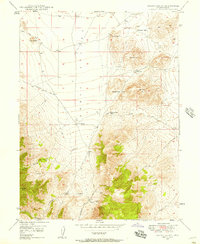 1947 Allens Ranch1958 Print · USGSThe northern reaches of the Tintic mining district appear here in the late 1940s as a landscape of isolated ranches and active claims. Researchers can trace the era's mining footprint through the Tintic Paymaster and Selma Mine, or locate Allens Ranch in the Cedar Valley.3 unique versions available
 - 1947 Map of Boulter Peak, 1958 Print
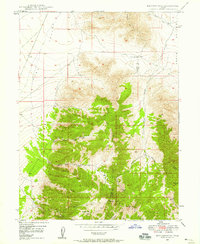 1947 Boulter Peak1958 Print · USGSThe East Tintic Mountains meet the desert basins of Tooele and Juab counties in the late 1940s. Researchers can trace historical mining claims and rugged transportation routes like the Scranton Mine, Twelvemile Pass, and Silver Dollar Mine.2 unique versions available
 - 1947 Map of Goshen Pass, 1970 Print
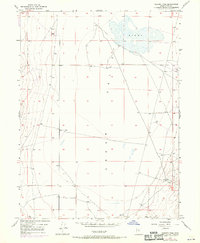 1947 Goshen Pass1970 Print · USGSCedar Valley remains a stark and open landscape in the late 1940s, defined by its vital water sources and mountain corridors. Researchers can trace the early infrastructure of this arid basin through sites like the Sinks, several remote Well points, and the narrow transit at Goshen Pass.2 unique versions available
 - 1948 Map of Spanish Fork, 1956 Print
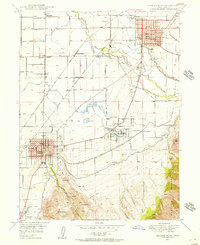 1948 Spanish Fork1956 Print · USGSUtah County at the end of the 1940s shows a thriving network of agricultural towns and mountain mines as the valley modernized. Researchers can trace family roots at Benjamin Cem or locate industrial sites like the Sugar Refinery and the Dream Mine.3 unique versions available
 - 1948 Map of Timpanogos Cave, 1957 Print
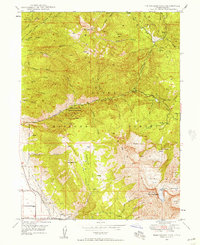 1948 Timpanogos Cave1957 Print · USGSThe Wasatch peaks and deep canyons above Pleasant Grove were being actively managed for both water and recreation in the late 1940s. Genealogists and hikers can trace historic routes like the Alpine Scenic Highway and find landmark sites like Mutual Dell and the Timpooneke Guard Sta.4 unique versions available
 - 1948 Map of Orem, 1957 Print
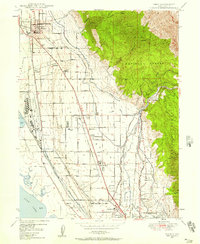 1948 Orem1957 Print · USGSPostwar industrialization and agricultural roots converge in this mid-century survey of the Utah Valley shoreline. Genealogists and local historians can trace the footprint of the Geneva Steel Plant, local schools like Vineyard School, and old settlements such as Christmas City.4 unique versions available
 - 1948 Map of Orem, 1959 Print
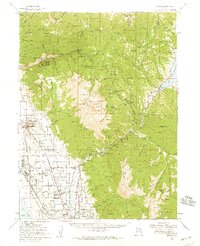 1948 Orem1959 Print · USGSThe Utah Valley at the end of the 1940s showcases a unique blend of heavy industry and high-mountain wilderness. Local historians can trace the development of Orem and Pleasant Grove or locate the Steel Plant and Lincoln Jr HS near Utah Lake.2 unique versions available
 - 1948 Map of Springville, 1959 Print
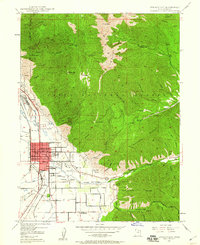 1948 Springville1959 Print · USGSSpringville and the southern Wasatch Front are shown here just after the war as industrial and agricultural centers. Genealogists can locate family sites near City Cem or trace school locations like Jefferson Sch and Lincoln Sch.4 unique versions available
 - 1948 Map of Aspen Grove, 1960 Print
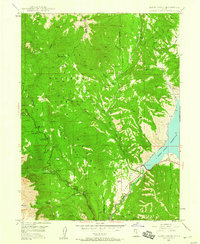 1948 Aspen Grove1960 Print · USGSThe Wasatch Range and Heber Valley appear here in the late 1940s, highlighting the area's role in education and recreation. You can trace the shoreline of the Deer Creek Reservoir and locate historic sites like the Alpine Summer School (B. Y. U.) and the Girls M. I. A. Camp.3 unique versions available
 - 1948 Map of Provo, 1960 Print
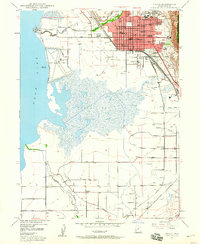 1948 Provo1960 Print · USGSMid-century Provo is shown here as a thriving center for education and industry along the eastern shores of Utah Lake. Genealogists and historians can trace the footprint of Brigham Young University, the State Mental Hospital, and neighborhood schools like Maeser School.3 unique versions available
 - 1948 Map of Bridal Veil Falls, 1960 Print
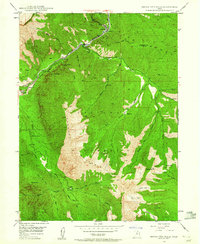 1948 Bridal Veil Falls1960 Print · USGSThe Provo River canyon was a vital transportation corridor just after the war, where the Denver & Rio Grande Western RR wound past steep peaks. Trace early settlement sites and mountain landmarks like Bridal Veil Falls, Vivian Park, and Y Mountain.4 unique versions available
 - 1949 Map of Eureka
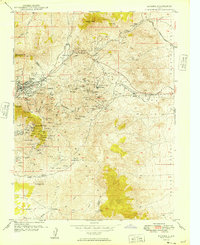 1949 Eureka1949 Print · USGSThe Tintic mining district was at the height of its industrial reach in the late 1940s, marking a landscape defined by deep shafts and rail lines. You can trace the exact locations of historic operations like Mammoth, the Iron King No 1 Shaft, and the camps at Knightville.
 - 1949 Map of Allens Ranch
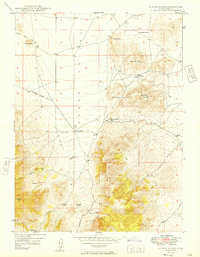 1949 Allens Ranch1949 Print · USGSCedar Valley and the surrounding mountains are captured here in the late 1940s during a peak era of mineral extraction. Researchers can trace the specific locations of several mining operations including Tintic Paymaster, Selma Mine, and the buildings at Allens Ranch.
 - 1949 Map of Fivemile Pass
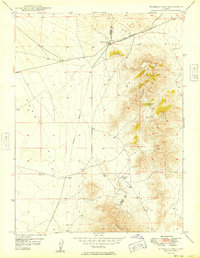 1949 Fivemile Pass1949 Print · USGSTooele and Utah County lines intersect here in the late 1940s, revealing a landscape shaped by strategic desert passes and shifting rail lines. Trace the industrial footprint of the (Dismantled Railroad) leading to Topliff or follow the Union Pacific through Fivemile Pass.2 unique versions available
 - 1949 Map of Goshen Pass
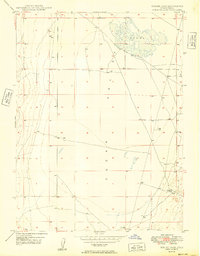 1949 Goshen Pass1949 Print · USGSCedar Valley at the end of the 1940s reveals a sparsely settled Utah landscape defined by its high-desert hydrology and transit routes. Researchers can trace early roads leading to the Goshen Pass corridor and locate water sources like the Sinks.
 - 1949 Map of Provo, 1959 Print
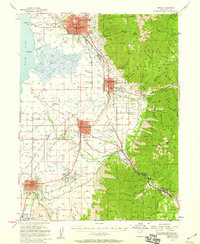 1949 Provo1959 Print · USGSThe Utah Valley thrived in the late post-war years as industrial growth and educational institutions expanded along the eastern shore of Utah Lake. Researchers can locate family roots in settlements like Palmyra and Leland or trace the industrial sites at Ironton and the Sugar Refinery.
 - 1949 Map of Spanish Fork Peak, 1960 Print
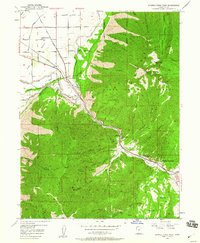 1949 Spanish Fork Peak1960 Print · USGSIn the shadow of the Wasatch Range in the late 1940s, this area shows a fascinating mix of canyon industry and alpine wilderness. Researchers can trace the Denver and Rio Grande Western rail lines past Mapleton Siding to the Old Spanish Mine and Castilla Springs.4 unique versions available
End of results
Showing maps 1-19 of 19
Top cities of Utah County
- Provo historical maps
- Orem historical maps
- Lehi historical maps
- Eagle Mountain historical maps
- Saratoga Springs historical maps
- Spanish Fork historical maps
See more
Frequently asked questions
- What are the different types of historical maps available for Utah County?
- What is the oldest map of Utah County?
- Where can I purchase historical maps of Utah County for my home or office?
- Where can I download high-res historical maps of Utah County?
- Are there historical topographic maps available for Utah County?
- Is there historical aerial imagery available for Utah County?
- Where are historical maps of Utah County sourced from?