1970s Maps of Washington
Explore 343 historic maps of Washington from the 1970s. These maps offer a rare glimpse into what life looked like during the 1970s — showing old roads, neighborhoods, homes, and landmarks that have changed or disappeared over time.
Whether you're researching your family's past, planning a metal detecting trip, or studying how Washington's landscape evolved across the 1970s, these high-resolution maps are a powerful tool for exploring the history of this region.
- Focus on a specific era: All maps on this page are from the 1970s, giving you a focused view of this time period.
- See what’s changed: Compare century-old streets, trails, and buildings to today's modern landscape using overlays and satellite layers.
- Research with precision: Use these maps for genealogy, historical research, land use analysis, or educational projects.
- View, download, or print: Maps are fully viewable online in high resolution, and can be downloaded or printed for your own records.
Start exploring Washington's history through authentic maps from the 1970s. This is your window into the past.
Washington maps
- 1970 Map of Alderdale, 1972 Print
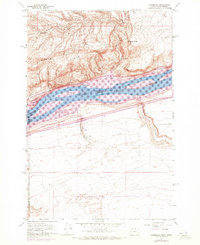 1970 Alderdale1972 Print · USGSThe Columbia River corridor comes alive in the early seventies as a hub of rail activity and industrial transit. Trace the riverbank routes of the Union Pacific and Burlington Northern near Alderdale and Golgotha Butte.
 - 1970 Map of Burr Canyon, 1972 Print
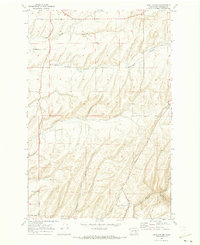 1970 Burr Canyon1972 Print · USGSFranklin County's coulee country is captured in the early 1970s, showing a landscape of deep canyons and isolated wheat ranches. Trace local history along family-named routes like Bauermeister Road or explore the terrain of Maid Coulee and Burr Canyon.
 - 1970 Map of Outlet Falls, 1973 Print
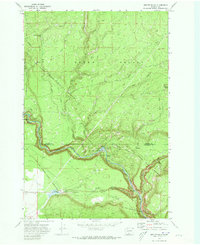 1970 Outlet Falls1973 Print · USGSThe Klickitat River valley in the early seventies reveals a landscape defined by historic survey lines and remote mountain terrain. Genealogists and local historians can trace the Old RR Grade, the Klickitat State Fish Hatchery, and the landmark Outlet Falls.
 - 1970 Map of Lost Horse Plateau, 1973 Print
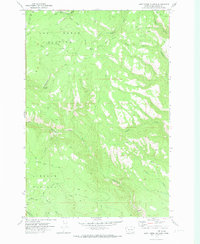 1970 Lost Horse Plateau1973 Print · USGSThe Yakima Indian Reservation uplands come into focus in the early seventies, showing a landscape defined by high plateaus and remote creek forks. Genealogists and historians can trace old mountain routes like Old Maid Road and find isolated landmarks such as Olney Corral.
 - 1970 Map of Glenwood, 1973 Print
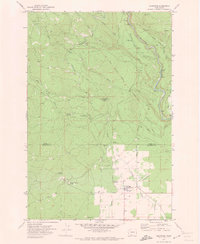 1970 Glenwood1973 Print · USGSGlenwood and the surrounding Yakima Indian Reservation lands are documented here during the early 1970s. Local historians can trace the Old Railroad Grade and locate ancestral boundaries like the Campbell Line.
 - 1970 Map of Lower Monumental Dam, 1973 Print
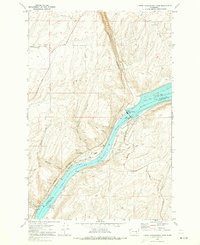 1970 Lower Monumental Dam1973 Print · USGSThe Snake River at the start of the 1970s reveals a landscape transformed by the Lower Monumental Dam and Lake Sacajawea. Researchers can trace the Burlington Northern rail line past the settlements of Farrington and Windust.
 - 1970 Map of Lind SE, 1973 Print
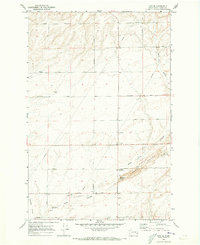 1970 Lind SE1973 Print · USGSAdams County's agricultural heartland is captured here in the early seventies, showing a landscape defined by glacial coulees and family-named homestead roads. Researchers can locate the Delight Cem, the Sand Hills Grange Hall, and landmarks like McChesney Spring.
 - 1970 Map of Mesa East, 1973 Print
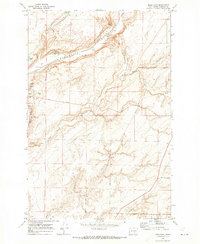 1970 Mesa East1973 Print · USGSFranklin County's dryland farming and rail corridors come into focus in the early 1970s. Trace the tracks of the Burlington Northern through Mesa and find family-named landmarks like Pepiot Road and Old Maid Coulee.
 - 1970 Map of Sleeping Beauty, 1973 Print
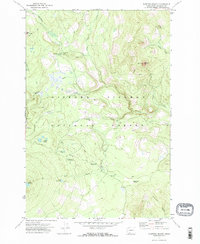 1970 Sleeping Beauty1973 Print · USGSSkamania County in the early seventies is shown as a deep wilderness of the Cascades, mapped during the peak of mid-century forest management. You can trace the rugged network of Pack Trails and Jeep Trails to remote spots like Lake Wapiki, Little Goose Campground, and Indian View Point.
 - 1970 Map of Frischknecht, 1973 Print
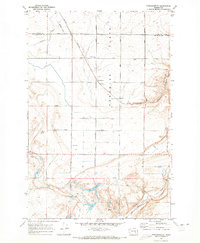 1970 Frischknecht1973 Print · USGSFranklin County grain-growing country comes into focus in the early 1970s, as the rail and road network supported the region's agricultural harvest. Genealogists and historians can trace the Burlington Northern line to the Grain Elevators at Frischknecht and locate the Paradise Flats Cem.
 - 1970 Map of Lind SW, 1973 Print
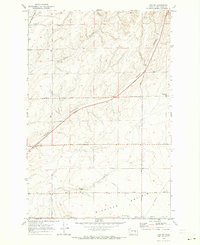 1970 Lind SW1973 Print · USGSThe high plains of Adams County in the early 1970s are mapped here as a landscape of remote farmsteads and coulee systems. Researchers can trace early family connections through sites like Michigan Prairie Cem, the Woodward Elevator, and the settlement of Midway.
 - 1970 Map of Hamilton Buttes, 1973 Print
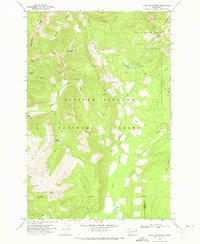 1970 Hamilton Buttes1973 Print · USGSThe Cascade high country of the early seventies is revealed through its network of river forks and primitive trails. Trace the old Pack Trail routes that connect remote mountain waters like St John Lake and the high peaks of the Goat Rocks Wilderness.
 - 1970 Map of Lind, 1973 Print
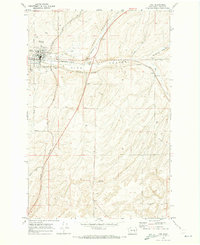 1970 Lind1973 Print · USGSLind flourished as a rail hub in the 1970s where two major lines intersected amidst the unique coulee geography of eastern Washington. Researchers can trace the town's layout including the High Sch and Lind Cem or follow rural routes like Wahl Road.
 - 1970 Map of Shano, 1973 Print
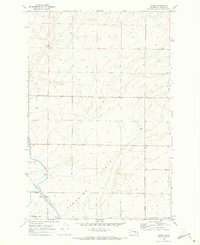 1970 Shano1973 Print · USGSAdams County agriculture and water engineering are on full display in the early seventies as irrigation reshapes the landscape. Researchers can trace the path of the East Low Canal through the Shano Siphon to the Grain Elevators at Shano.2 unique versions available
 - 1970 Map of Fairview Ridge, 1973 Print
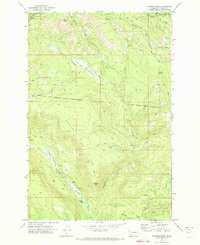 1970 Fairview Ridge1973 Print · USGSYakima County high country is documented here in the early 1970s, showing the intersection of forest and reservation lands. Researchers can locate remote outposts like Kesslers Ranch and seasonal sites like Klickitat Camp along the Klickitat River.2 unique versions available
 - 1970 Map of Connell SE, 1973 Print
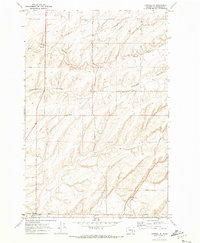 1970 Connell SE1973 Print · USGSFranklin County's coulee-scarred plains are captured here in the early 1970s, illustrating the agricultural and infrastructural network of eastern Washington. Researchers can trace family-named routes like Bauermeister Road and find landmarks such as McLean and Five Corners.
 - 1970 Map of Blue Lake, 1973 Print
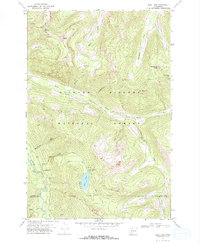 1970 Blue Lake1973 Print · USGSThe Lewis and Skamania county line crosses this high mountain wilderness in the early 1970s. Researchers can trace the network of Pack Trails leading to Blue Lake, St Michael Lake, and lookout points like Horseshoe Point.2 unique versions available
 - 1970 Map of Roxboro, 1973 Print
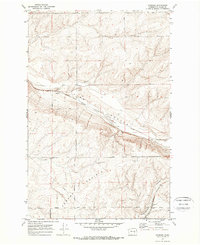 1970 Roxboro1973 Print · USGSAdams County’s agricultural heartland is captured here in the early seventies, centered on the high plateau and the rail lines through the coulees. Genealogists and local historians can trace family-named routes and remote landmarks like Kansas Prairie Cem, Woodruff Cem, and the siding at Servia.2 unique versions available
 - 1970 Map of East Canyon Ridge, 1973 Print
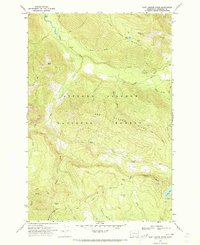 1970 East Canyon Ridge1973 Print · USGSSkamania County's high Cascades come into focus in the 1970s, showing a landscape defined by forest management and backcountry recreation. Researchers can trace historic access routes like the Table Mtn Trail (Pack) or locate landmarks such as the Summit Prairie lookout and Council Lake.
 - 1970 Map of Kahlotus, 1973 Print
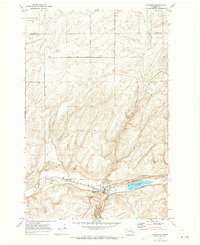 1970 Kahlotus1973 Print · USGSKahlotus and the surrounding coulee country are captured here in the early seventies, showing a landscape defined by rail and ranching. Genealogists and local historians can trace the Union Pacific corridor, locate Lakeview Cemetery, and explore the terrain of Michigan Prairie.
 - 1970 Map of Signal Peak, 1973 Print
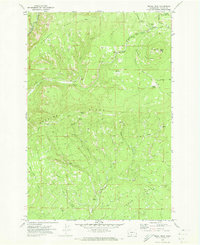 1970 Signal Peak1973 Print · USGSThe Yakima Indian Reservation highlands are shown here in the early 1970s, focused on the forest management and lookouts of Signal Peak. Researchers can trace the 1890 Schwartz Line and find landmarks like Saxton Rock and Jungle Spring.
 - 1970 Map of Trout Lake, 1973 Print
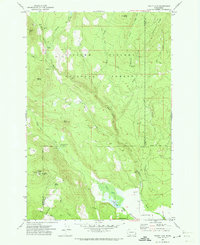 1970 Trout Lake1973 Print · USGSThe Trout Lake valley in the early seventies shows a landscape defined by forestry and river management. Trace local landmarks like the Trout Lake Big Tree, the Wicky Creek Shelter, and high-altitude lookouts atop Flattop Mtn.
 - 1970 Map of Providence, 1973 Print
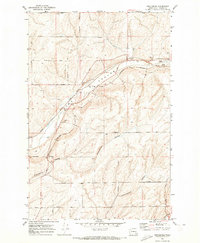 1970 Providence1973 Print · USGSAdams County at the start of the 1970s shows a landscape shaped by rail and coulee drainage. Trace the crossing of the Burlington Northern and the Milwaukee Road near Providence and the Rodeo Grounds.
 - 1970 Map of Connell, 1973 Print
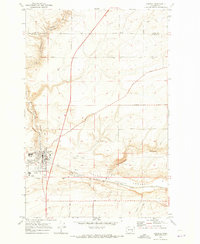 1970 Connell1973 Print · USGSFranklin County's rail and agricultural heart is captured here during the early seventies as the region's transport network matured. Researchers can trace the path of the Northern Pacific railroad through Connell or locate family-named landmarks like Myers Road and Nordheim.
 - 1970 Map of Sulphur Lake, 1973 Print
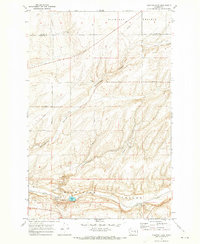 1970 Sulphur Lake1973 Print · USGSThe Franklin and Adams County line comes alive in the early seventies, showing a landscape defined by the deep Washtucna (Depression) Coulee. Trace the Union Pacific rail corridor to find local landmarks like Sulphur Lake, Estes, and numerous grain elevators.
Showing maps 1-25
Top cities of Washington
- Seattle historical maps
- Spokane historical maps
- Tacoma historical maps
- Vancouver historical maps
- Bellevue historical maps
- Kent historical maps
See more
Top counties of Washington
- King County historical maps
- Pierce County historical maps
- Snohomish County historical maps
- Spokane County historical maps
- Clark County historical maps
- Thurston County historical maps
See more
Frequently asked questions
- What are the different types of historical maps available for Washington?
- What is the oldest map of Washington?
- Where can I purchase historical maps of Washington for my home or office?
- Where can I download high-res historical maps of Washington?
- Are there historical topographic maps available for Washington?
- Is there historical aerial imagery available for Washington?
- Where are historical maps of Washington sourced from?