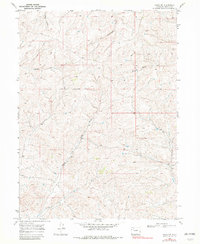
1969 Map of Craig NW
USGS Topo · Published 1982About this map
Deep drainages and ephemeral watercourses carve through this northwest Colorado landscape as it appeared in the late 1960s. The topography is defined by the extensive systems of Big Gulch and the North Fork Big Gulch, which dominate the southern half of the quadrangle. To the north, the terrain transitions into the upper reaches of Blue Gravel Creek and West Timberlake Creek, illustrating a classic high-desert drainage pattern where water is the primary architect of the land. Evidence of geological exploration and early resource assessment is scattered across the hillsides, marked by a Drill Hole in the east and various Prospects and a singular Prospect located toward the south. These features, along with the names of minor draws like Dressler Gulch and Housel Gulch, provide a window into the land's utility for livestock grazing and mineral prospecting during this era.
Find a feature on this map
9 named features on this map. Tap any name to fly to it.
Don’t see what you’re looking for? This feature index may not catch every label — zoom into the map to look around manually.
Map Details
Editions of this 1969 Craig NW Map
4 editions found
Other maps of this area
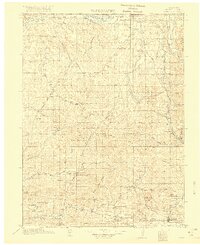
1916 · Craig
USGS Topo · 1:125,000
1954 · Craig
USGS Topo · 1:250,000
1957 · Craig
USGS Topo · 1:250,000
1958 · Craig
USGS Topo · 1:250,000
1960 · Craig
USGS Topo · 1:250,000
1962 · Craig
USGS Topo · 1:250,000
1964 · Craig
USGS Topo · 1:250,000
1965 · Craig
USGS Topo · 1:250,000
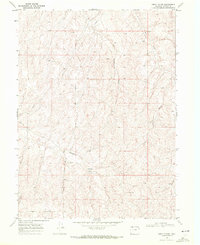
1969 · Great Divide
USGS Topo · 1:24,000
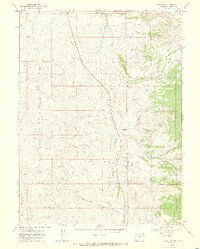
1969 · Fortification
USGS Topo · 1:24,000