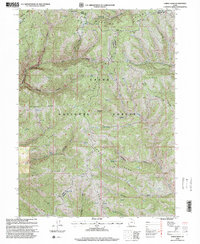
1998 Map of Horse Ridge
USGS Topo · Published 2000About this map
Wasatch Cache National Forest dominates this landscape where the high-altitude boundaries of Rich, Weber, and Morgan counties converge. Revised in the late 1990s, the map reveals a complex drainage network characterized by deep incisions like Frost Canyon and Squaw Canyon that feed toward Lost Creek. Prominent geological landmarks such as Squaw Butte and the extensive Horse Ridge define the vertical relief, while isolated water sources like Wonder Spring and Bear Hollow Springs provide critical points of interest in an otherwise high, arid environment. The presence of several Corral sites and numerous 4wd tracks suggests a landscape primarily utilized for seasonal grazing and timber management. This topographical study illustrates the intricate connection between the ridgelines, including Bald Ridge and Stark Ridge, and the hollows that drain this portion of the northern Wasatch Range.
Find a feature on this map
40 named features on this map. Tap any name to fly to it.
Don’t see what you’re looking for? This feature index may not catch every label — zoom into the map to look around manually.
Map Details
Editions of this 1998 Horse Ridge Map
This is the sole edition of this map. No revisions or reprints were ever made.
Other maps of this area
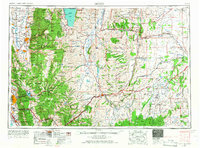
1954 · Ogden
USGS Topo · 1:250,000
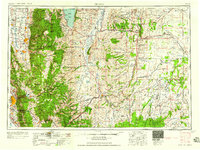
1958 · Ogden
USGS Topo · 1:250,000
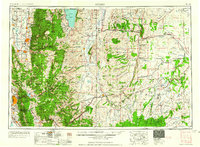
1960 · Ogden
USGS Topo · 1:250,000
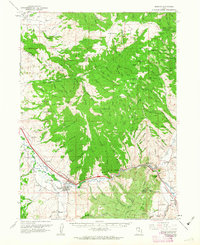
1961 · Morgan
USGS Topo · 1:62,500
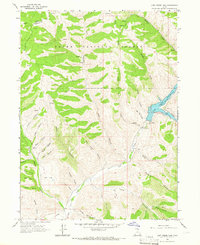
1964 · Lost Creek Dam
USGS Topo · 1:24,000
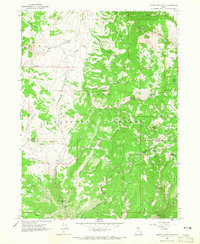
1964 · Monte Cristo PK
USGS Topo · 1:24,000
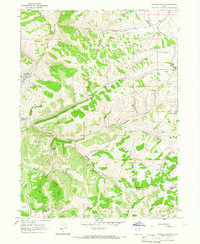
1964 · Francis Canyon
USGS Topo · 1:24,000
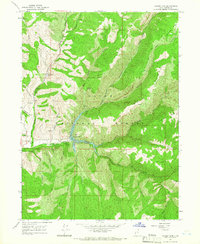
1964 · Causey Dam
USGS Topo · 1:24,000
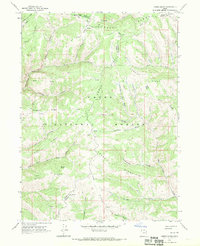
1968 · Horse Ridge
USGS Topo · 1:24,000
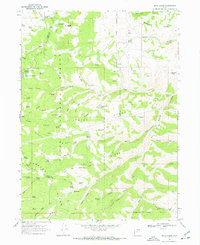
1968 · Dairy Ridge
USGS Topo · 1:24,000