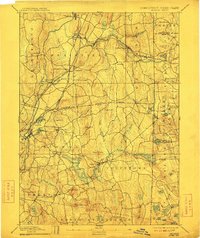
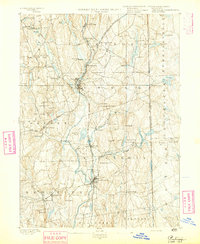
1893 Map of Moosup
USGS Topo · Published 1912About this map
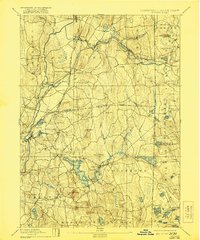
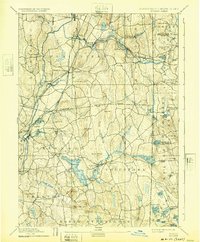
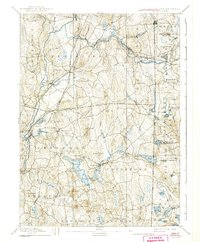
Moosup and Plainfield serve as industrial and rail anchors in this late 19th-century survey of the Connecticut-Rhode Island boundary. The map illustrates a landscape defined by the Quinebaug River and a dense network of early rail lines, including the Norwich and Worcester Railroad and the New York and New England Railroad Providence Division. These corridors connected manufacturing hamlets like Almyville and Packersville to the larger regional economy. To the south and east, the terrain becomes increasingly defined by water bodies such as Pachaug Pond, Beach Pond, and Billings Lake, which supported early mill settlements like Glasgo and Voluntown. The inclusion of small, remote settlements like Hopkins Hollow and Oneco provides a look at the rural borderlands before modern development altered these small agricultural and textile communities.
Find a feature on this map
84 named features on this map. Tap any name to fly to it.
Don’t see what you’re looking for? This feature index may not catch every label — zoom into the map to look around manually.
Map Details
Editions of this 1893 Moosup Map
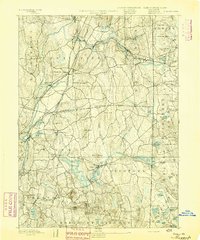
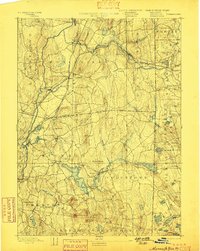
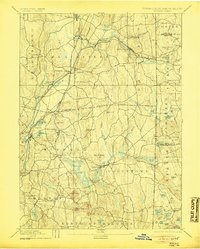
7 editions found
Other maps of this area
1889 · Stonington
USGS Topo · 1:62,500
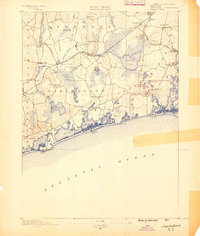
1889 · Charlestown
USGS Topo · 1:62,500
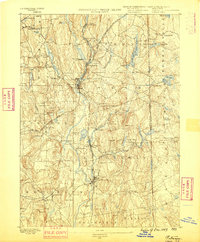
1889 · Putnam
USGS Topo · 1:62,500
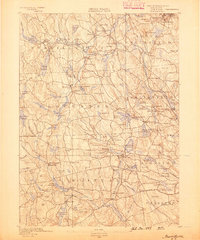
1889 · Burrillville
USGS Topo · 1:62,500
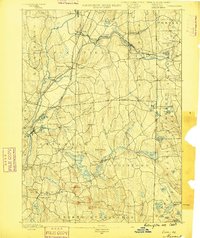
1889 · Moosup
USGS Topo · 1:62,500
1890 · Kent
USGS Topo · 1:62,500
1892 · Woodstock
USGS Topo · 1:62,500
1892 · New London
USGS Topo · 1:62,500
1892 · Norwich
USGS Topo · 1:62,500
1893 · Putnam
USGS Topo · 1:62,500