1940s Maps of Escambia County, Florida
Explore 29 historic maps of Escambia County from the 1940s. These maps offer a rare glimpse into what life looked like during the 1940s — showing old roads, neighborhoods, homes, and landmarks that have changed or disappeared over time.
Whether you're researching your family's past, planning a metal detecting trip, or studying how Escambia County's landscape evolved across the 1940s, these high-resolution maps are a powerful tool for exploring the history of this region.
- Focus on a specific era: All maps on this page are from the 1940s, giving you a focused view of this time period.
- See what’s changed: Compare century-old streets, trails, and buildings to today's modern landscape using overlays and satellite layers.
- Research with precision: Use these maps for genealogy, historical research, land use analysis, or educational projects.
- View, download, or print: Maps are fully viewable online in high resolution, and can be downloaded or printed for your own records.
Start exploring Escambia County's history through authentic maps from the 1940s. This is your window into the past.
Escambia County, FL maps
(29)- 1941 Map of Fort Barrancas
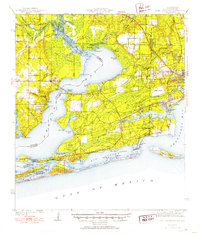 1941 Fort Barrancas1941 Print · USGSCoastal Florida and Alabama meet at the Perdido River during the early 1940s, showing a landscape of bayous, naval aviation, and growing bayside towns. Genealogists and historians can trace old homesteads near Millview, Fort Barrancas, and schools like Oakfield Sch.3 unique versions available
 - 1941 Map of Muscogee, 1956 Print
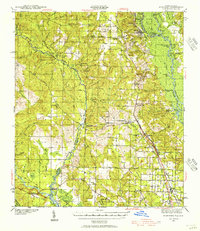 1941 Muscogee1956 Print · USGSThe Florida-Alabama borderlands come alive in the early 1940s as the Perdido River and major rail lines dictate the rhythm of local commerce. Researchers can trace family roots through numerous rural landmarks like Barrineau Park, the Mission Cem, and Quintette Sch.2 unique versions available
 - 1941 Map of Robertsdale, 1956 Print
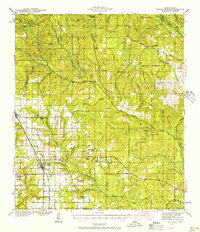 1941 Robertsdale1956 Print · USGSCoastal Alabama's agricultural heartland is documented here just before mid-century, following the rail lines and river bends of the lower Perdido basin. Researchers can pinpoint early rural infrastructure from Old Mill Bridge to the Chandler Fire Tower and rural landmarks like Bethel Chapel or the CCC Camp.3 unique versions available
 - 1941 Map of Pensacola, 1956 Print
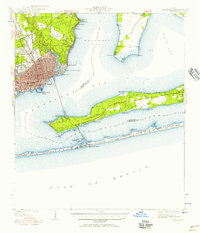 1941 Pensacola1956 Print · USGSPensacola and its surrounding bays are seen here just before the mid-century boom, detailing a landscape defined by naval aviation and maritime rail. Trace the historic city grid, explore the U S Naval Reservation, or locate Oakland Ch and Black Hammock Cem.
 - 1941 Map of Milton, 1956 Print
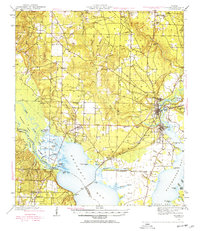 1941 Milton1956 Print · USGSSanta Rosa County at the start of the 1940s is shown here as a landscape of timber-towns and tidewater rail junctions. Genealogists can trace family names at Allen Cem, Robinson Sch, and the riverside settlements of Bagdad and Floridatown.2 unique versions available
 - 1941 Map of Century, 1962 Print
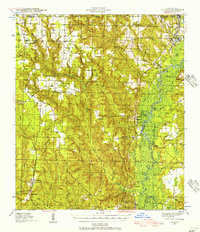 1941 Century1962 Print · USGSThe Florida-Alabama borderlands come alive in the early 1940s as a landscape of river-bottom wetlands and upland rail towns. Genealogists can trace family roots at Coon Hill Cem, Kays Chapel, and long-standing schools like Pine Barren Sch.2 unique versions available
 - 1941 Map of Foley, 1964 Print
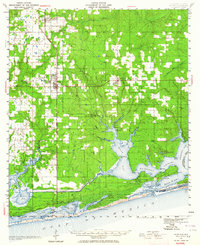 1941 Foley1964 Print · USGSCoastal Baldwin County in the early 1940s shows the working landscape of the Gulf before the era of major development. Researchers can trace the Louisville and Nashville Railroad line, find local landmarks like Stone Quarry Bayou, and locate early community sites such as Miflin Sch.3 unique versions available
 - 1942 Map of Pensacola
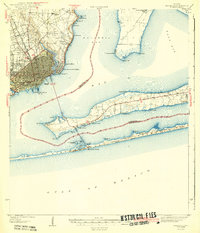 1942 Pensacola1942 Print · USGSCoastal Florida is captured here in the early years of the war, showing the maritime and rail infrastructure that shaped the Panhandle. Genealogists and historians can trace family locations near Oakland Ch, the Black Hammock Cem, and the busy Muscogee Wharf.2 unique versions available
 - 1942 Map of Dyas, 1965 Print
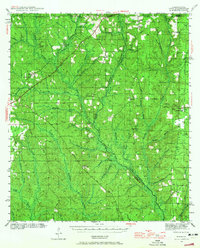 1942 Dyas1965 Print · USGSThe borderlands of Alabama and Florida are captured here during the early 1940s, highlighting a landscape shaped by timber and the Perdido River. Genealogists can locate family landmarks like Cain Cem, Nokomis Sch, and the St Stephens and St Louis RR.2 unique versions available
 - 1943 Map of Robertsdale
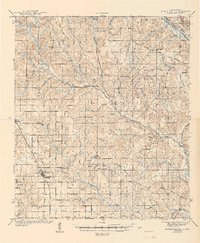 1943 Robertsdale1943 Print · USGSCentral Baldwin County is shown here in the early 1940s, when timber work and rail lines defined the landscape. You can trace family roots at Rock Creek Cem, locate the Turpentine Camp, and find old schools like Blackwater Sch.3 unique versions available
 - 1943 Map of Muscogee
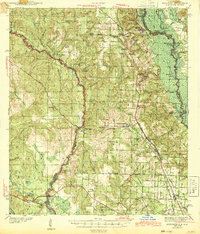 1943 Muscogee1943 Print · USGSThe Florida-Alabama borderlands come alive in the early 1940s as the river-and-rail economy pulses through Muscogee and Cantonment. Genealogists can trace family footprints at Mission Cem, Sunnyhill Sch, and rural stops along the Louisville and Nashville RR.2 unique versions available
 - 1943 Map of Century
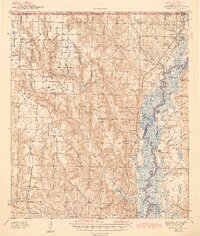 1943 Century1943 Print · USGSThe Florida-Alabama borderlands in the 1940s are defined by the winding Escambia River and a thriving rail-and-timber network. Researchers can trace rural life through family-named landmarks like Coon Hill Cem, Ward Sch, and Chumuckla Springs.2 unique versions available
 - 1943 Map of Fort Barrancas
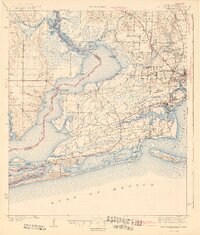 1943 Fort Barrancas1943 Print · USGSThe Florida-Alabama borderlands at Perdido Bay come alive in the early 1940s, showing a landscape of coastal swamps and growing Pensacola suburbs. Researchers can trace the grounds of Fort Barrancas, locate Oakfield Sch, or find family roots near Millview and Seminole.2 unique versions available
 - 1943 Map of Milton
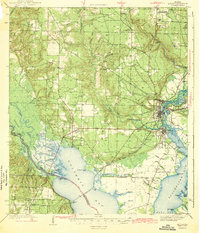 1943 Milton1943 Print · USGSSanta Rosa and Escambia counties are captured here in the early 1940s at the confluence of the Blackwater and Escambia rivers. Researchers can trace the waterfront history of MILTON and Bagdad or locate rural landmarks like Union Valley Ch and Conners Still.2 unique versions available
 - 1943 Map of Foley
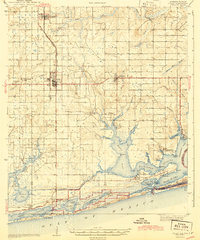 1943 Foley1943 Print · USGSCoastal Baldwin County in the early 1940s shows a landscape of rail-end farming hubs and quiet bayou settlements before the rise of modern tourism. Genealogists and historians can trace local family roots through sites like Summerdale Cem, the Little Rock School, and the fishing village of Bon Secour.2 unique versions available
 - 1943 Map of Jay
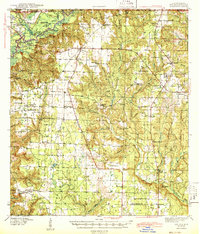 1943 Jay1943 Print · USGSSanta Rosa County's agricultural and riverine heartland is captured here during the early years of the Second World War. Researchers can locate vanished landmarks like Catawba Fidelis Sch and Old Fidelis Cem or trace family roots in Jay and Chumuckla.4 unique versions available
 - 1944 Map of Floridatown
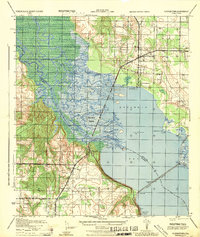 1944 Floridatown1944 Print · USGSCoastal Santa Rosa County is captured here during the mid-forties, showing the vital river-and-rail hub where the Escambia delta meets the bay. Trace the wartime footprint of Ellyson Field and the historic streets of Floridatown and Pace.
 - 1944 Map of Perdido Bay North
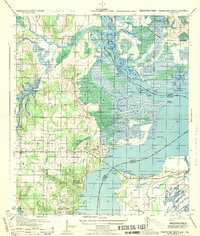 1944 Perdido Bay North1944 Print · USGSPerdido Bay and the Alabama-Florida borderlands are captured here during the Second World War. Researchers can trace family history through the Old Spanish Cemetery, the settlement at Seminole, and vanished maritime structures like the Old Docks.
 - 1944 Map of Miflin
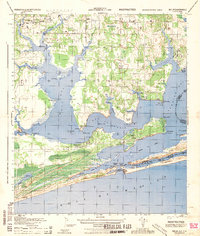 1944 Miflin1944 Print · USGSCoastal Alabama and the Florida borderlands are captured here during the mid-forties, showing the quiet maritime life of the Gulf shore. Researchers can trace family-named points and old settlements like Josephine, Perdido Beach, and the Josephine School.
 - 1944 Map of West Pensacola
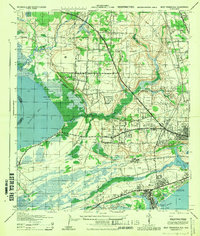 1944 West Pensacola1944 Print · USGSWest Pensacola and the surrounding naval aviation grounds are captured here during their mid-century expansion. Trace the growth of Warrington and Myrtle Grove alongside vital wartime infrastructure like Corry Field and the Frisco railroad line.
 - 1944 Map of Muscogee
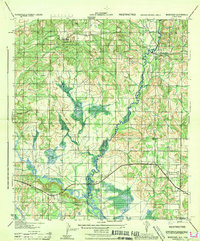 1944 Muscogee1944 Print · USGSThe Perdido River borderlands in the mid-1940s reveal a landscape of river-bottom wetlands and timbered ridges. Genealogists and historians can trace old homesteads and landmarks like Buelah Church, the Mitchell Cem, and the rail town of Muscogee.
 - 1944 Map of Oriole Beach
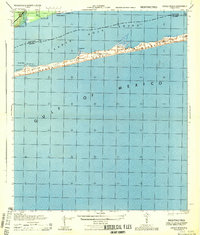 1944 Oriole Beach1944 Print · USGSThe Florida Panhandle's barrier islands remain largely undeveloped during the mid-1940s, dominated by the Santa Rosa National Monument. Local historians can trace early maritime markers and coastal settlements like Oriole Beach and the U S Naval Res.
 - 1944 Map of Perdido Bay South
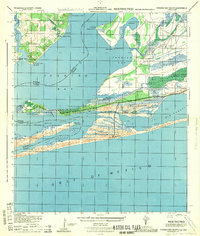 1944 Perdido Bay South1944 Print · USGSThe Florida-Alabama borderlands at Perdido Bay were a complex of waterways and barrier islands during the 1940s. Genealogists and maritime historians can trace old coastal landmarks like the Pontoon Swing Bridge, Perdido Beach, and the Old River.
 - 1944 Map of Gonzalez
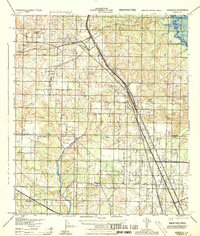 1944 Gonzalez1944 Print · USGSNorth of Pensacola in the mid-1940s, this area centers on the rail hub of Cantonment and the surrounding rural communities. Genealogists can locate family landmarks like Jordan Cemetery, the Tate School, and the historic Farm Hill Church.
 - 1944 Map of Dyas
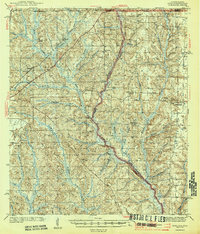 1944 Dyas1944 Print · USGSThe Alabama-Florida borderlands come to life in the mid-1940s, showing the rural communities and timberlands of Baldwin County. Trace old family names and landmarks like Cain Cem, New Providence Ch, and the Walnut Hill Fire Tower.2 unique versions available
Showing maps 1-25 of 29
Top cities of Escambia County
- Pensacola historical maps
- Ensley historical maps
- Century historical maps
- McDavid historical maps
- Molino historical maps
Frequently asked questions
- What are the different types of historical maps available for Escambia County?
- What is the oldest map of Escambia County?
- Where can I purchase historical maps of Escambia County for my home or office?
- Where can I download high-res historical maps of Escambia County?
- Are there historical topographic maps available for Escambia County?
- Is there historical aerial imagery available for Escambia County?
- Where are historical maps of Escambia County sourced from?