Old Maps of Iron County, Utah for Metal Detecting
Plan your next treasure hunt with 565 historic maps of Iron County. Find old homesites, ghost towns, trails, and gathering spots that may be lost to time — perfect for identifying promising metal detecting locations.
- Locate forgotten sites: Uncover places like long-lost settlements, abandoned rail lines, or gathering spots.
- Plan better hunts: Use map overlays combined with LiDAR or satellite views to narrow in on historically rich areas.
- Made for detectorists: Thousands of hobbyists use these maps to discover relics, coins, and hidden history.
Use these historic maps to boost your research and find new opportunities beneath the surface of Iron County.
Iron County, UT maps
(565)- 1885 Map of St. George
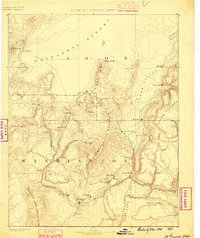 1885 St. George1885 Print · USGSSouthern Utah’s high deserts and river valleys are captured here during the mid-1880s, an era of mining expansion and early settlement. Researchers can trace the layout of pioneer towns like Silver Reef, Virgin City, and the historic site of Mountain Meadows.
 - 1885 Map of Beaver
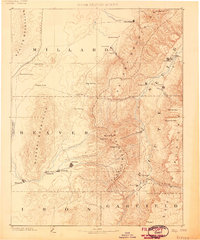 1885 Beaver1885 Print · USGSSouth-central Utah in the 1880s was a landscape of high plateaus and valley settlements tied to the lifelines of the Sevier River and Beaver Creek. Family researchers can trace early town layouts in Beaver and Fillmore or locate rural outposts like Minersville and Kanosh.5 unique versions available
 - 1885 Map of Pioche
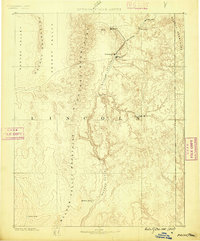 1885 Pioche1885 Print · USGSLincoln County was a center of frontier mining and ranching during the mid-1880s. Genealogists and historians can trace the early layout of the silver-rich Pioche district and find remote locations like Bullionville, Panacca, and Hackberry Spring.4 unique versions available
 - 1886 Map of Kanab
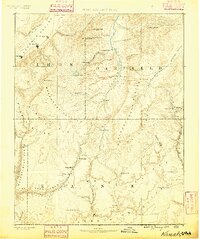 1886 Kanab1886 Print · USGSSouthern Utah in the late nineteenth century remains a frontier of deep canyons and high plateaus. Researchers can trace early pioneer outposts and river settlements like Orderville, Mt. Carmel, and Kanab tucked beneath the Vermilion Cliffs.5 unique versions available
 - 1886 Map of Pioche, 1896 Print
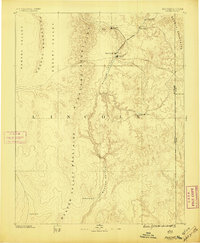 1886 Pioche1896 Print · USGSEastern Nevada and the Utah borderlands are captured here during the height of the regional mining boom in the late nineteenth century. Genealogists and historians can trace early settlements and vital water sources like Bullionville, Panacca, and Hackberry Spring.
 - 1891 Map of St. George
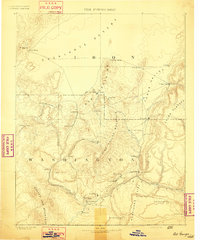 1891 St. George1891 Print · USGSSouthwestern Utah in the early 1890s was a landscape of pioneer outposts and mining ventures at the edge of the Escalante Desert. Genealogists and historians can trace the early footprints of St George, the mining camp at Silver Reef, and the now-quiet site of Iron City.4 unique versions available
 - 1949 Map of Cedar City NW
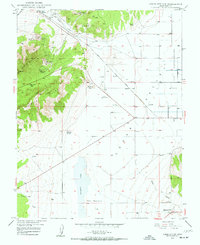 1949 Cedar City NW1949 Print · USGSIron County mining and valley life are captured here at mid-century, just as several major mines reached inactivity. Genealogists and historians can trace the Union Pacific line to the Smith Mine, the settlement of Hamiltons Fort, or the waters of Quichapa Lake.4 unique versions available
 - 1950 Map of Cedar City NW
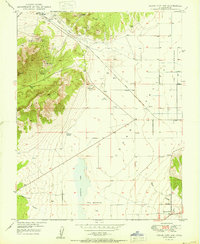 1950 Cedar City NW1950 Print · USGSIron County ranching and mining meet in the mid-century Cedar Valley, where the Union Pacific railroad connects small settlements and desert basins. Researchers can trace the layout of Hamiltons Fort, explore the numerous workings of the Great Western Mine, or locate Quichapa Lake.
 - 1950 Map of Kanarraville
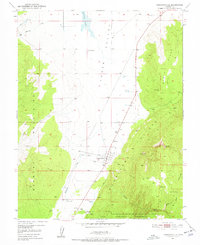 1950 Kanarraville1950 Print · USGSSouthern Utah ranching and settlement life are captured here at mid-century, where the town of Kanarraville meets the Hurricane Cliffs. Trace old pathways like the Rock Trail or locate family sites near Kanarra Creek and the local Cemetery.5 unique versions available
 - 1950 Map of Antelope Peak, 1952 Print
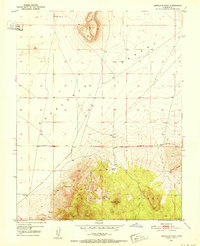 1950 Antelope Peak1952 Print · USGSIron County in the early fifties is captured here as a landscape of remote desert ranges and essential water holes. Researchers can trace the path of Antelope Road and locate critical desert waypoints like Antelope Springs and Table Butte.2 unique versions available
 - 1950 Map of Enoch, 1952 Print
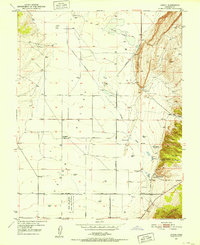 1950 Enoch1952 Print · USGSSettlement and irrigation projects define this mid-century look at the Iron County desert as the community of Enoch expanded. Researchers can trace early land history through Stevensville (Site), the Enoch Cem, and family outposts like Adams Ranch.3 unique versions available
 - 1950 Map of Cedar City, 1952 Print
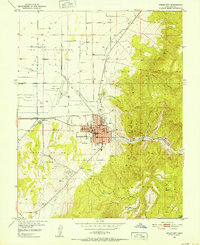 1950 Cedar City1952 Print · USGSCedar City at mid-century is a thriving mountain-valley hub where the railroad and early aviation meet. Genealogists and local historians can trace the town's development through landmarks like the Branch Agricultural College, the Stock Yards, and the local Cemetery.6 unique versions available
 - 1950 Map of Enoch, 1957 Print
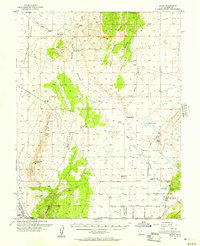 1950 Enoch1957 Print · USGSIron County ranching and mining operations are captured here at mid-century as the landscape transitioned between historic forts and modern industry. Researchers can locate the Fort Johnson site, the old Union Pacific corridor, and the waters of Rush Lake.2 unique versions available
 - 1950 Map of Iron Mountain, 1959 Print
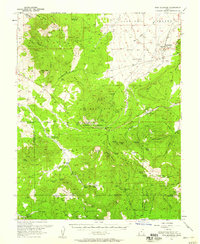 1950 Iron Mountain1959 Print · USGSSouthern Utah's mining and ranching heritage is on full display in the 1950s as industry expands across the Harmony Mountains. Researchers can locate specific operations like the Columbia Steel Mine alongside historical landmarks such as Old Irontown and Page Ranch.
 - 1950 Map of Cedar City, 1959 Print
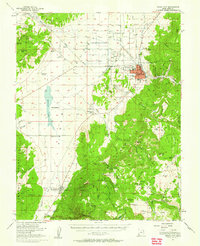 1950 Cedar City1959 Print · USGSIron County entered the 1950s as a thriving hub of mining and education centered on Cedar City. Local historians can trace the rail-to-mine connections of the Union Pacific or locate early landmarks like the College of Southern Utah and Hamiltons Fort.
 - 1950 Map of The Three Peaks, 1964 Print
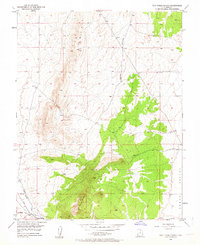 1950 The Three Peaks1964 Print · USGSIron County in the mid-twentieth century was a landscape of mineral exploration and vital rail transit. Researchers can trace the legacy of early mining and infrastructure near The Three Peaks and along the Union Pacific line and Iron Springs.2 unique versions available
 - 1950 Map of Cedar Mountain, 1974 Print
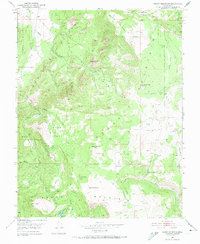 1950 Cedar Mountain1974 Print · USGSSouthern Utah at the mid-century was a landscape of high-altitude industry and water engineering along the Hurricane Cliffs. Trace the region's mining and ranching history through the Tucker Coal Mine, the Meadow Reservoir, and numerous named springs.2 unique versions available
 - 1950 Map of Stoddard Mtn, 1975 Print
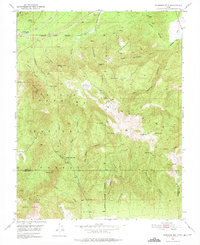 1950 Stoddard Mtn1975 Print · USGSIron County at mid-century reveals a landscape of industrial rail and seasonal mountain camps. Researchers can trace the Union Pacific line to the Iron Mountain Wye or locate the site of the Coal Mine (Inactive) and Kelsey Deer Camp.
 - 1950 Map of Enoch NE, 1976 Print
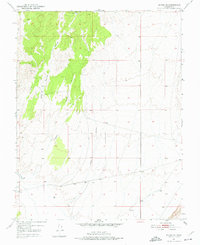 1950 Enoch NE1976 Print · USGSIron County, Utah, is captured here at mid-century, showing a landscape defined by desert water sources and early roads. Researchers can trace the path of Minersville Road or locate historical water features like Lost Spring and the Windmill.
 - 1950 Map of Silver Peak, 1977 Print
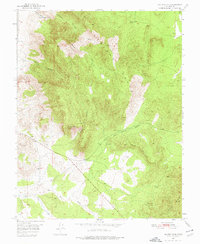 1950 Silver Peak1977 Print · USGSIron County in the early fifties shows a landscape shaped by mining and rugged terrain. Researchers can locate remote water sources and geologic landmarks like Silver Peak, Bullion Canyon, and the slopes of Iron Mountain.3 unique versions available
 - 1950 Map of Desert Mound, 1979 Print
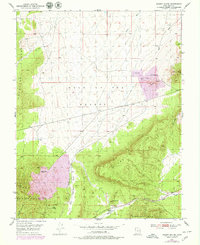 1950 Desert Mound1979 Print · USGSIron County's mining heart is on full display in the mid-century, where the high desert terrain meets industrial expansion. Researchers can trace the path of the Union Pacific railroad and locate sites like the Woolsey Ranch or the Open Pit Iron Mine.
 - 1950 Map of Page Ranch, 1979 Print
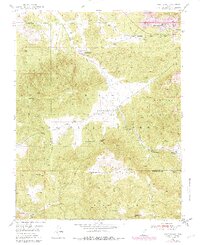 1950 Page Ranch1979 Print · USGSIron County mining and ranching culture are preserved here in the mid-twentieth century as industrial pits and historic ruins dot the landscape. Genealogists and historians can trace pioneer roots at the Old Irontown (Historic Site) and local cattle history at Page Ranch or The Dairy.
 - 1950 Map of Avon SE, 1979 Print
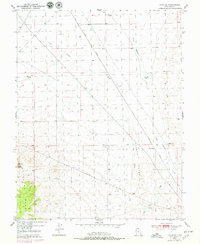 1950 Avon SE1979 Print · USGSIron County's desert landscape is captured here at mid-century, dominated by the Union Pacific rail line and the arid reaches of the Antelope Range. Trace the paths of Dick Palmer Wash, local windmills, and the historic alignment of Antelope Road.2 unique versions available
 - 1951 Map of Avon SE
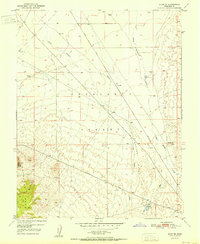 1951 Avon SE1951 Print · USGSThe high basin of the Utah desert is shown in the early fifties as the Union Pacific railroad and Antelope Road facilitated transit through the arid interior. Researchers can trace land use through drainage features like Dick Palmer Wash and isolated Windmill sites.
 - 1951 Map of Silver Peak
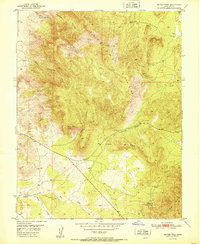 1951 Silver Peak1951 Print · USGSIron County in the early fifties was a land of high peaks and vital water sources for local ranchers and miners. Researchers can trace historic drainages and landmark summits like Silver Peak, Bullion Canyon, and the prominent Iron Mtn.
Showing maps 1-25 of 565
Top cities of Iron County
- Cedar City historical maps
- Enoch historical maps
- Parowan historical maps
- Paragonah historical maps
- Newcastle historical maps
- Kanarraville historical maps
See more
Frequently asked questions
- What are the different types of historical maps available for Iron County?
- What is the oldest map of Iron County?
- Where can I purchase historical maps of Iron County for my home or office?
- Where can I download high-res historical maps of Iron County?
- Are there historical topographic maps available for Iron County?
- Is there historical aerial imagery available for Iron County?
- Where are historical maps of Iron County sourced from?