1960s Maps of Chinle Agency, Arizona
Explore 37 historic maps of Chinle Agency from the 1960s. These maps offer a rare glimpse into what life looked like during the 1960s — showing old roads, neighborhoods, homes, and landmarks that have changed or disappeared over time.
Whether you're researching your family's past, planning a metal detecting trip, or studying how Chinle Agency's landscape evolved across the 1960s, these high-resolution maps are a powerful tool for exploring the history of this region.
- Focus on a specific era: All maps on this page are from the 1960s, giving you a focused view of this time period.
- See what’s changed: Compare century-old streets, trails, and buildings to today's modern landscape using overlays and satellite layers.
- Research with precision: Use these maps for genealogy, historical research, land use analysis, or educational projects.
- View, download, or print: Maps are fully viewable online in high resolution, and can be downloaded or printed for your own records.
Start exploring Chinle Agency's history through authentic maps from the 1960s. This is your window into the past.
Chinle Agency, AZ maps
(37)- 1960 Map of Flagstaff
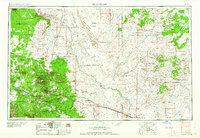 1960 Flagstaff1960 Print · USGSNorthern Arizona at the dawn of the sixties shows a landscape defined by mesa-top Hopi villages and the burgeoning railroad hub of Flagstaff. Trace the path of U.S. 66 past Meteor Crater or locate historic trading posts like Gray Mountain Trading Post.2 unique versions available
 - 1961 Map of Marble Canyon
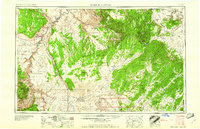 1961 Marble Canyon1961 Print · USGSThe northern Arizona desert in the early sixties reveals a landscape of tribal lands and canyon crossings. Trace the old river life at Lees Ferry, find the Uranium mill at Tuba City, and locate the iconic Elephant Feet landmarks.
 - 1962 Map of Flagstaff
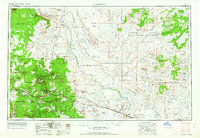 1962 Flagstaff1962 Print · USGSNorthern Arizona in the early sixties showcases the intersection of Tribal lands, national forests, and the busy Route 66 corridor. Trace historic roadside stops and landmarks like Meteor Crater, the Buck-Rodgers Trading Post, and the ancient village of Old Oraibi.
 - 1962 Map of Gallup
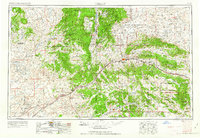 1962 Gallup1962 Print · USGSThe high plateau and mountains surrounding Gallup in the early sixties reveal a landscape defined by tribal lands, coal mining, and the rail corridor. Researchers can locate remote trading posts, the Gibson Coal Mine, and the historic Window Rock capital.
 - 1966 Map of Keams Canyon, 1968 Print
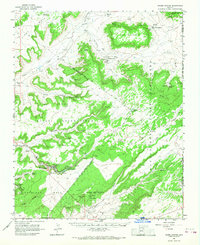 1966 Keams Canyon1968 Print · USGSThe Hopi and Navajo tribal lands in the mid-1960s reveal a landscape of ancestral sites and high-desert outposts. Researchers can locate remote settlements like Low Mountain alongside historical points like the Kit Carson Inscription Picnic Area and Jeddito.
 - 1966 Map of Toadlena, 1969 Print
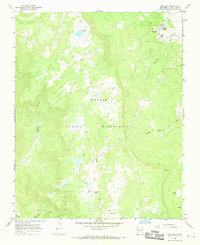 1966 Toadlena1969 Print · USGSToadlena and the surrounding high reservation lands come to life in this mid-century survey of the Chuska Mountains foothills. Trace essential water sources like Big Water Spring and Toadlena Lake alongside local landmarks like Toh-ni-tsa Lookout.2 unique versions available
 - 1966 Map of Polacca, 1987 Print
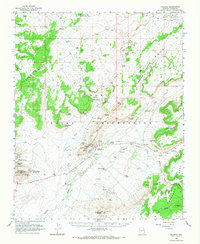 1966 Polacca1987 Print · USGSThe Hopi mesas and surrounding Navajo lands are captured here in the mid-sixties, detailing the historic high-elevation pueblo villages. Genealogists and historians can trace the footpaths and roads connecting Walpi, Mishongnovi, and Keams Canyon.
 - 1967 Map of Gallup
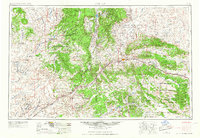 1967 Gallup1967 Print · USGSThe high desert of New Mexico and Arizona comes into focus in the mid-1960s, centered on the railroad and ranching hub of Gallup. Genealogists and historians can trace routes through Zuni Pueblo, identify old rail stops like Houck, or locate the Aqua Fria Post Office.
 - 1967 Map of Hard Rocks, 1969 Print
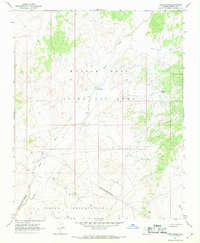 1967 Hard Rocks1969 Print · USGSTribal lands and desert water management are central to this late 1960s survey of Navajo County. Genealogists and historians can locate the community of Hard Rocks and trace geography near Ah Na Na Betoh and the Hard Rocks Dam.
 - 1967 Map of Whippoorwill Spring, 1969 Print
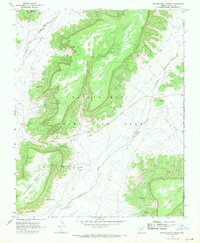 1967 Whippoorwill Spring1969 Print · USGSHigh desert mesas and traditional grazing lands characterize this Navajo-Hopi borderland in the late sixties. Genealogists and historians can trace essential desert water sources and local landmarks like Whippoorwill Sch, Burnt Corn, and Set Betoh.2 unique versions available
 - 1967 Map of Big Mountain Dam, 1969 Print
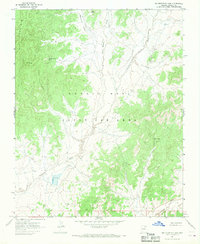 1967 Big Mountain Dam1969 Print · USGSNavajo County in the late sixties reveals the intricate landscape of the Navajo - Hopi Joint Use Area. Researchers can trace the drainage patterns of Dinnebito Wash and locate vital water sources like Big Mountain Spring and Big Mountain Dam.2 unique versions available
 - 1967 Map of Rocky Ridge Se, 1969 Print
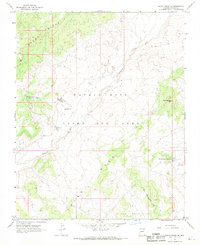 1967 Rocky Ridge Se1969 Print · USGSThe Navajo and Hopi borderlands are captured here in the late sixties during a period of shared land administration. Genealogists can locate the Navajo Gospel Mission, Rocky Ridge Sch, and the Dinnebito Trading Post.
 - 1967 Map of Pinon NW, 1969 Print
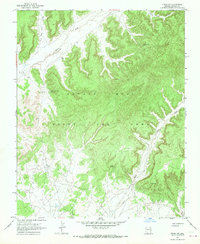 1967 Pinon NW1969 Print · USGSNorthern Arizona's high plateau comes into focus during the late sixties, showcasing the vast Navajo - Hopi Joint Use Area. Researchers can trace the essential desert water network at Cottonwood Spring and Lamb Spring or follow the winding Oraibi Wash through the mesas.
 - 1967 Map of Coat Spring, 1969 Print
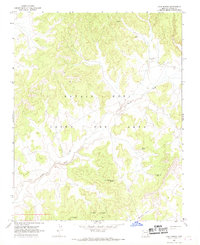 1967 Coat Spring1969 Print · USGSThe Navajo and Hopi highlands are captured here in the late sixties within the Navajo - Hopi Joint Use Area. Researchers can trace the path of Oraibi Wash and locate vital desert water sources like Coat Spring and Saa Betoh.
 - 1967 Map of Burnt Corn Spring, 1969 Print
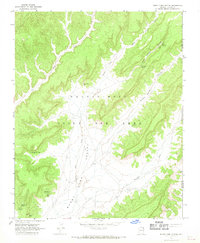 1967 Burnt Corn Spring1969 Print · USGSThe Navajo-Hopi Joint Use Area of northeastern Arizona is documented here in the late sixties, showing a landscape defined by seasonal washes and remote outposts. Researchers can locate critical water sources like Salt Water Spring and trace the small settlement of Burnt Corn.2 unique versions available
 - 1967 Map of Rocky Ridge NE, 1969 Print
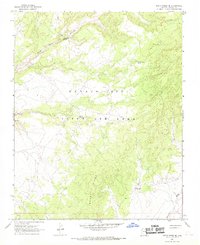 1967 Rocky Ridge NE1969 Print · USGSNavajo and Hopi lands are documented here in the late sixties, showing a landscape defined by shared boundaries and ancient history. Researchers can locate remote water sources like Goldtooth Windmill and Sweetwater Spring, along with a Cliff Dwelling and a solitary Grave.
 - 1967 Map of Little Black Spot Mtn, 1969 Print
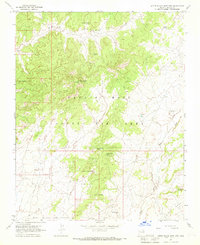 1967 Little Black Spot Mtn1969 Print · USGSNavajo County in the late sixties reveals a remote landscape of tribal lands and desert springs. Researchers can trace historic settlements like Chilchinbeto and Hostiin Akahibito alongside natural landmarks such as Little Black Spot Mtn and Ponderosa Pine Spring.
 - 1967 Map of Pinon, 1970 Print
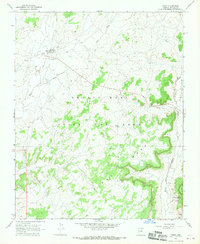 1967 Pinon1970 Print · USGSNavajo County land in the late sixties reveals the complex geography of the Navajo Hopi Joint Use Area and the isolated settlement of Pinon. Researchers can identify local landmarks like the Rodeo Grounds and vital desert water sources such as Toh-Ha-Huo-Cheen.2 unique versions available
 - 1968 Map of Owl Valley, 1971 Print
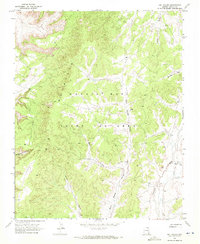 1968 Owl Valley1971 Print · USGSNortheastern Arizona's high-country drainages are meticulously recorded in this late-sixties study of the Navajo - Hopi Joint Use Area. Researchers can trace the path of Many Sheep Valley to find documented ruins, a corral, and the critical Owl Well.
 - 1968 Map of Rock Point SW, 1971 Print
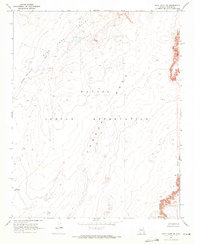 1968 Rock Point SW1971 Print · USGSThe Navajo Nation's high plateaus are documented here in the late sixties, showing the intersection of traditional land use and cartographic boundaries. Researchers can trace the Old Treaty Boundary and locate local landmarks like the Trading Post and Carson Mesa.
 - 1968 Map of Toh Ne Zhonnie Spring, 1971 Print
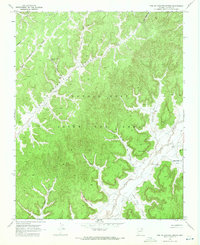 1968 Toh Ne Zhonnie Spring1971 Print · USGSThe Navajo Hopi Joint Use Area is captured in the late sixties as a landscape of remote washes and vital desert springs. Researchers can trace the path of Toh Ne Zhonnie Wash through Rock Gap and locate historic water sources like Big Water and Toh Ne Zhonnie Spring.
 - 1968 Map of Hole In Rock Valley, 1971 Print
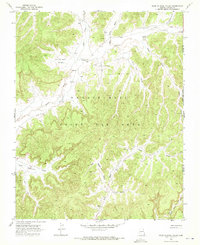 1968 Hole In Rock Valley1971 Print · USGSThe Navajo Nation high-desert landscape is captured in the late sixties, centered on the Kitsillie Chapter House. Researchers can trace old routes like the Jeep Trail and locate historical Ruins near Aspen Grove Wash.
 - 1968 Map of Yucca Hill, 1972 Print
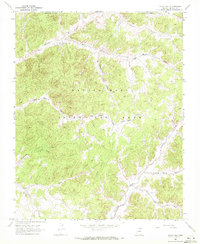 1968 Yucca Hill1972 Print · USGSNavajo County in the late sixties was a landscape of shared grazing lands and deep seasonal washes. Trace the geography of the high desert through landmarks like Reed Well, Yucca Hill, and the intricate drainage of Moenkopi Wash.2 unique versions available
 - 1968 Map of Tah Chee Wash, 1972 Print
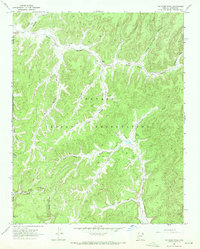 1968 Tah Chee Wash1972 Print · USGSApache County in the late sixties reveals a landscape shaped by seasonal washes and high desert landmarks. Researchers can trace the Rough Rock Trail and locate isolated water sources such as Coal Spring, Salt Well, and Donkey Spring.2 unique versions available
 - 1968 Map of Dancing Rocks, 1972 Print
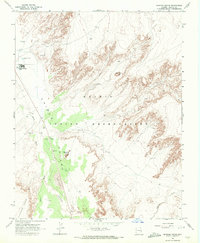 1968 Dancing Rocks1972 Print · USGSThe Navajo Indian Reservation in the late sixties shows a remote high-desert landscape defined by the vast Chinle Valley. Researchers can locate community hubs like the Rock Point Boarding Sch, the Rodeo Grounds, and landmarks like Hat Rock.
Showing maps 1-25 of 37
Top cities near Chinle Agency
Top neighborhoods of Chinle Agency
- Rocky Ridge historical maps
- Upper Wheatfields historical maps
- Wheatfields historical maps
- Totshoh historical maps
- Many Farms historical maps
- Whippoorwill Springs historical maps
See more
Frequently asked questions
- What are the different types of historical maps available for Chinle Agency?
- What is the oldest map of Chinle Agency?
- Where can I purchase historical maps of Chinle Agency for my home or office?
- Where can I download high-res historical maps of Chinle Agency?
- Are there historical topographic maps available for Chinle Agency?
- Is there historical aerial imagery available for Chinle Agency?
- Where are historical maps of Chinle Agency sourced from?