1950s Maps of Beaver County, Utah
Explore 17 historic maps of Beaver County from the 1950s. These maps offer a rare glimpse into what life looked like during the 1950s — showing old roads, neighborhoods, homes, and landmarks that have changed or disappeared over time.
Whether you're researching your family's past, planning a metal detecting trip, or studying how Beaver County's landscape evolved across the 1950s, these high-resolution maps are a powerful tool for exploring the history of this region.
- Focus on a specific era: All maps on this page are from the 1950s, giving you a focused view of this time period.
- See what’s changed: Compare century-old streets, trails, and buildings to today's modern landscape using overlays and satellite layers.
- Research with precision: Use these maps for genealogy, historical research, land use analysis, or educational projects.
- View, download, or print: Maps are fully viewable online in high resolution, and can be downloaded or printed for your own records.
Start exploring Beaver County's history through authentic maps from the 1950s. This is your window into the past.
Beaver County, UT maps
(17)- 1953 Map of Ninemile Knoll, 1954 Print
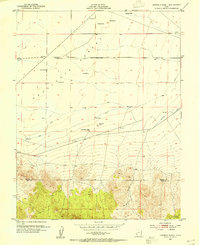 1953 Ninemile Knoll1954 Print · USGSThe Escalante Desert of the early fifties is captured here at the junction of Beaver and Iron counties. Researchers can trace mid-century water infrastructure including the Irrigation Canal, lonely windmills, and landmarks like Government Well.2 unique versions available
 - 1953 Map of Milford Flat, 1955 Print
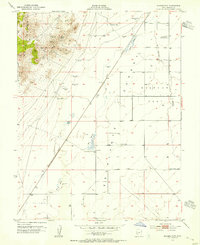 1953 Milford Flat1955 Print · USGSThe eastern Escalante Desert and Milford Flat are captured here in the early fifties during a period of active high-desert mining. Genealogists and historians can locate mining sites like the Maud S Mine and Gold Crown Mine, or trace the Union Pacific rail line past Upton and Laho.2 unique versions available
 - 1953 Map of Minersville, 1955 Print
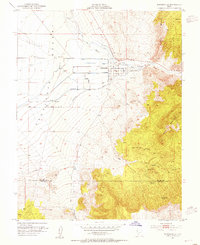 1953 Minersville1955 Print · USGSMinersville served as a vital agricultural hub at the foot of the Mineral Mountains in the early fifties. Genealogists and desert historians can trace the intricate irrigation network of The Mile Ditch and locate landmarks like Uncle Benneys Orchard and the town Cemetery.2 unique versions available
 - 1953 Map of Cave Canyon, 1955 Print
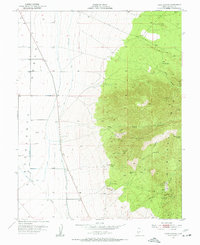 1953 Cave Canyon1955 Print · USGSBeaver County mining and desert irrigation are captured in detail in the early 1950s. Trace local history through family landmarks like Jimmy Jones Spring and storied industrial sites such as the Lincoln Mine and Honey Boy Mine.2 unique versions available
 - 1953 Map of Richfield, 1963 Print
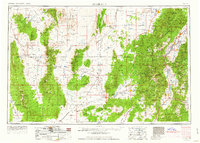 1953 Richfield1963 Print · USGSCentral Utah in the early fifties reveals a complex geography of high plateaus and desert basins tied together by the Union Pacific rail lines. Genealogists and historians can trace family roots in Richfield or Kanosh and locate remote operations like the Blue Star Mine or Newhouse.3 unique versions available
 - 1954 Map of Beaver SE, 1955 Print
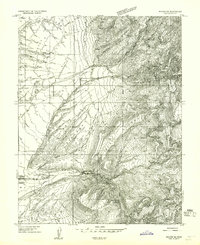 1954 Beaver SE1955 Print · USGSBeaver and the surrounding canyon country are captured here in the mid-fifties, showing the vital irrigation network that sustained the valley. Researchers can trace historic water rights through the Harris Ditch and Mammoth Ditch or locate the old Racetrack and Power Plant at the edge of Beaver.
 - 1954 Map of Beaver NE, 1955 Print
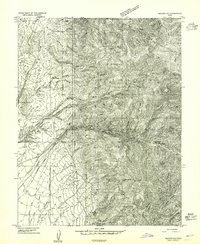 1954 Beaver NE1955 Print · USGSThe high country of the Utah-Piute county line is documented here in the mid-1950s during a period of active mountain mining and water engineering. Historians and mineral hunters can trace routes to the Bob Roy Mine, Sheepskin Mine, and the length of the Old Manderfield Ditch Road.
 - 1956 Map of Lund, 1963 Print
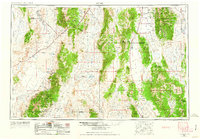 1956 Lund1963 Print · USGSEastern Nevada and the Utah borderlands are mapped here during the mid-fifties, showing a landscape of high-desert ranches and mountain mining camps. Genealogists and historians can trace family locations through sites like Bristol Silver Mines, Lund, and the Sunnyside Whipple Ranch.2 unique versions available
 - 1958 Map of Richfield
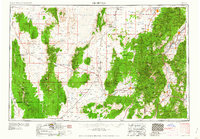 1958 Richfield1958 Print · USGSCentral Utah in the late fifties shows a landscape of mountain forests and desert basins connected by the Union Pacific Railroad. Genealogists and historians can trace rail stops at Nada Station, mines like the Blue Star Mine, and tribal lands of the Paiute Indian Reservation.2 unique versions available
 - 1958 Map of Minersville, 1960 Print
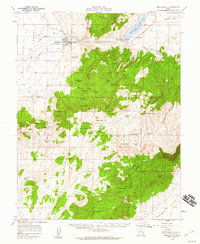 1958 Minersville1960 Print · USGSMinersville and the edge of the Escalante Desert are captured here during the late fifties as irrigation transformed the arid valley floor. Genealogists and local historians can locate the Cemetery, trace the Low Line Canal, and find family-named landmarks like Uncle Benneys Orchard or Jack Henry Knoll.3 unique versions available
 - 1958 Map of Thermo, 1960 Print
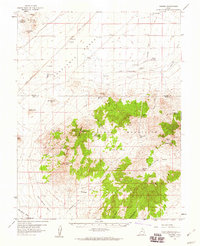 1958 Thermo1960 Print · USGSSouthern Utah's high desert and mountain frontier are captured in the late fifties, showing the isolated rail stop at Thermo. Researchers can trace early water management and transport routes through the Black Mountains via Dead Horse Reservoir, Baboon Seep, and the Union Pacific line.
 - 1958 Map of Milford, 1960 Print
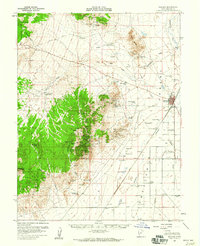 1958 Milford1960 Print · USGSIn the late fifties, this area of Beaver County was a hive of mining activity and railroad transport. Researchers can trace the layout of the Union Pacific through Milford or locate the historical footprints of Shauntie and the Mammoth Mine.
 - 1958 Map of Beaver, 1960 Print
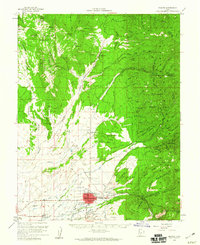 1958 Beaver1960 Print · USGSBeaver and the surrounding high desert valleys are documented here in the late fifties as the town grew along the historic corridor of the Utah state roads. Genealogists and local historians can locate civic landmarks like Belknap Sch and Mtn View Cemetery or trace old mining claims such as the Rob Roy Mine.2 unique versions available
 - 1958 Map of Milford, 1960 Print
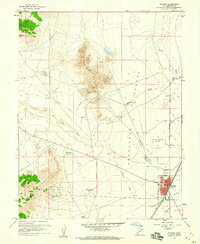 1958 Milford1960 Print · USGSMilford and the surrounding Escalante Desert are shown here in the late fifties as a bustling rail and mining center. Researchers can trace the extensive Union Pacific lines and numerous mountain claims like the Montreal Mine and Copper King Mine.3 unique versions available
 - 1958 Map of Adamsville, 1960 Print
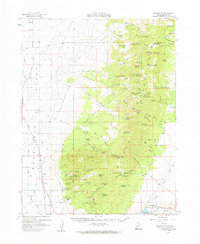 1958 Adamsville1960 Print · USGSNear the Beaver River in the late 1950s, this area supported both valley ranching and high-altitude mining. Researchers can trace historic claims like the Creole Mine and Honey Boy Mine or locate the old station at Murdock along the Union Pacific tracks.2 unique versions available
 - 1958 Map of Ranch Canyon, 1960 Print
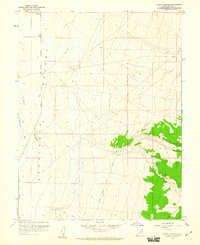 1958 Ranch Canyon1960 Print · USGSBeaver County at the end of the fifties reveals a landscape shaped by water engineering and desert transit. Genealogists and historians can trace the Pacific Union rail line and irrigation systems like The Low Line Canal near the settlement of Murdock.3 unique versions available
 - 1959 Map of Frisco, 1961 Print
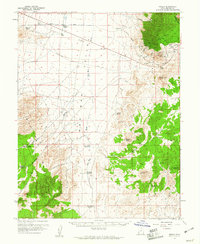 1959 Frisco1961 Print · USGSBeaver County at the end of the fifties reveals a landscape shaped by a fading mining era. Genealogists and historians can trace the remnants of silver and copper districts through the Horn Silver Mine, the small cemetery, and the Frisco townsite.3 unique versions available
End of results
Showing maps 1-17 of 17
Top cities of Beaver County
Frequently asked questions
- What are the different types of historical maps available for Beaver County?
- What is the oldest map of Beaver County?
- Where can I purchase historical maps of Beaver County for my home or office?
- Where can I download high-res historical maps of Beaver County?
- Are there historical topographic maps available for Beaver County?
- Is there historical aerial imagery available for Beaver County?
- Where are historical maps of Beaver County sourced from?