1950s Maps of Maine
Explore 210 historic maps of Maine from the 1950s. These maps offer a rare glimpse into what life looked like during the 1950s — showing old roads, neighborhoods, homes, and landmarks that have changed or disappeared over time.
Whether you're researching your family's past, planning a metal detecting trip, or studying how Maine's landscape evolved across the 1950s, these high-resolution maps are a powerful tool for exploring the history of this region.
- Focus on a specific era: All maps on this page are from the 1950s, giving you a focused view of this time period.
- See what’s changed: Compare century-old streets, trails, and buildings to today's modern landscape using overlays and satellite layers.
- Research with precision: Use these maps for genealogy, historical research, land use analysis, or educational projects.
- View, download, or print: Maps are fully viewable online in high resolution, and can be downloaded or printed for your own records.
Start exploring Maine's history through authentic maps from the 1950s. This is your window into the past.
Maine maps
(210)- 1950 Map of Cupsuptic
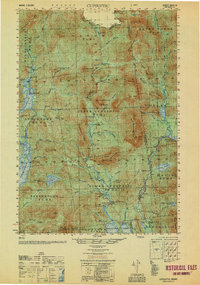 1950 Cupsuptic1950 Print · USGSThe northern Maine woods come alive in this mid-century survey of the remote townships near the Canadian border. Researchers can trace the heritage of historic logging and sporting sites like the Parmachenee Club, Moochers Home, and Riverside Camp.
 - 1950 Map of Drisko Island
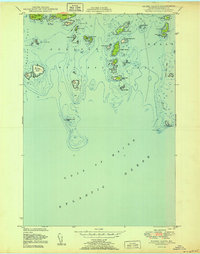 1950 Drisko Island1950 Print · USGSCoastal Washington County is shown here during the mid-century, mapping the intricate islands and ledges between Pleasant Bay and the Atlantic. Mariners and local historians can trace maritime landmarks like Big Nash Island, Cape Split Harbor, and the Tibbett Narrows.
 - 1950 Map of Phippsburg
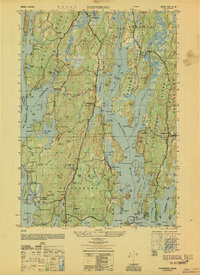 1950 Phippsburg1950 Print · USGSCoastal Sagadahoc County during the mid-twentieth century reveals a landscape of maritime defense and granite-hewn industry. Genealogists and researchers can locate family-named plots like Harris Cem, historic landmarks such as Fort Popham, and industrial sites including the Old Mica Mine.
 - 1950 Map of Belfast
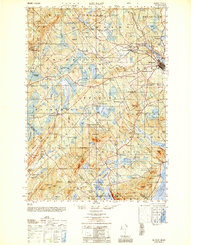 1950 Belfast1950 Print · USGSMid-century Waldo County comes to life as a network of crossroads hamlets and coastal industry before the modern highway era. Genealogists can trace family names across schoolhouses like Apple Sch and rural intersections such as Hayford Corner and Vickerys Corner.
 - 1950 Map of Lewiston
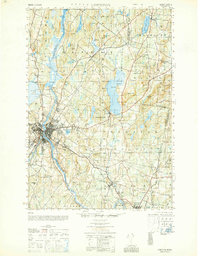 1950 Lewiston1950 Print · USGSAndroscoggin County at mid-century shows a landscape of busy industrial centers and quiet crossroad hamlets connected by the river. Genealogists can trace family names at Jordan Corners or Blake Corners and locate rural landmarks like Sprague Mill and Ridge Sch.
 - 1950 Map of Gorham
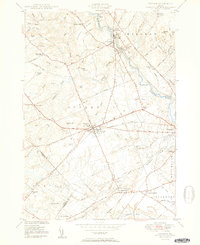 1950 Gorham1950 Print · USGSCumberland County at mid-century reveals a bustling network of river-powered mill towns and railroad corridors. Genealogists can locate family landmarks like Winship Corner, local institutions such as the State Normal Sch, and several rural burial sites including Browns Cem.2 unique versions available
 - 1950 Map of Petit Manan
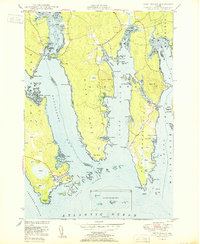 1950 Petit Manan1950 Print · USGSCoastal Washington and Hancock counties are seen here at mid-century, defined by lobster harbors and the shifting tides of the Atlantic. Researchers can trace family names and local landmarks from Corea to Dyer Harbor, including the Corea Cem and Long Mill Cove.
 - 1950 Map of Kingsbury
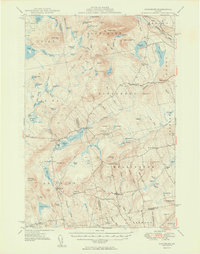 1950 Kingsbury1950 Print · USGSThe Maine interior at the dawn of the fifties is a patchwork of small crossroads and remote ponds. Genealogists and historians can trace family locations near Mayfield Corner, Brighton, and the Foss Hill Cem, or explore the rural school districts like Campbell Sch.2 unique versions available
 - 1950 Map of Liberty
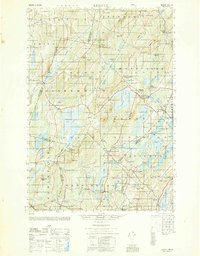 1950 Liberty1950 Print · USGSMid-century Waldo County and its neighbors are defined here by a network of crossroad hamlets and upland ridges just after the war. Local historians can trace the foundations of The Kingdom, identify family sites near Hutchins Corner, or locate rural schoolhouses like Hallidale Sch.
 - 1950 Map of Cherryfield
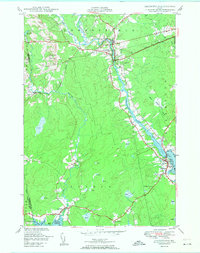 1950 Cherryfield1950 Print · USGSThe Narraguagus River valley and the coastal harbors of Washington County are shown here in the years following World War II. Local historians can trace the Maine Central railroad line through Unionville and Cherryfield, or locate family sites near Evergreen Cem and Steuben Harbor.
 - 1950 Map of Attean
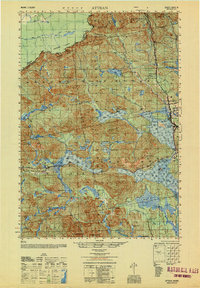 1950 Attean1950 Print · USGSSomerset County’s northern timberlands and the Canadian border are captured here at mid-century, when the railroad remained the primary artery. Researchers can locate the old Stetson Sch, the remote Boston Ranch, and the railway hub at Jackman Station.2 unique versions available
 - 1950 Map of Bois Bubert
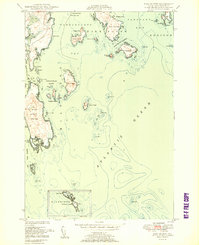 1950 Bois Bubert1950 Print · USGSThe Maine coastline near Addison and Harrington is captured here at the mid-century, showing a maritime landscape of islands and harbors. Researchers can trace family-named landmarks like Tom Leighton Point and find offshore aids like the lighthouse.3 unique versions available
 - 1950 Map of Cross Island
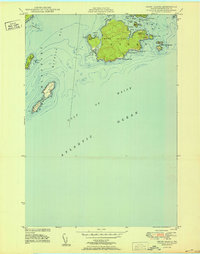 1950 Cross Island1950 Print · USGSThe Washington County coast at the midpoint of the century is defined by its maritime outposts and hazardous ledges. Trace the legacy of coastal safety at the Cross Island Coast Guard Sta and the Lighthouse on the Libby Islands.
 - 1950 Map of Petit Manan
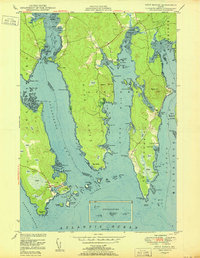 1950 Petit Manan1950 Print · USGSThe Downeast shoreline around Corea and Pigeon Hill is captured here at the mid-century, before modern development changed the coast. Trace family roots at Corea Cem and explore the historic Carrying Place between the harbor and the sea.
 - 1950 Map of Orrs Island
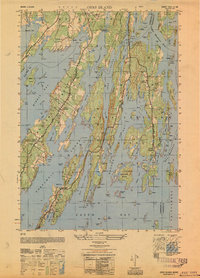 1950 Orrs Island1950 Print · USGSCoastal Maine in the post-war era reveals an intricate network of island villages and saltwater coves. Genealogists can trace family-named points and landmarks like the Gun Point School, Harpswell Ch, and the fishing hub at Cundy Harbor.
 - 1950 Map of Bailey Island
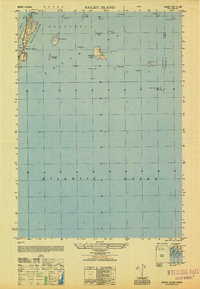 1950 Bailey Island1950 Print · USGSThe Harpswell islands and the Casco Bay coastline are captured in the mid-1940s, showing a landscape defined by maritime navigation. Trace family landmarks and old harbor sites near Mackerel Cove, David Castle, and the isolated Ragged Island.
 - 1950 Map of Waldoboro
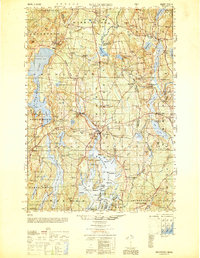 1950 Waldoboro1950 Print · USGSThe Medomak River valley and the coastal hills of Lincoln County are captured here in the mid-century, prior to modern suburban expansion. Genealogists and historians can locate old landmarks like Nobleboro Station, Winslow Mills, and numerous neighborhood schools like Duckpuddle Sch.
 - 1950 Map of Lewiston
 1950 Lewiston1950 Print · USGSThe Maine and New Hampshire borderlands come alive in this post-war survey of the White Mountains and Androscoggin valley. Genealogists and historians can trace rail lines like the Maine Central Railroad and find high-altitude landmarks from Mount Washington to Bretton Woods.2 unique versions available
 - 1950 Map of Great Wass Island
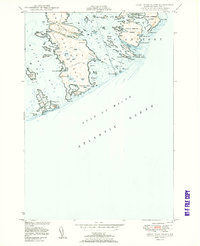 1950 Great Wass Island1950 Print · USGSThe Washington County coast in the post-war era reveals a landscape of isolated farmsteads and vital maritime outposts. Researchers can trace the layout of Mannings Farm, the telephone line through the brush, and the Moose Peak Coast Guard station.3 unique versions available
 - 1950 Map of Dover East
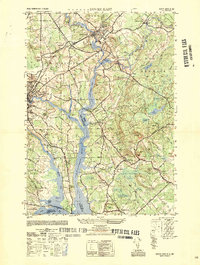 1950 Dover East1950 Print · USGSThe borderlands of New Hampshire and Maine are captured here at mid-century, following the winding Salmon Falls River through a landscape of rail-connected towns. Researchers can trace historic cemeteries and schools such as Pine Hill Cem, Pear Yard School, and the junction at Eliot Depot.
 - 1950 Map of Dead River
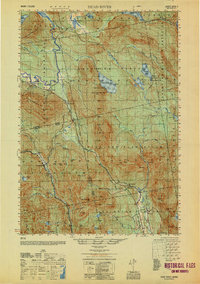 1950 Dead River1950 Print · USGSSomerset and Franklin Counties are shown during a time of isolated farms and remote plantations in the mid-twentieth century. Researchers can locate early schoolhouses like Dead River Sch and trace the old postal route at Carry Pond PO.
 - 1950 Map of Sebec Lake, 1952 Print
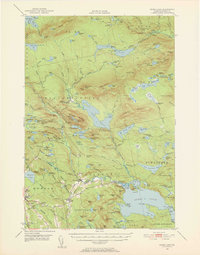 1950 Sebec Lake1952 Print · USGSMid-century Piscataquis County reveals a landscape of slate quarries, remote rail outposts, and wilderness trails just after the war. You can trace the mining history near Monson at Hillside Quarry or follow the Canadian Pacific line to the settlement at Onawa.7 unique versions available
 - 1951 Map of Van Buren
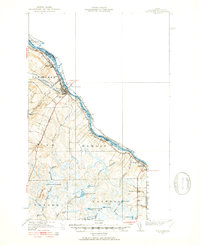 1951 Van Buren1951 Print · USGSSt John River life and the northern Maine border are detailed here during the mid-century, showing the international boundary with New Brunswick. Researchers can trace the Bangor and Aroostook rail line through Keegan or locate rural landmarks like St Joseph Ch and Bernie Sch.5 unique versions available
 - 1951 Map of Machias
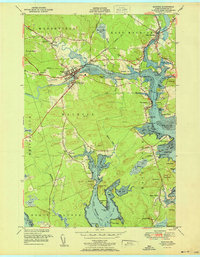 1951 Machias1951 Print · USGSCoastal Washington County is captured here in the early fifties, showing the vital rail-and-sea connections of Machias. Genealogists and historians can trace family locations in Dog Town, locate the Longfellow Cem, or explore the grounds of Fort O'Brien Pt.
 - 1951 Map of Boyd Lake
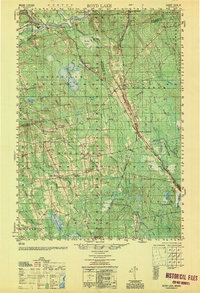 1951 Boyd Lake1951 Print · USGSPenobscot and Piscataquis Counties are captured here in the early 1950s, showing a landscape of timber-rail economies and scattered rural schoolhouses. Genealogists can trace family footprints at Bradford Center, the Hoxie Sch, or along the Bangor and Aroostook rail line.
Showing maps 1-25 of 210
Top cities of Maine
- Portland historical maps
- Lewiston historical maps
- Bangor historical maps
- South Portland historical maps
- Auburn historical maps
- Biddeford historical maps
See more
Top counties of Maine
- Cumberland County historical maps
- York County historical maps
- Penobscot County historical maps
- Kennebec County historical maps
- Androscoggin County historical maps
- County historical maps
See more
Frequently asked questions
- What are the different types of historical maps available for Maine?
- What is the oldest map of Maine?
- Where can I purchase historical maps of Maine for my home or office?
- Where can I download high-res historical maps of Maine?
- Are there historical topographic maps available for Maine?
- Is there historical aerial imagery available for Maine?
- Where are historical maps of Maine sourced from?