1910s Maps of Minnesota
Explore 108 historic maps of Minnesota from the 1910s. These maps offer a rare glimpse into what life looked like during the 1910s — showing old roads, neighborhoods, homes, and landmarks that have changed or disappeared over time.
Whether you're researching your family's past, planning a metal detecting trip, or studying how Minnesota's landscape evolved across the 1910s, these high-resolution maps are a powerful tool for exploring the history of this region.
- Focus on a specific era: All maps on this page are from the 1910s, giving you a focused view of this time period.
- See what’s changed: Compare century-old streets, trails, and buildings to today's modern landscape using overlays and satellite layers.
- Research with precision: Use these maps for genealogy, historical research, land use analysis, or educational projects.
- View, download, or print: Maps are fully viewable online in high resolution, and can be downloaded or printed for your own records.
Start exploring Minnesota's history through authentic maps from the 1910s. This is your window into the past.
Minnesota maps
(108)- 1910 Map of Wendell, 1965 Print
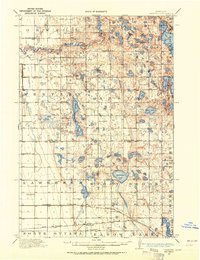 1910 Wendell1965 Print · USGSGrant and Otter Tail counties are shown here in the early twentieth century as a burgeoning network of rail lines and lakeside settlements. Genealogists can locate over twenty numbered schoolhouses and early stations along the Minneapolis St Paul and Sault Ste Marie line near Wendell and Hereford.
 - 1910 Map of Chokio, 1968 Print
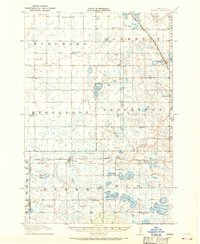 1910 Chokio1968 Print · USGSStevens County is shown here at the height of its rail-and-schoolhouse era in the early twentieth century. Genealogists can locate specific rural properties near landmarks like Harstad Slough, Town Hall, and over twenty numbered school sites including School No 35.
 - 1911 Map of Barrett
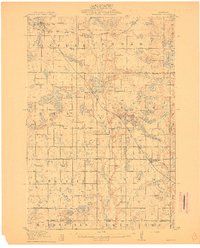 1911 Barrett1911 Print · USGSGrant County is a mosaic of prairie lakes and early rail towns at the dawn of the twentieth century. Genealogists can locate over twenty numbered school sites and early settlements like Thorsborg, Erdahl, and the lake-front village of Barrett.2 unique versions available
 - 1911 Map of Herman
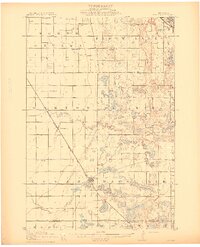 1911 Herman1911 Print · USGSThe junction of two major rail lines at Herman defines this prairie landscape during a period of steady agricultural growth. Researchers can locate nearly twenty numbered rural schoolhouses and trace the original paths of the Great Northern RR and the Mustinka River.3 unique versions available
 - 1912 Map of Chokio
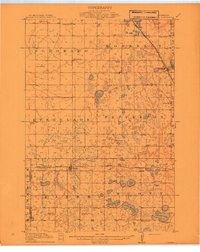 1912 Chokio1912 Print · USGSWestern Minnesota prairie life is centered on the rail lines of Donnelly and Chokio during the early twentieth century. Genealogists and researchers can trace local school districts from School No 56 to School No 42 and locate landmarks like the Town Hall and Harstad Slough.
 - 1912 Map of Morris
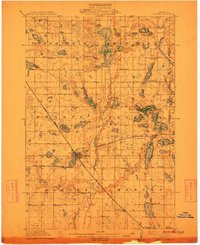 1912 Morris1912 Print · USGSThe rail hub of Morris and the surrounding Stevens County prairie are captured here at the height of the steam era. Genealogists and historians can trace dozens of early rural schoolhouses, the North Star Mill, and pioneer worship sites like Scandia Church.3 unique versions available
 - 1912 Map of Deerwood, 1963 Print
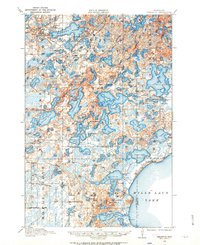 1912 Deerwood1963 Print · USGSIn the decade before the region's full industrialization, this survey captures the lake-country settlements of Deerwood and Crosby just as the Northern Pacific railroad was driving local growth. Genealogists can locate dozens of early district schools and local landmarks like Doris Church and Katrine School.2 unique versions available
 - 1912 Map of Vergas, 1969 Print
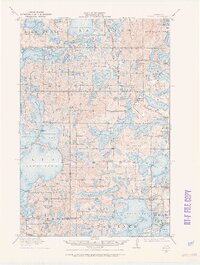 1912 Vergas1969 Print · USGSOtter Tail County was a patchwork of glaciated lakes and early rail lines in the years preceding the Great War. You can trace the path of the Winnipeg Line through Vergas and locate over twenty rural school sites including Jacobs School and School No 116.
 - 1912 Map of Battle Lake, 1975 Print
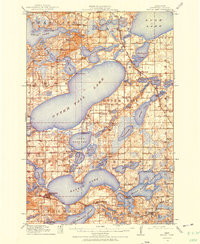 1912 Battle Lake1975 Print · USGSOtter Tail County is captured here in the early twentieth century, showing a lake-rich landscape being shaped by new railroads and summer tourism. Genealogists can locate nearly twenty numbered schoolhouses and early communities like Battle Lake, Vining, and Ottertail.
 - 1913 Map of Ashby
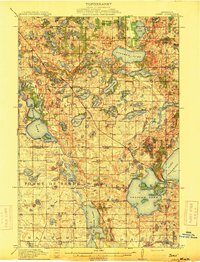 1913 Ashby1913 Print · USGSBefore the modernization of the Midwest, this part of Minnesota was a patchwork of numbered school districts and vital rail lines. Genealogists can trace family footprints near Dalton or search for local landmarks like School No 81, Tenmile Lake, and the Northern Pacific RR.4 unique versions available
 - 1913 Map of Fergus Falls
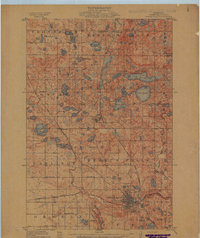 1913 Fergus Falls1913 Print · USGSOtter Tail County is shown here in the early twentieth century, as rural townships were densely populated with family farms and dozens of small schoolhouses. Researchers can trace the Northern Pacific RR route through Carlisle and Elizabeth or locate the sprawling State Insane Asylum near Fergus Falls.3 unique versions available
 - 1913 Map of Wendell
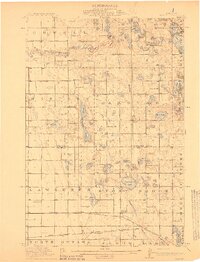 1913 Wendell1913 Print · USGSGrant and Otter Tail counties appear here just before the Great War, showing a landscape defined by prairie rail expansion and rural school districts. Genealogists can locate specific farmstead locations near School No 119, Dayton Dam, or the village of Wendell.
 - 1913 Map of Cuyuna, 1963 Print
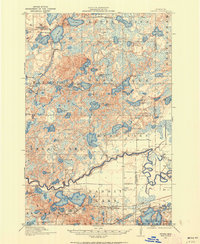 1913 Cuyuna1963 Print · USGSBefore the height of northern Minnesota's iron boom, this area centered on the nascent village of Cuyuna and the logging town of Emily. Genealogists and researchers can trace the early township school system through sites like Mud Brook School and Keeler School, or follow the competing routes of the Northern Pacific and Minneapolis St Paul and Sault Ste Marie railroads.2 unique versions available
 - 1914 Map of Battle Lake
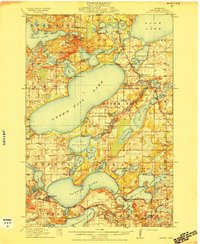 1914 Battle Lake1914 Print · USGSOtter Tail County’s lake country is captured here just before the Great War, showing a landscape defined by water and rail. Researchers can trace numerous rural schoolhouses and early lakeside retreats like Island Lodge, Camp Nidaros, and the village of Battle Lake.3 unique versions available
 - 1914 Map of Deerwood
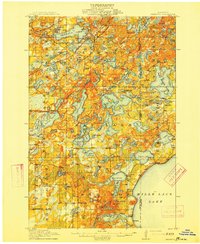 1914 Deerwood1914 Print · USGSCrow Wing and Aitkin counties are captured here just before the First World War, showing the growth of iron range towns and lakeside settlements. Genealogists and researchers can trace early rural life through nearly twenty numbered schoolhouses, the Dorris Church, and railroad stops at Crosby and Ironton.3 unique versions available
 - 1914 Map of Pelican Rapids, 1949 Print
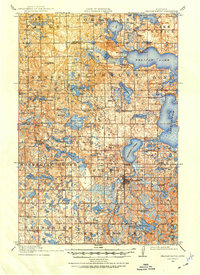 1914 Pelican Rapids1949 Print · USGSThe glacier-carved landscape of Otter Tail County is shown here just before the First World War, when rural schools and lakefront resorts defined the local character. Genealogists can trace family roots through sites like South Emmanuel Church and Bangor Cemetery or locate the many schoolhouses including Rollag School.
 - 1914 Map of Aitkin, 1966 Print
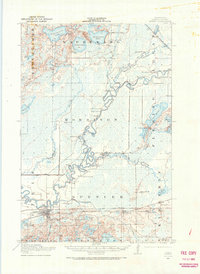 1914 Aitkin1966 Print · USGSAitkin and the surrounding wetlands are shown here just before the First World War, as the river-and-rail economy shaped the landscape. Genealogists can locate numerous rural schoolhouses and early settlements like Rossburg, Hassman, and the Lone Pine School.
 - 1915 Map of Superior
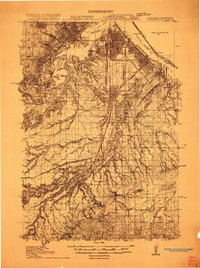 1915 Superior1915 Print · USGSThe Twin Ports region at the peak of the industrial era shows a landscape defined by massive rail yards and shoreline development. Genealogists and historians can locate early neighborhoods like Morgan Park, find rural landmarks like Saunders Cem, and trace the numerous lines of the Northern Pacific railroad.2 unique versions available
 - 1915 Map of Aitkin
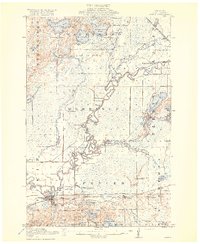 1915 Aitkin1915 Print · USGSAitkin County in the mid-1910s was a hub of river transport and rail expansion, centered on the growing village of Aitkin. You can trace the path of the Northern Pacific railroad through Rossburg and find rural landmarks like Lone Pine School and Waukenabo Lake.4 unique versions available
 - 1915 Map of Cuyuna
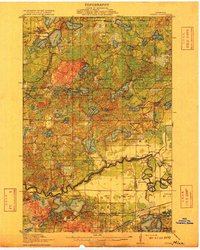 1915 Cuyuna1915 Print · USGSCrow Wing and Aitkin counties are captured here just before the First World War, as railroads and mining began to transform the lake-heavy landscape. Genealogists can locate many numbered district schools and settlements like Emily, Manganese, and Dean Lake.3 unique versions available
 - 1915 Map of Underwood
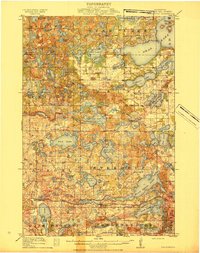 1915 Underwood1915 Print · USGSOtter Tail County is shown here in the early twentieth century as a thriving network of small school districts and lakeside townships. You can trace the Northern Pacific rail line through Underwood or locate local landmarks like School No 207 Weggeland and Maine.3 unique versions available
 - 1915 Map of Perham
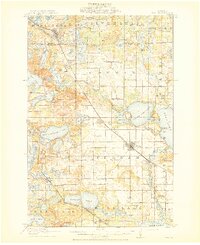 1915 Perham1915 Print · USGSOtter Tail County was a landscape of steam and water in the early twentieth century. Genealogists can trace family footprints through numerous rural school sites like School No 132 and settlements along the Northern Pacific including Perham and Frazee.3 unique versions available
 - 1915 Map of Vergas
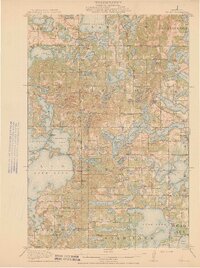 1915 Vergas1915 Print · USGSThe lake country of Otter Tail and Becker counties is captured here in the early twentieth century as recreation began to meet rural industry. Researchers can find numerous country schoolhouses, early lodges like Pelican Inn, and the Fricke Mill site near Lake Melissa.6 unique versions available
 - 1915 Map of White Rock, 1954 Print
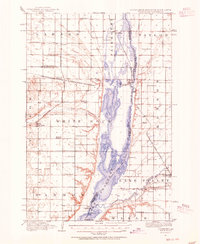 1915 White Rock1954 Print · USGSThe tri-state border region of the Dakotas and Minnesota comes alive in the early twentieth century as a hub of rail lines and prairie schools. Trace early settlements like White Rock and Rosholt or locate family landmarks such as Knutson School and Teare School.2 unique versions available
 - 1915 Map of Brainerd, 1960 Print
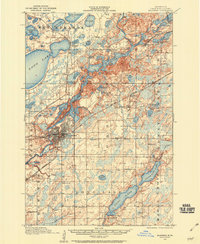 1915 Brainerd1960 Print · USGSCrow Wing County during the early twentieth century is captured here as a landscape of interconnected lakes, railroads, and emerging settlements. Genealogists can trace rural school districts from School No 57 to School No 26 and locate early rail stops like Merrifield and Riverton.2 unique versions available
Showing maps 1-25 of 108
Top cities of Minnesota
- Minneapolis historical maps
- Saint Paul historical maps
- Rochester historical maps
- Duluth historical maps
- Bloomington historical maps
- Brooklyn Park historical maps
See more
Top counties of Minnesota
- Hennepin County historical maps
- Ramsey County historical maps
- Dakota County historical maps
- Washington County historical maps
- Saint Louis County historical maps
- Stearns County historical maps
See more
Frequently asked questions
- What are the different types of historical maps available for Minnesota?
- What is the oldest map of Minnesota?
- Where can I purchase historical maps of Minnesota for my home or office?
- Where can I download high-res historical maps of Minnesota?
- Are there historical topographic maps available for Minnesota?
- Is there historical aerial imagery available for Minnesota?
- Where are historical maps of Minnesota sourced from?