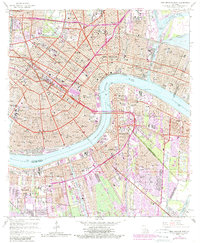
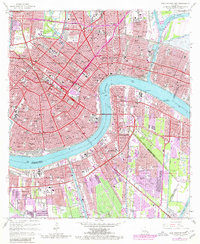
1966 Map of New Orleans East
USGS Topo · Published 1989About this map
New Orleans and its surrounding parishes are captured during a period of significant urban expansion and infrastructure development. The crescent of the Mississippi River defines the core of the city, separating the historic Vieux Carre and the U S Customhouse from the western bank communities of Algiers, Gretna, and McDonoghville. This mid-century view illustrates the densification of the street grid and the critical role of maritime commerce, evidenced by the Turning Basin and the Intracoastal Waterway (Mississippi River-Gulf Outlet Canal). Extensive institutional grounds are prominent, including Tulane University, Dillard University, and the sprawling Metairie Cemetery and St Patrick Cemetery complexes. The map documents the city's transition toward modern transit with the Greater New Orleans Bridge and Pontchartrain Expy overlaying the older rail networks of the Southern Ry and the New Orleans Public Belt RR.
Find a feature on this map
56 named features on this map. Tap any name to fly to it.
Don’t see what you’re looking for? This feature index may not catch every label — zoom into the map to look around manually.
Map Details
Editions of this 1966 New Orleans East Map
5 editions found
Other maps of this area
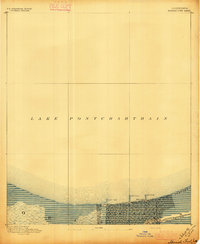
1891 · Spanish Fort
USGS Topo · 1:62,500
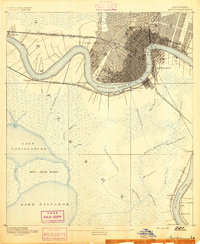
1891 · New Orleans
USGS Topo · 1:62,500
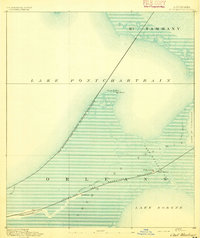
1892 · Chef Menteur
USGS Topo · 1:62,500
1892 · St. Bernard
USGS Topo · 1:62,500
1932 · New Orleans NE
USGS Topo · 1:31,680
1932 · New Orleans NW
USGS Topo · 1:31,680
1932 · New Orleans SE
USGS Topo · 1:31,680
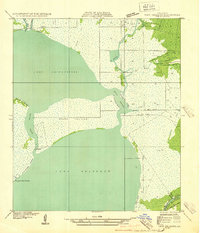
1932 · New Orleans SW
USGS Topo · 1:31,680
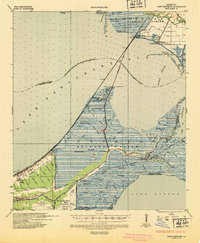
1936 · Chef Menteur
USGS Topo · 1:62,500
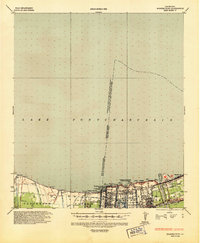
1936 · Spanish Fort
USGS Topo · 1:62,500