1980s Maps of Oklahoma
Explore 268 historic maps of Oklahoma from the 1980s. These maps offer a rare glimpse into what life looked like during the 1980s — showing old roads, neighborhoods, homes, and landmarks that have changed or disappeared over time.
Whether you're researching your family's past, planning a metal detecting trip, or studying how Oklahoma's landscape evolved across the 1980s, these high-resolution maps are a powerful tool for exploring the history of this region.
- Focus on a specific era: All maps on this page are from the 1980s, giving you a focused view of this time period.
- See what’s changed: Compare century-old streets, trails, and buildings to today's modern landscape using overlays and satellite layers.
- Research with precision: Use these maps for genealogy, historical research, land use analysis, or educational projects.
- View, download, or print: Maps are fully viewable online in high resolution, and can be downloaded or printed for your own records.
Start exploring Oklahoma's history through authentic maps from the 1980s. This is your window into the past.
Oklahoma maps
(268)- 1980 Map of Protection SW
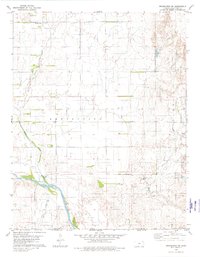 1980 Protection SW1980 Print · USGSComanche County during the late 1970s reveals a prairie landscape shaped by historic demarcations and river systems. Genealogists and historians can trace the Old Indian Treaty Boundary and locate the Mennonite Cem near the banks of Cavalry Creek.
 - 1980 Map of Buttermilk
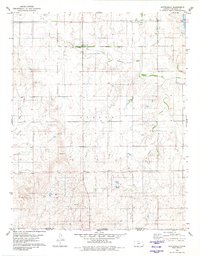 1980 Buttermilk1980 Print · USGSSouthern Kansas and the Oklahoma borderlands are mapped here in the late seventies, showing a landscape defined by ranching and historic lines. Genealogists and researchers can trace the Old Indian Treaty Boundary and find local landmarks like Antioch Ch and the settlement of Buttermilk.
 - 1980 Map of Telephone, 1981 Print
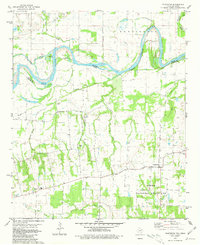 1980 Telephone1981 Print · USGSThe Red River borderlands of Fannin County were captured in the early eighties as a landscape of small farms and protected grasslands. Local researchers can trace family landmarks like Old Elwood Cem, the rural Telephone community, and the Sam Rayburn Sch.
 - 1980 Map of Durant South, 1981 Print
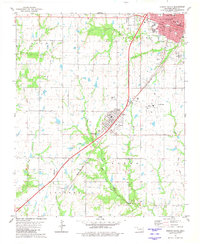 1980 Durant South1981 Print · USGSThe southern outskirts of Durant and the town of Calera are captured here in the early 1980s, showcasing a mix of municipal growth and historical boundary lines. Researchers can trace the Old Indian Treaty Boundary and locate family burial grounds at Highland Cem or Rose Hill Cem.
 - 1980 Map of Monkstown, 1981 Print
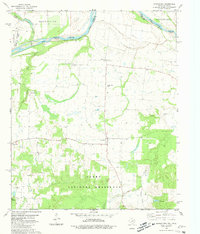 1980 Monkstown1981 Print · USGSThe Red River border between Texas and Oklahoma comes into focus during the early 1980s, showcasing the agricultural rhythm of Fannin County. Researchers can trace rural cemetery sites like Arch Chapel Cem and Bigsby Cem or locate the sprawling Caddo National Grassland.
 - 1980 Map of Roberta, 1981 Print
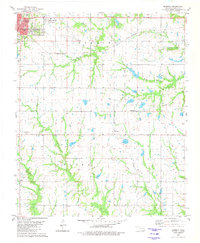 1980 Roberta1981 Print · USGSThe outskirts of Durant and the surrounding rural communities of Bryan County are captured here in the 1980s. Genealogists and local historians can trace legacy sites like Pioneer Cem, George Washington Sch, and the community at Roberta.
 - 1980 Map of Bennington South, 1981 Print
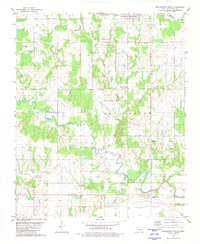 1980 Bennington South1981 Print · USGSSouthern Bryan County in the early 1980s is captured here as a landscape of rural school districts and small prairie settlements. Genealogists and historians can trace family locations near Blue Branch Ch, Spring Hill Cem, or the old town sites of Wade and Bokchito.
 - 1980 Map of Blue, 1981 Print
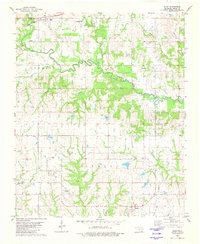 1980 Blue1981 Print · USGSBryan County at the dawn of the 1980s reveals a landscape of winding river bottoms and historic family cemeteries. Genealogists and local historians can trace the foundations of Blue, Utica, and Albany, or locate family landmarks like Burris Cem and Old Philadelphia Cem.2 unique versions available
 - 1980 Map of New Oberlin, 1981 Print
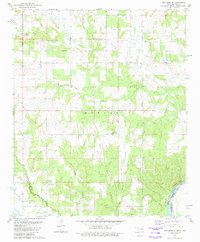 1980 New Oberlin1981 Print · USGSThe Oklahoma-Texas borderlands along the Red River are captured here during the late twentieth century. Genealogists and historians can trace rural landmarks and family burial grounds such as Crowder Cem, Oberlin Cem, and Iron Stob Ch.
 - 1980 Map of Kemp, 1981 Print
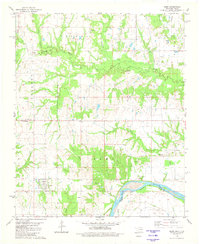 1980 Kemp1981 Print · USGSThe Oklahoma-Texas borderlands along the Red River are captured here during the late 1970s. Local researchers can trace family roots through Kemp and Yarnaby, locating the Old Indian Treaty Boundary and Burney Cem.
 - 1980 Map of Lake West, 1981 Print
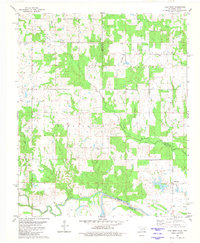 1980 Lake West1981 Print · USGSThe Oklahoma-Texas borderlands along the Red River are captured here in the mid-1970s. Local historians can trace family ties at Good Springs Ch or map the drainage of Whitegrass Creek and Slash Creek through the rural township of Bennington.
 - 1980 Map of Yuba, 1981 Print
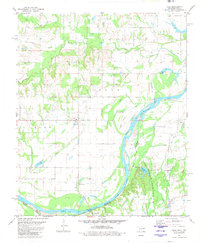 1980 Yuba1981 Print · USGSThe Oklahoma-Texas borderlands along the Red River are captured here in the early 1980s, showcasing the fertile floodplains and rural river life. Genealogists and local historians can trace the small communities of Yuba, Tulip, and Duplex alongside Lake Fannin.
 - 1980 Map of Direct, 1981 Print
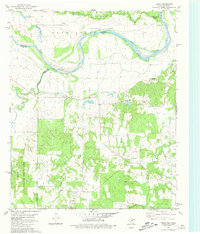 1980 Direct1981 Print · USGSThe Red River border between Texas and Oklahoma is captured here in the late seventies, showing the rural communities along the river's winding path. Genealogists can trace the rural landscape around Direct, find the location of Pyles Cem, or locate the crossroads at Unity.
 - 1980 Map of Achille, 1981 Print
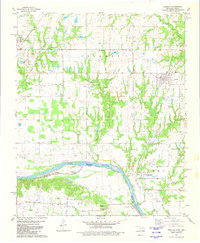 1980 Achille1981 Print · USGSThe Oklahoma-Texas borderlands in the early eighties come to life through this detailed survey of the Red River crossing. Researchers can locate family sites and rural landmarks like Colbert Cem, the Missouri Kansas Texas line, and Messengers Chapel.
 - 1980 Map of Bluff, 1981 Print
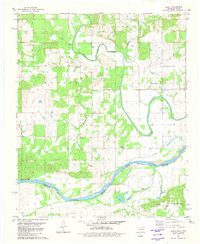 1980 Bluff1981 Print · USGSThe Oklahoma-Texas border comes into focus in the early eighties as the Red River separates Choctaw and Lamar counties. Researchers can trace rural life through landmarks like St Paul Ch, Bluff Cem, and the small settlement of Gay.2 unique versions available
 - 1980 Map of Grant, 1981 Print
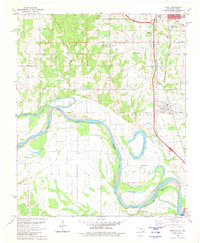 1980 Grant1981 Print · USGSChoctaw County at the turn of the 1980s shows the winding Red River valley as it marks the Oklahoma-Texas border. Genealogists and local historians can trace rural communities through landmarks like Goodland, Sweet Hill Cem, and Mt Pleasant Ch.
 - 1981 Map of Eagletown
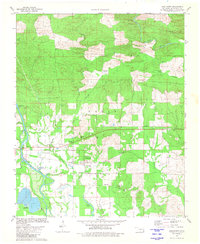 1981 Eagletown1981 Print · USGSSoutheastern Oklahoma’s river country is documented here in the early eighties, centered on the settlement of Eagletown. Genealogists and local historians can locate St Matthew Ch, trace family plots at Tonka Cem, or explore the reaches of Luksuklo Creek.
 - 1981 Map of Heavener
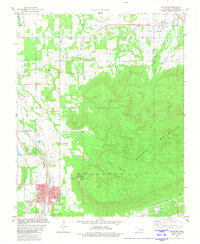 1981 Heavener1981 Print · USGSLe Flore County's eastern ridges and rail corridors are showcased here in the early 1980s. Genealogists and local historians can trace family locations through Oakdale Cem, Springhill Cem, and landmarks like Runestone State Park.
 - 1981 Map of Smithville
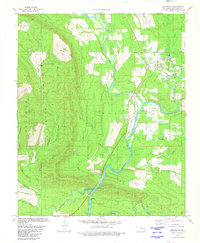 1981 Smithville1981 Print · USGSThe Ouachita foothills of McCurtain County come into sharp focus in the early eighties, as the region prepared for changes to the local watershed. Researchers can trace the layout of Smithville and Octavia, or locate the Indian Mission and the Footbridge on Rock Creek.
 - 1981 Map of Hee Creek
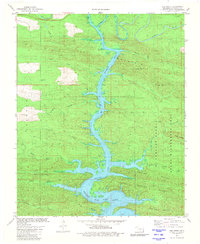 1981 Hee Creek1981 Print · USGSSoutheast Oklahoma in the early eighties shows a landscape of deep valleys and rising reservoir waters. Trace the rugged terrain from Hee Mountain down to Broken Bow Lake, including the Mc Curtain County State Wilderness Area.
 - 1981 Map of Broken Bow
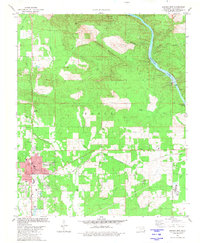 1981 Broken Bow1981 Print · USGSBroken Bow and the surrounding McCurtain County landscape are captured here in the early eighties as the timber and rail economy shaped the region. Genealogists and local historians can trace the locations of Crown Hill Cem, rural schools like North Highway Sch, and the Texas and Oklahoma Eastern rail line.
 - 1981 Map of Octavia
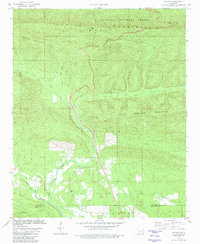 1981 Octavia1981 Print · USGSIn the early 1980s, this area of the Kiamichi Mountains shows a remote landscape of timber and steep ridges. Genealogists and hikers can locate the Octavia Cem and trace the paths of Big Eagle Creek through the Ouachita National Forest.
 - 1981 Map of Hontubby
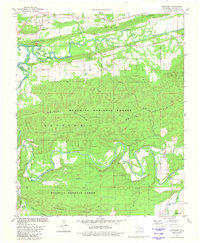 1981 Hontubby1981 Print · USGSLe Flore County in the early eighties is defined by the winding Poteau River and the industrial corridor of the Kansas City Southern. Researchers can locate rural landmarks like Stapp, Hontubby Falls, and the Big Creek Cem.
 - 1981 Map of Tablerville
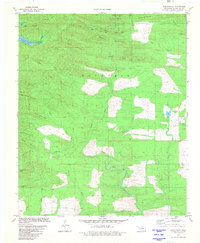 1981 Tablerville1981 Print · USGSMcCurtain County's timbered ridges and river valleys are shown in detail during the early eighties. Genealogists and local historians can trace the topography around Tablerville and search for family landmarks near Gobblers Knob or Luksuklo Creek.
 - 1981 Map of Lawton
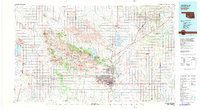 1981 Lawton1981 Print · USGSSouthwestern Oklahoma in the early eighties shows a landscape shaped by military history and the rising peaks of the Wichitas. Researchers can trace the boundaries of the Fort Sill Military Reservation and locate early settlements like Meers, Chattanooga, and Richards Spur.
Showing maps 1-25 of 268
Top cities of Oklahoma
- Oklahoma City historical maps
- Tulsa historical maps
- Norman historical maps
- Broken Arrow historical maps
- Lawton historical maps
- Edmond historical maps
See more
Top counties of Oklahoma
- Oklahoma County historical maps
- Cleveland County historical maps
- Canadian County historical maps
- Comanche County historical maps
- Rogers County historical maps
- Payne County historical maps
See more
Frequently asked questions
- What are the different types of historical maps available for Oklahoma?
- What is the oldest map of Oklahoma?
- Where can I purchase historical maps of Oklahoma for my home or office?
- Where can I download high-res historical maps of Oklahoma?
- Are there historical topographic maps available for Oklahoma?
- Is there historical aerial imagery available for Oklahoma?
- Where are historical maps of Oklahoma sourced from?